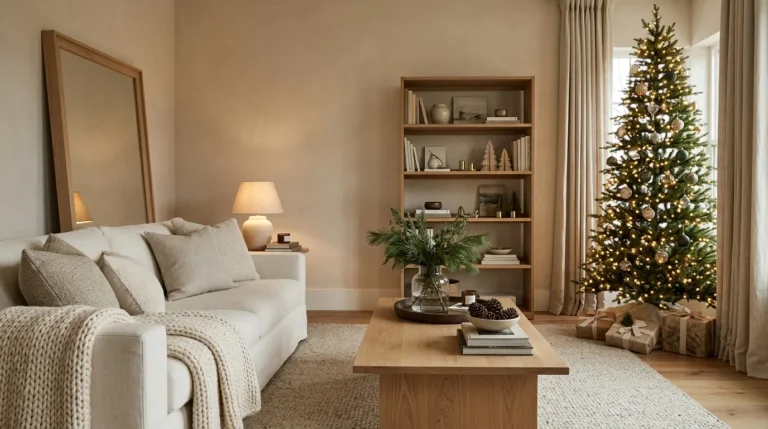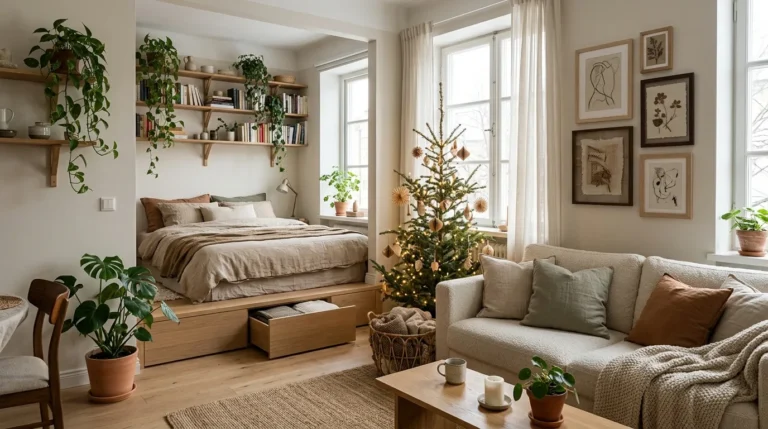
20 Christmas Decor Mistakes That Make Your Home Look Cheap – And How to Fix Them
Your Christmas decorations should make your home feel warm, welcoming, and beautiful, not cluttered or cheap. Sometimes, a few small decorating mistakes can take away from the festive atmosphere you’re trying to create.
The good news? You don’t need expensive decorations or a complete holiday makeover to achieve a polished look. Many common Christmas Decor Mistakes come down to poor color combinations, overcrowded displays, mismatched accessories, or unbalanced lighting. With a few thoughtful changes, even budget-friendly decorations can look elegant and professionally styled.
In this guide, you’ll discover 20 common decorating mistakes that can affect the appearance of your holiday home, along with simple, practical ways to fix them. From styling your Christmas tree to decorating your mantel, dining table, and entryway, these ideas will help you create a coordinated space that feels festive without looking overdone. Whether you’re decorating your first apartment or refreshing your family home, you’ll find plenty of inspiration to make this Christmas feel extra special.
Overloading the Christmas Tree

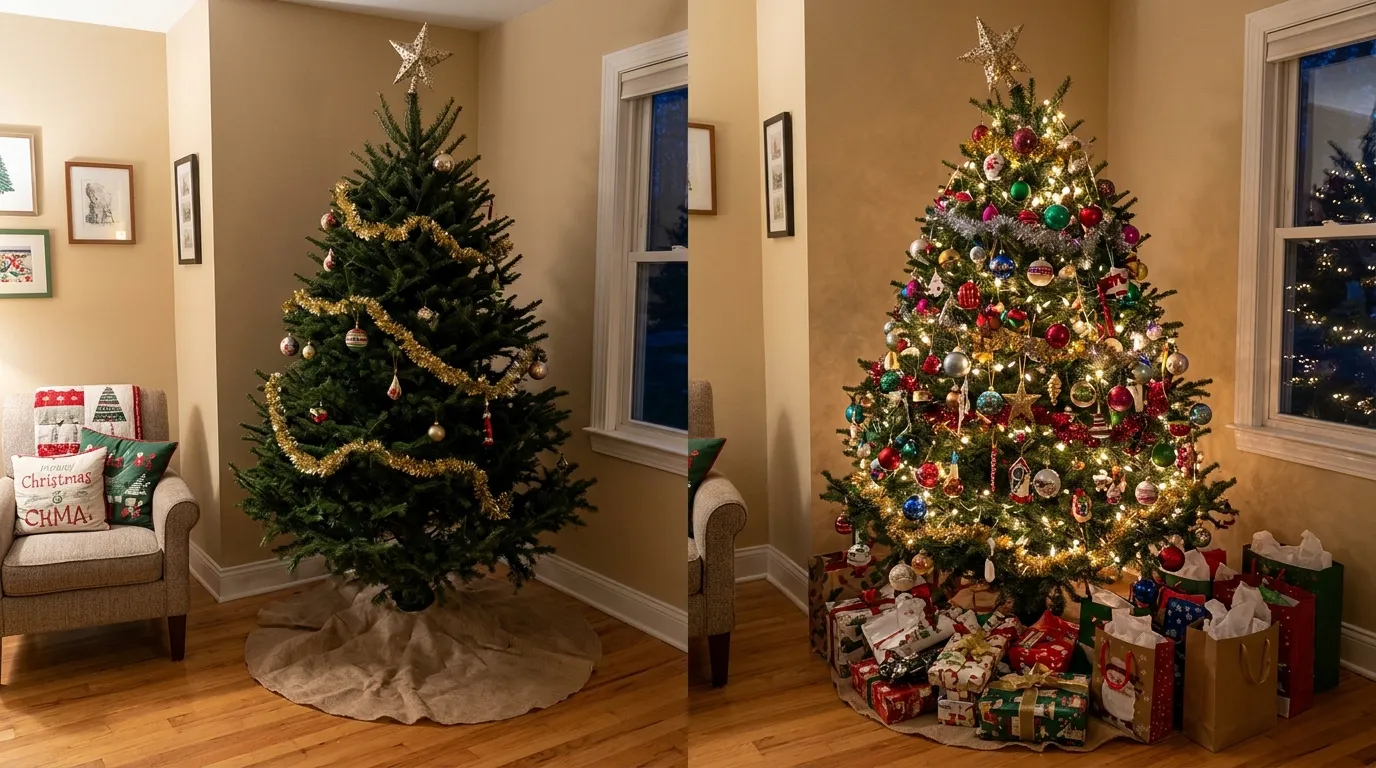
A Christmas tree covered in too many decorations can quickly look cluttered instead of festive. When every branch holds multiple ornaments, ribbons, and decorative picks, individual details disappear. The tree loses its shape, and the overall display feels overwhelming. A little breathing room makes each decoration more noticeable.
Start by removing unnecessary ornaments and choosing two or three complementary colors. Spread decorations evenly across the branches, placing larger pieces deeper inside for dimension. Leave some greenery visible between ornaments. In my experience, a thoughtfully decorated tree often looks more expensive than one filled with decorations from top to bottom.
Mixing Too Many Colors

Too many competing colors can make holiday decorations look disconnected, even when every individual piece is attractive. Bright red, purple, blue, silver, gold, and green competing in one room can create visual confusion. A consistent color scheme helps your Christmas decorations feel intentional and professionally styled.
- Choose two main colors and one accent shade.
- Repeat those colors across the tree, mantel, and dining table.
- Use warm metallics like champagne gold or brushed brass.
- Keep large furniture and everyday textiles relatively neutral.
- Remove decorations that clash with your chosen palette.
For a timeless look, combine cream, forest green, and soft gold. If you love traditional Christmas colors, stick with red, green, and warm white instead. You don’t need to replace everything. Simply group existing decorations by color and display the best combinations together.
Using Cheap Looking Tinsel

Shiny, thin tinsel can make an otherwise beautiful Christmas display look dated and inexpensive. Especially when it hangs unevenly or covers every surface, it competes with the tree, ornaments, and other decorative details. Replacing excessive sparkle with natural textures creates a more refined holiday atmosphere.
Quick Tip:
Swap plastic-looking tinsel for realistic cedar garlands, pine branches, or eucalyptus stems. If you still love sparkle, choose a few quality metallic ornaments or delicate champagne-gold accents instead of covering entire branches with shiny strands.
Natural greenery adds depth and texture without making your decorations feel crowded. Drape a simple garland across your mantel, weave in warm white lights, and finish with a few understated ornaments. The result feels balanced, festive, and much more expensive without requiring a complete decorating makeover.
Ignoring Proper Lighting
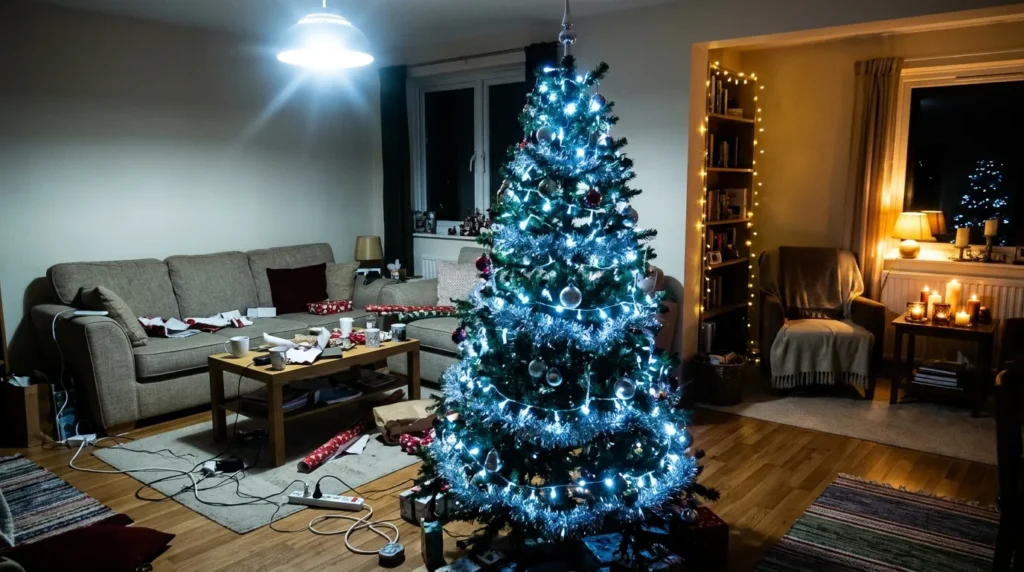
BEFORE:
A Christmas tree with harsh, cool-toned lights can make an otherwise lovely room feel cold and uninviting. Bright overhead lighting also washes out decorative details and creates an unbalanced atmosphere.
AFTER:
Warm white lights create a softer, more welcoming glow. Layered lighting around the room makes the tree, mantel, and other festive details feel connected.
Lighting can completely change how Christmas decorations look after sunset. Choose warm white bulbs instead of icy blue ones, and distribute small light sources throughout the room. Add a table lamp near the sofa and battery-operated candles on the mantel. Keep the lighting gentle rather than overly bright.
Choosing the Wrong Ornament Sizes

Even expensive ornaments can look awkward when their sizes don’t suit the tree. Tiny baubles disappear among thick branches, while oversized decorations can make a small tree look crowded and unbalanced.
- Start with large ornaments: Place a few larger baubles toward the middle and lower branches.
- Add medium decorations: Distribute these throughout the tree to create visual balance.
- Fill smaller spaces: Use delicate ornaments to cover empty areas without overcrowding.
- Check the proportions: Step back occasionally to see whether one section looks heavier than another.
A balanced arrangement creates depth and makes the tree look professionally decorated. I’ve noticed that mixing three ornament sizes usually produces a more interesting result than buying dozens of identical baubles. Always consider the height and width of your tree before shopping for decorations.
Using Too Many Different Textures

Mixing textures adds character, but too many competing materials can make a Christmas display feel messy. Glitter, plastic, shiny satin, sequins, metallic mesh, and fluffy fabrics all fighting for attention can overwhelm the room.
| Overcrowded Look | More Polished Look |
| Excessive glitter | Subtle metallic accents |
| Shiny plastic garlands | Natural-looking greenery |
| Multiple competing fabrics | Velvet and soft knits |
| Glossy decorations everywhere | Matte and ceramic finishes |
Choose two or three main textures and repeat them throughout your decorations. For example, combine velvet stockings, natural greenery, and matte ceramic ornaments. These materials create enough contrast to make your space interesting without overwhelming the eye. A little texture variation goes a long way.
Overcrowding the Mantel
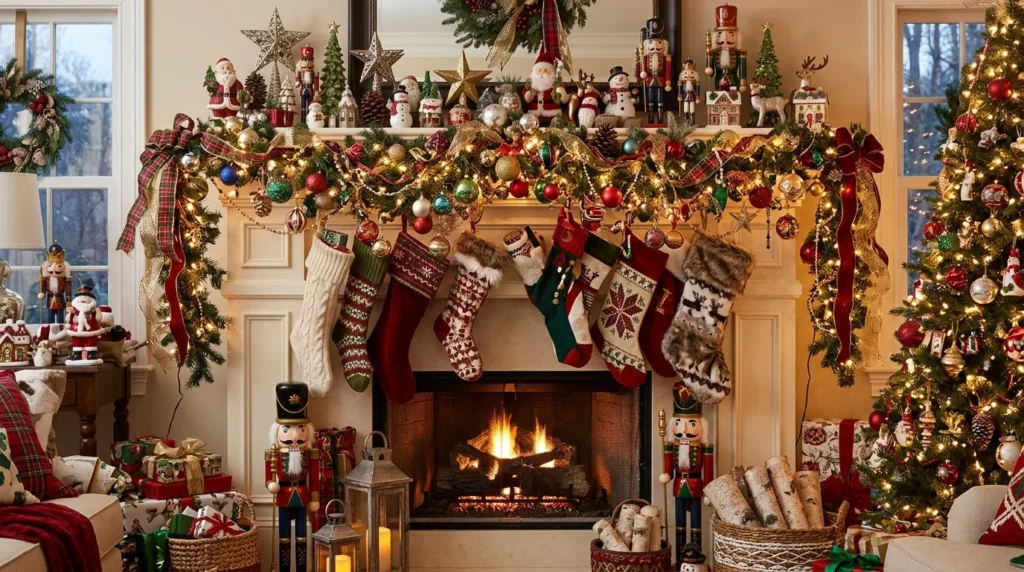
DO:
- Keep the garland loosely arranged across the mantel.
- Hang stockings with equal spacing between them.
- Add three or four carefully selected decorative accents.
- Leave small sections of the mantel visible.
DON’T:
- Cover every inch with ornaments and figurines.
- Mix several garland styles together.
- Hang too many stockings in different colors.
- Place tall decorations where they block artwork or mirrors.
A fireplace mantel looks more expensive when each decoration has room to stand out. Choose one main focal point, such as a lush greenery garland, and build around it. In my experience, leaving some empty space makes even affordable holiday accessories look more thoughtfully arranged.
Displaying Fake Looking Greenery
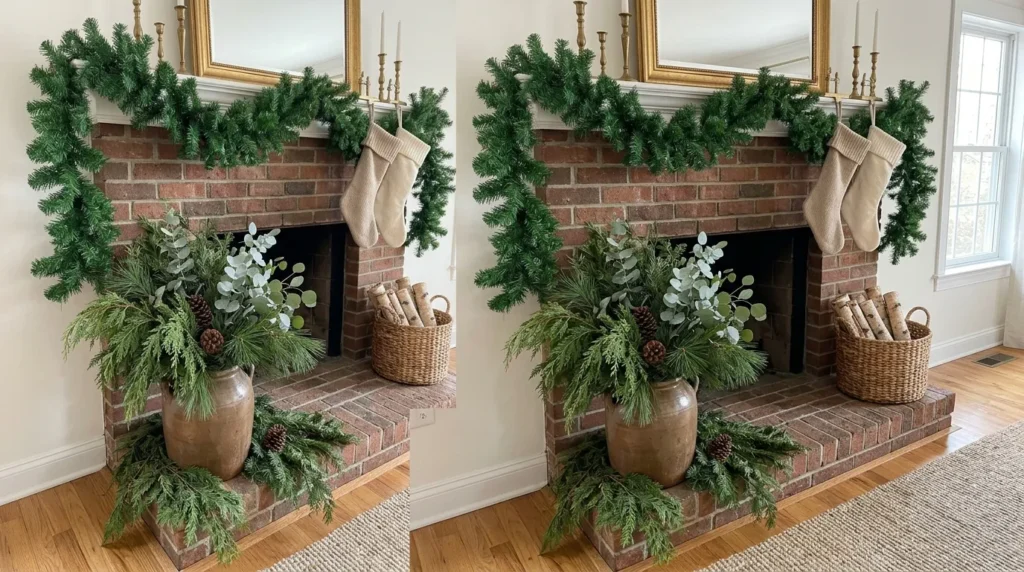
- Cost: Affordable to moderate, depending on greenery type.
- Best Materials: Cedar, pine, eucalyptus, and realistic faux branches.
- Difficulty: Beginner-friendly.
- Best Placement: Mantels, stair railings, tabletops, and entryways.
Nothing makes holiday decorations look less polished than overly shiny plastic greenery. Choose branches with varied shades of green, natural-looking needles, and flexible stems. If natural greenery is available, mix a few fresh branches into a reusable faux garland for added texture and depth.
Pay attention to how the greenery is arranged, too. Avoid perfectly straight lines and identical branch patterns. Let a few stems extend naturally beyond the edges of your mantel or centerpiece. This small detail gives artificial arrangements a more realistic appearance.
Neglecting the Entryway
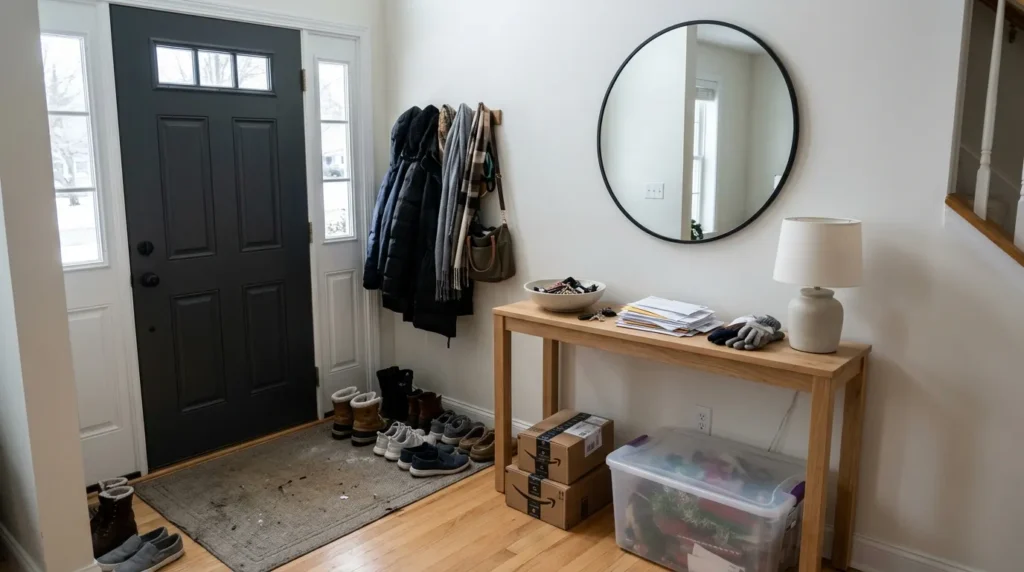
The entryway is the first place guests notice, yet it often receives less attention than the living room. A beautifully decorated Christmas tree cannot create a cohesive home atmosphere if the entrance feels completely forgotten.
Start with a simple evergreen wreath on the front door or above a console table. Add a small arrangement of pine branches in a ceramic vase, then place a warm lantern or candle nearby. Keep shoes, bags, and everyday clutter out of sight so the decorations remain the main focus.
You don’t need an elaborate display to make your entrance feel festive. A few coordinated details can connect the entryway to the rest of your Christmas decorating style.
Overdecorating Every Surface

A room can feel festive without having Christmas decorations on every available surface. Covering coffee tables, shelves, countertops, side tables, and windowsills with ornaments creates visual clutter and makes the space feel smaller.
- Choose two or three surfaces to decorate in each room.
- Keep everyday essentials accessible and organized.
- Group small ornaments together on decorative trays.
- Leave some shelves and tabletops completely clear.
- Use one larger statement decoration instead of several tiny pieces.
Give your decorations a little breathing room. For example, style your coffee table with a small evergreen arrangement, two candles, and a decorative bowl rather than filling it with miniature Christmas figures. The room will feel more organized, and your favorite decorations will receive more attention.
Using Mismatched Christmas Stockings

Christmas stockings can become a beautiful focal point, but mismatched colors, patterns, and materials often make a fireplace look disorganized.
Quick Tip:
Choose stockings in one consistent color family, even if their patterns are slightly different. Cream, beige, muted green, and soft red work beautifully together. Keep the hanging style and length similar for a balanced appearance.
You don’t have to purchase a completely new set. Replace only the stockings that clash with your existing decorations, or use matching ribbons to create a consistent look. Add simple name tags or small bells for personality. The result feels coordinated while still keeping the personal charm of family Christmas traditions.
Our Facebook Page : Blossom Dream Decor
Forgetting the Dining Table

BEFORE:
A dining table covered with everyday items, random decorations, and mismatched accessories can make the entire dining area feel unfinished. Even a beautifully decorated living room may look disconnected when the dining space receives no holiday attention.
AFTER:
A simple centerpiece, coordinated table linens, and a few festive details create a welcoming dining area. Matching the colors to your living room makes the whole home feel more intentional.
Start with a neutral table runner and add a low evergreen centerpiece that doesn’t block conversations. Place two or three candle holders along the middle, then finish with coordinated napkins and simple place settings. Avoid oversized arrangements that take up valuable serving space. Practical styling makes the table attractive and comfortable for holiday meals.
Hanging Decorations Unevenly

Unevenly placed decorations can make even expensive Christmas accessories look messy. A tree with all its ornaments hanging on one side or a mantel with randomly spaced accessories can feel unfinished.
- Step back first: Look at your decorations from across the room before making adjustments.
- Balance the tree: Distribute larger ornaments evenly around the branches.
- Measure the spacing: Leave similar gaps between stockings, wall decorations, and garland accents.
- Check both sides: Make sure one area doesn’t look noticeably heavier than the other.
Symmetry doesn’t mean everything needs to look identical. It simply creates a sense of order. I’ve noticed that taking a few minutes to adjust ornament placement can make a surprisingly big difference. Small corrections often matter more than buying additional decorations.
Choosing Oversized Decorations
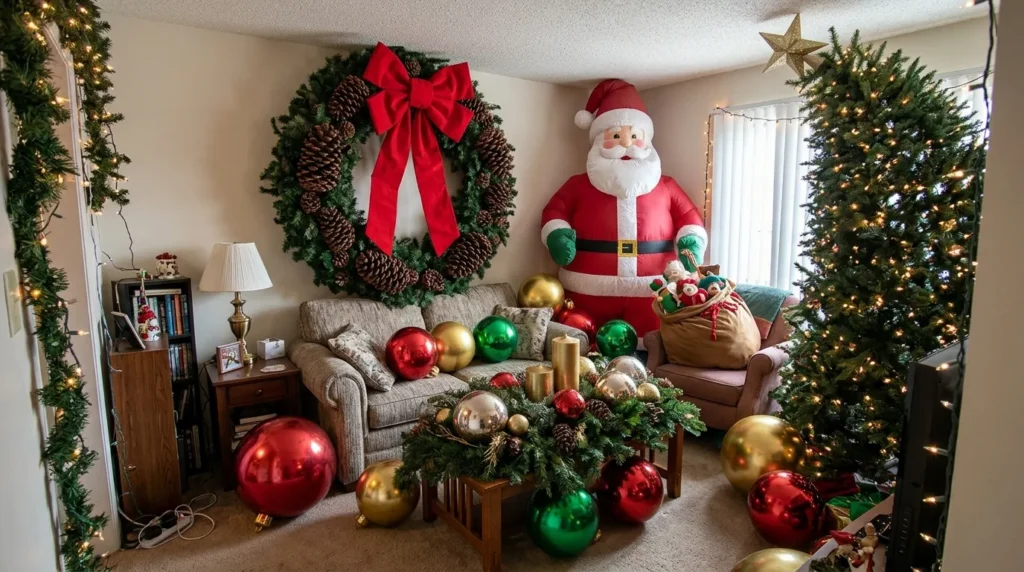
- Cost: No additional cost if you rearrange existing pieces.
- Time: 20 to 30 minutes.
- Skill Level: Beginner.
- Best For: Small living rooms, apartments, and narrow entryways.
Oversized decorations can overpower a room, especially when furniture and walkways are already limited. A giant wreath on a narrow door or an enormous tabletop centerpiece can make the surrounding space feel cramped.
Before purchasing holiday accessories, measure the area where each piece will go. Choose decorations that complement your furniture rather than competing with it. For smaller rooms, a slim Christmas tree, medium-sized wreath, and compact tabletop arrangements usually create better proportions. Keep pathways clear and allow larger statement pieces to stand alone.
Ignoring Visible Cords

DO:
- Use cord clips to secure wires behind furniture.
- Choose battery-operated lights for small decorative arrangements.
- Hide extension cords behind the Christmas tree or console table.
- Check that all electrical connections are safely positioned.
DON’T:
- Leave tangled wires hanging from branches.
- Run loose cords across walking areas.
- Overload extension sockets with multiple light sets.
- Hide damaged cables beneath rugs or furniture.
Visible cords can distract from even the prettiest Christmas decorations. Take time to organize your lighting before adding the final ornaments. Use suitable cable covers and keep electrical connections accessible, dry, and away from heat sources. A tidy lighting setup improves the overall appearance while making your holiday decorations safer to enjoy.
Our Instagram : Blossom Dream Decor
Using Cheap Gift Wrapping

Gift wrapping is part of your Christmas decor, especially when presents sit beneath the tree for several weeks. Bright mismatched wrapping paper, shiny plastic bows, and messy tape can make an otherwise polished display look cluttered.
- Color Palette: Kraft brown, ivory, forest green, and muted gold.
- Materials: Matte wrapping paper, cotton ribbon, and natural twine.
- Cost: Budget-friendly.
- Time: Around 10 minutes per gift.
Choose two or three wrapping paper designs and repeat them across your presents. Finish with fabric ribbons, small pine sprigs, or simple gift tags. Even inexpensive gifts can look beautifully presented when their wrapping follows a consistent color scheme. Arrange different-sized boxes together beneath the tree for a more balanced display.
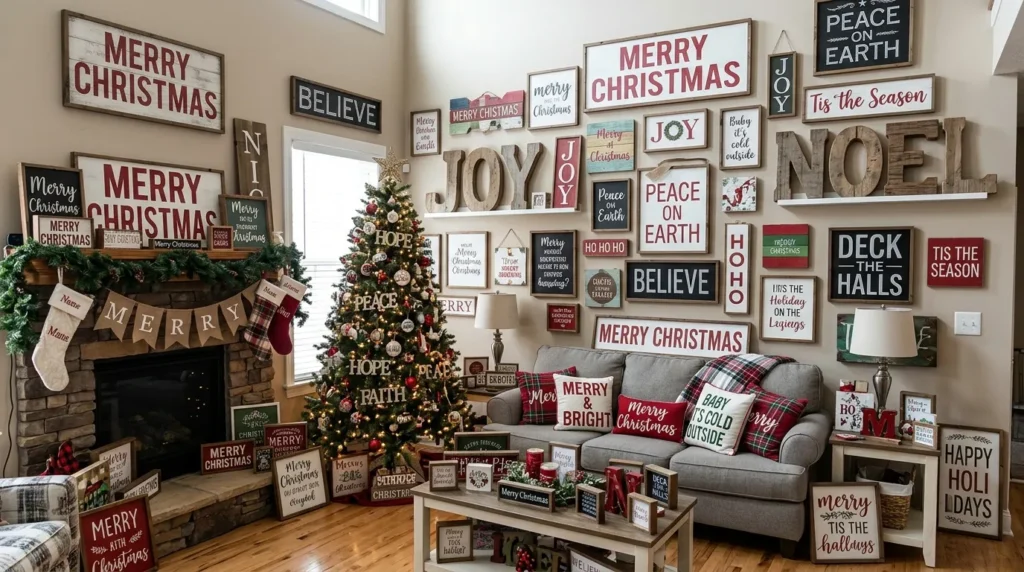
Displaying Too Many Christmas Signs
BEFORE:
A room filled with multiple signs saying Christmas, Merry Christmas, Joy, Believe, and Ho Ho Ho can quickly feel like a crowded holiday shop. When every wall and shelf contains lettering, the decorations lose their visual impact.
AFTER:
One thoughtfully placed Christmas sign becomes a clear focal point. Simple greenery, candles, and coordinated accessories complement the lettering without competing for attention.
Choose a sign that matches your home’s existing decorating style. A small wooden design works beautifully in rustic interiors, while a simple white or neutral sign suits modern spaces. Place it above the mantel, on an entryway shelf, or against a quiet wall. Let the surrounding decorations remain understated.
Neglecting Window Decorations

Bare windows can make an otherwise festive room feel incomplete, especially when the Christmas tree and mantel are beautifully decorated. On the other hand, excessive window stickers, colorful flashing lights, and bulky hanging ornaments can make the display look untidy.
Start with one simple decoration for each window. Hang a small evergreen wreath in the center, add delicate warm white lights around the frame, or place a few battery-operated candles on a wide windowsill. Keep decorations away from curtains, heat sources, and window mechanisms. A simple window display adds festive charm without overwhelming the room.
Forgetting the Outdoor Decor

A beautifully decorated interior can lose some of its festive charm when the front entrance looks completely forgotten. Outdoor decorations help connect your home’s exterior with the Christmas atmosphere inside.
Start with a fresh-looking evergreen wreath on the front door. Place matching planters on either side of the entrance and fill them with pine branches, pinecones, or weather-resistant greenery. Add one or two outdoor-rated lanterns for a soft evening glow. Choose decorations designed for outdoor conditions, especially when exposed to rain, wind, or moisture.
You don’t need an elaborate porch display. A coordinated wreath, simple greenery, and a welcoming doormat can make your entrance feel just as festive as your living room.
You May Like : 19 Front Porch Christmas Decor Ideas for Instant Curb Appeal
Buying Decorations Without a Plan

- DO: Decide on a Christmas color palette before shopping.
- DO: Check your existing decorations and reuse suitable pieces.
- DO: Make a list of specific items your home actually needs.
- DON’T: Purchase random ornaments simply because they’re on sale.
- DON’T: Buy decorations without considering their size or placement.
- DON’T: Replace everything each Christmas season.
Impulse shopping often leads to decorations that don’t match your furniture, existing ornaments, or overall holiday style. Before buying anything, gather your current decorations and decide which pieces need replacing. I’ve found that planning around a few statement items helps avoid unnecessary spending while creating a much more cohesive look.
A beautiful Christmas home doesn’t require expensive accessories or a completely new decorating collection. Thoughtful choices, balanced arrangements, and a consistent color scheme can make even budget-friendly decorations look polished. Spend wisely, reuse what you love, and give every festive detail a purpose.
CONCLUSION
Creating a beautiful Christmas home isn’t about spending more money or filling every corner with decorations. It’s about making thoughtful choices, balancing colors, choosing the right textures, and giving your favorite pieces room to shine.
By avoiding these Christmas Decor Mistakes, you can make your home feel more welcoming, coordinated, and stylish without stretching your holiday budget. I’ve seen how small changes, like simplifying a mantel or adjusting tree decorations, can completely change the look of a room.
Save this article on Pinterest for your Christmas decorating plans, try a few of these simple fixes, and share it with someone who loves creating a beautiful holiday home. Happy decorating!