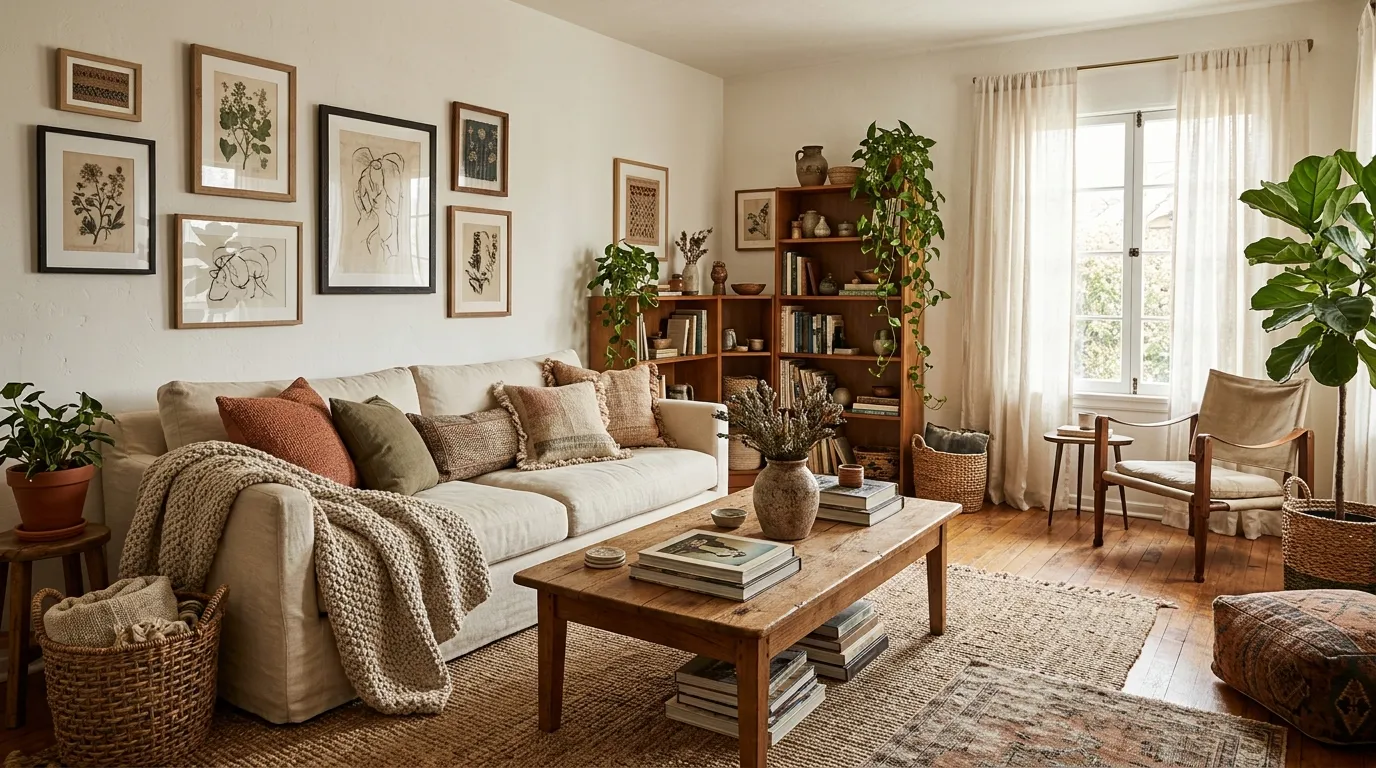
22 No-Buy Home Decor Ideas for a Fresh New Look
Your home doesn’t need a shopping spree to feel fresh, cozy, and beautiful. Sometimes, the biggest difference comes from simply seeing what you already own in a new way.
These no-buy home decor ideas will help you refresh your living spaces without spending money on new furniture, accessories, or trendy decorations. From rearranging your living room furniture and restyling shelves to giving houseplants new homes and creating cozy corners, you’ll discover simple ways to make familiar rooms feel exciting again. I’ve noticed that even small changes, like moving a favorite chair toward a sunny window or switching cushions between rooms, can completely change how a space feels.
Whether you’re decorating on a tight budget or simply want to use what you have more thoughtfully, these practical ideas will inspire you to create a home that feels personal, inviting, and beautifully refreshed. Get ready to look at your belongings with fresh eyes!
Rearrange Living Room Furniture
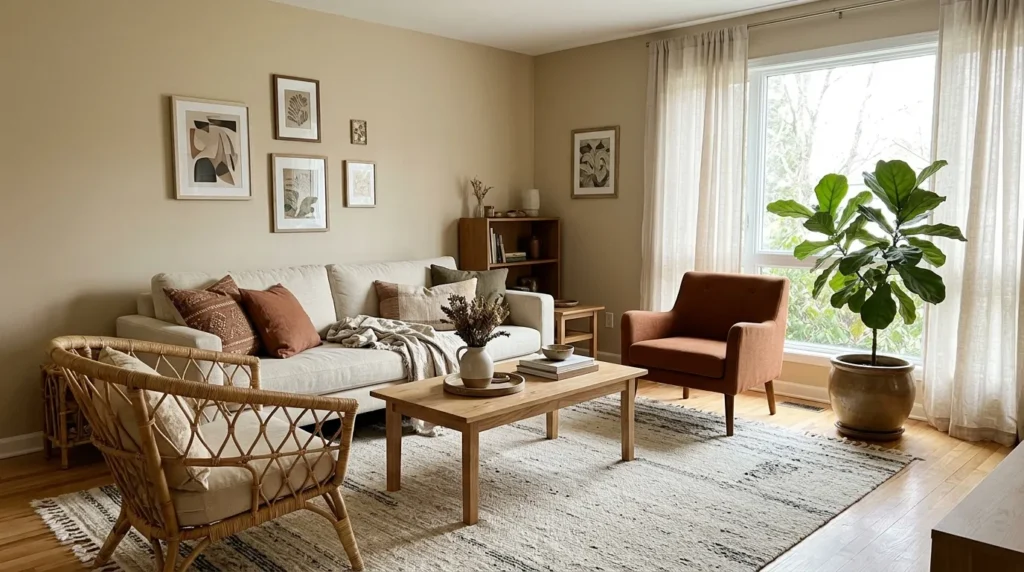
A fresh living room layout can change the entire feel of your home without costing a penny. Start by moving furniture away from the walls and arranging seating around a natural focal point, such as a window, fireplace, or coffee table.
Keep walking paths clear and make sure people can comfortably reach the seating. If your room feels cramped, remove one unnecessary side table or shift an oversized chair to another corner. I’ve noticed that even small layout changes can make familiar rooms feel more open, functional, and surprisingly new.
Restyle Existing Shelves

- Remove everything first: Clear each shelf so you can see the available space and start with a fresh perspective.
- Group books thoughtfully: Arrange some vertically and stack others horizontally to create varied heights.
- Reuse decorative objects: Bring together vases, framed photos, bowls, or souvenirs already scattered around your home.
- Add something natural: Use a houseplant clipping, an existing potted plant, or a few fallen branches in a clean jar.
- Leave breathing room: Keep some sections empty so the display feels intentional rather than crowded.
Shelf styling becomes much easier when you work with items you already own instead of buying matching accessories. Repeat a few colors across the shelves to create a connected look, and place heavier objects on lower levels for stability. Step back occasionally to check the balance. A little rearranging can turn everyday belongings into a display that feels personal and thoughtfully designed.
Swap Room Accessories
Quick Tip:
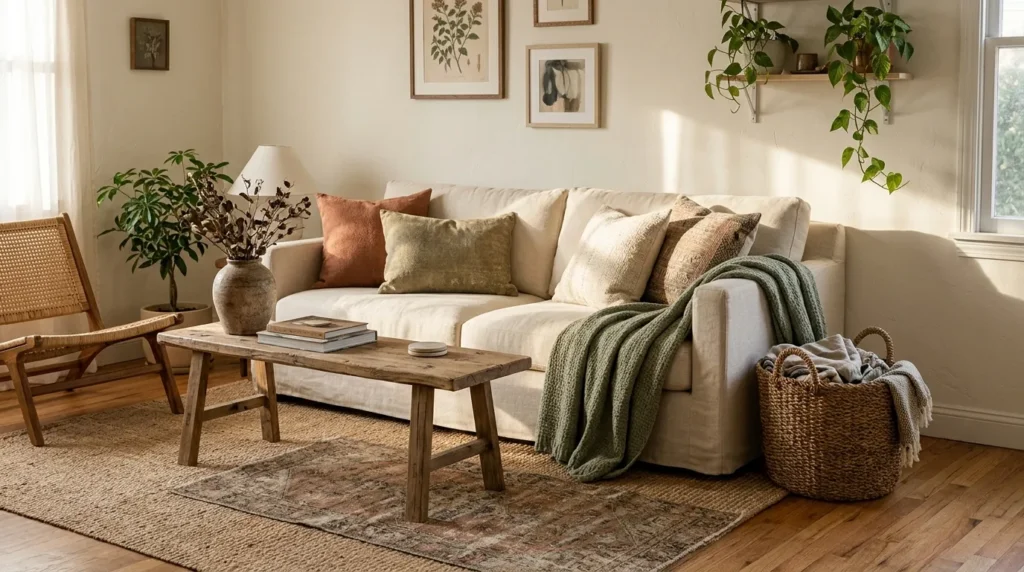
Shop your own home before changing anything. Collect cushions, throws, baskets, lamps, and decorative objects from different rooms, then test new combinations where you need a refresh. Keep fragile pieces away from busy walkways and make sure relocated lamps can reach safe, suitable outlets.
Moving accessories between rooms creates new color combinations without adding clutter or expense. A bedroom throw might soften a living room chair, while a hallway vase could become the centerpiece of your dining table. Choose items that suit each room’s practical needs, and avoid moving everything at once. Start with two or three pieces, then adjust the arrangement until the space feels balanced and comfortable.
Create a Pillow Refresh
BEFORE
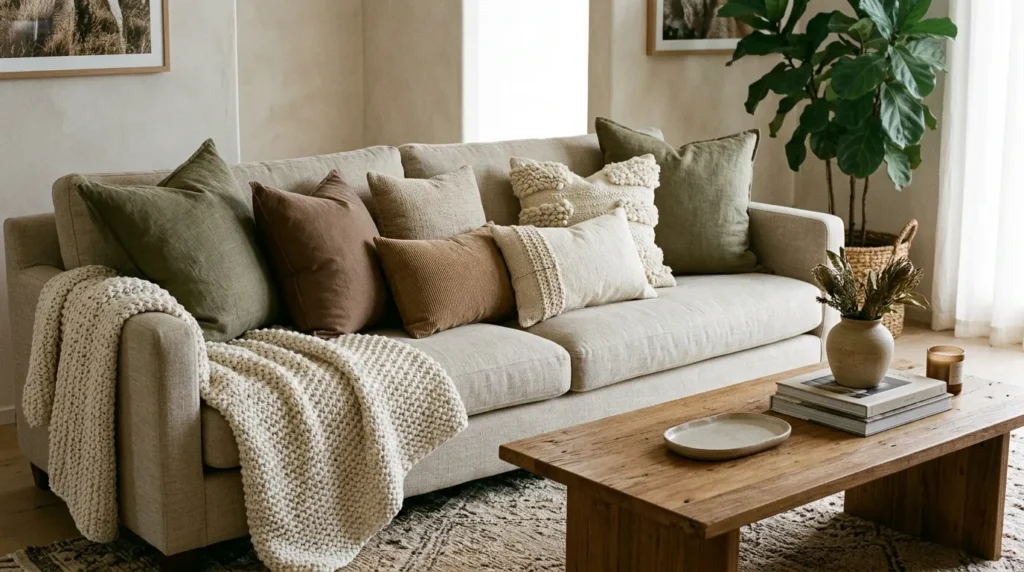
A sofa with flat cushions in identical positions can make the entire living room feel tired. Even attractive pillows may look dull when they are arranged uniformly or hidden beneath a blanket.
AFTER
Fluff the cushions, switch their positions, and bring together different shapes and textures. Place larger pillows at the back, smaller ones toward the front, and drape an existing throw over one arm.
You don’t need matching cushion covers to achieve a coordinated look. Repeat one or two colors already present in your room, such as beige, cream, or muted green. Turn patterned cushions to reveal quieter sides if available, and rotate cushions regularly to help them wear evenly. These small adjustments can make your sofa feel more inviting without purchasing a single new accessory.
Rearrange Wall Art
- Gather existing artwork: Collect framed prints, photographs, and small paintings from different rooms.
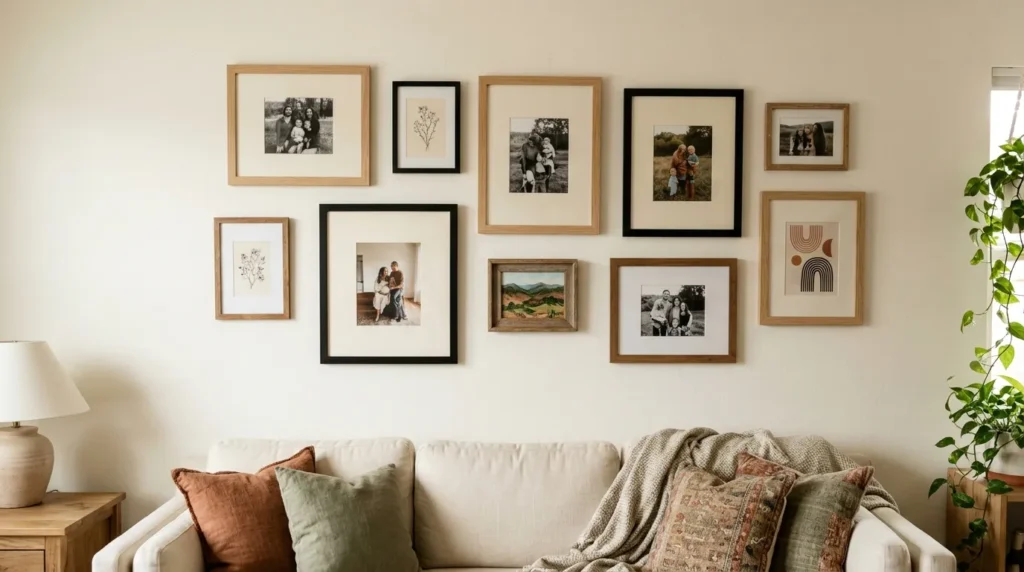
- Plan the arrangement: Lay the frames on the floor and test different groupings before moving anything.
- Mix frame sizes: Place larger pieces near the center or anchor the arrangement with one prominent print.
- Keep spacing consistent: Aim for roughly two to three inches between frames for a connected appearance.
- Hang securely: Use suitable hooks or existing nails, checking the wall material and frame weight first.
Rearranging artwork gives familiar walls a different rhythm and helps forgotten pieces feel special again. Try moving a landscape print from the bedroom into the hallway or grouping several small photographs above a console. If you rent, use existing hanging points or appropriate removable picture strips within their weight limits. The goal is a balanced display that reflects your personality, not a perfectly matched collection.
Restyle the Coffee Table

| Styling Approach | Old Habit | No-Buy Refresh |
| Books | Leave them scattered | Stack two or three neatly |
| Decorative objects | Display every small item | Choose a few meaningful pieces |
| Natural details | Leave the table bare | Add a clipping in a reused glass |
| Table space | Cover most of the surface | Leave room for drinks and daily use |
A coffee table looks more intentional when a few everyday objects are arranged with care. Use books you already own to create height, place a small bowl on top, and add greenery in a clean glass or jar. Keep the arrangement low enough for easy conversation across the sofa. Leave plenty of usable surface area, especially if your household regularly eats, works, or plays games in the living room.
Give Plants New Homes

DO
- Move sun-loving plants closer to bright windows where their light needs can be met.
- Place trailing plants on existing shelves to soften hard edges and add visual height.
- Group plants of different sizes together for a fuller, more natural display.
- Reuse sturdy stools, baskets with waterproof liners, or wooden crates as plant stands.
DON’T
- Put every plant in a dark corner just because it looks attractive there.
- Leave drainage water sitting inside decorative containers.
- The crowd leaves so tightly that airflow becomes restricted.
- Place heavy pots on unstable shelves or narrow window ledges.
Rearranging greenery can make a familiar room feel lively and connected to nature without buying new pots or furniture. Check each plant’s light and watering requirements before changing its location, since not every variety enjoys direct sunshine. Keep the arrangement varied, with some plants at floor level and others raised, to create depth without overwhelming the room.
Fold Throws Differently

Texture: Chunky knits, soft cotton, and lightweight woven blankets add different tactile details.
Placement: Fold a throw across the bed’s lower edge or drape it over one sofa arm.
Color: Bring forward a shade already present in your cushions, artwork, or rug.
Function: Keep frequently used blankets within easy reach instead of storing them out of sight.
A blanket can look like a completely different accessory simply by changing how it is displayed. Fold it into a clean rectangle for a tidy bedroom, or let it fall loosely over a chair for a relaxed reading nook. Swap throws between rooms when their colors and textures suit the surroundings. This simple styling trick adds warmth and visual interest while keeping your home comfortable for everyday living.
Refresh the Entryway

A cluttered entrance can make the whole home feel less organized, but a quick reset often makes a noticeable difference.
Start by removing anything that doesn’t belong near the door, then use items you already own to create a practical landing spot.
Move a small bowl onto the console for keys, place frequently worn shoes in an existing basket, and lean a framed print against the wall if hanging it isn’t convenient. A plant or folded runner can add softness, provided the walkway stays clear. Keep everyday essentials easy to reach, and avoid filling every empty surface with decorations. A tidy entryway feels welcoming because it works well as soon as you walk through the door.
Style a Dining Table

- Start with a clean surface: Remove mail, unused dishes, and everyday clutter to reveal the table’s natural finish.
- Reuse a fabric runner: Fold an existing scarf or lightweight blanket neatly along the center, ensuring it is washable and safe around food.
- Create a simple centerpiece: Gather a few branches, seasonal fruit, or flowers from your garden in a container you already own.
- Add varied heights: Pair a shallow bowl with a short vase or a small stack of decorative books, keeping the arrangement low enough for conversation.
- Leave room for meals: Keep the centerpiece compact so everyone can comfortably use the table.
A dining table can feel special without elaborate decorations or a shopping trip. Choose just two or three elements that complement your room’s existing colors, then leave the surrounding surface clear. For daily use, prioritize washable materials and sturdy containers. When dinner is served, everything should be easy to move aside, making the table both attractive and practical.
Make a Cozy Reading Nook

Quick Tip:
Choose a comfortable chair you already own and move it near a window with suitable natural light. Add a favorite blanket, a few books, and a side table borrowed from another room to create a useful reading spot. Make sure the chair doesn’t block a doorway or heating vent.
The secret to a welcoming reading nook is comfort rather than decoration. A folded cushion can support your back, while a basket keeps books and magazines together without adding visual clutter. If natural light fades in the evening, relocate a suitable lamp with a safe cable arrangement. Even an unused corner can become a peaceful retreat when every item serves a purpose.
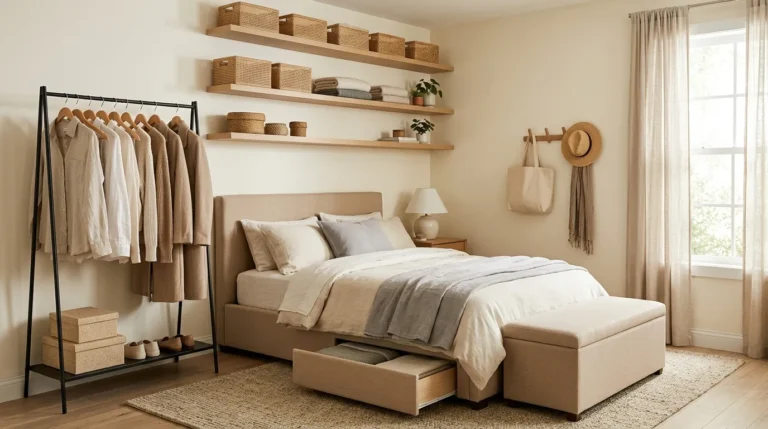
Refresh a Bedroom Layout
BEFORE
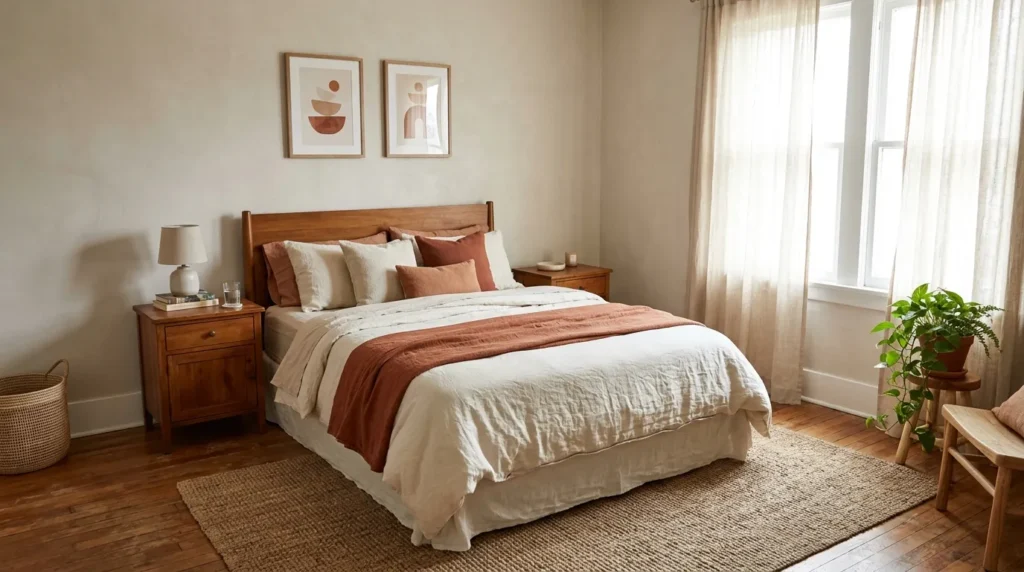
A bedroom can feel cramped when furniture interrupts walking paths or every piece is pushed into a familiar position without considering the room’s layout. Unused corners and crowded bedside surfaces can make the space feel less restful.
AFTER
Move the bed or bedside tables where practical, keeping doors, wardrobes, and windows accessible. Clear unnecessary items from the nightstands, then reposition existing cushions, blankets, and lamps for a calmer arrangement.
Before shifting heavy furniture, measure the available space and check that drawers and doors can open fully. Keep walkways clear and avoid blocking heaters or electrical outlets. Sometimes moving a bedside table to the opposite side or rotating a rug is enough to improve the room’s balance. A bedroom should support restful sleep and easy movement, so prioritize comfort over a perfectly styled appearance.
Re-purpose Glass Jars

- Collect suitable jars: Save clean glass jars from sauces, preserves, or candles, removing labels and sticky residue.
- Create mini vases: Fill a jar with fresh garden stems, small branches, or a few seasonal flowers.
- Organize small essentials: Use jars to hold cotton pads, craft supplies, pens, or other items that suit the room.
- Group them together: Arrange two or three jars on a tray or shelf for a more intentional look.
- Add simple details: Tie natural twine around the neck or leave the glass plain for a clean, understated finish.
Repurposed jars bring a little character to shelves, bathroom counters, desks, and kitchen corners. Choose containers that are stable and easy to clean, especially when holding water or frequently handled items. Avoid using jars with sharp edges or damaged glass. By giving everyday packaging a useful second life, you can create practical accents that feel personal instead of disposable.
Our Facebook Page : Blossom Dream Decor
Compare Rug Arrangements

| Arrangement | What It Does | Best For |
| Centered beneath seating | Connects the sofa and chairs into one zone | Open living rooms |
| Partly beneath furniture | Defines a smaller area without covering the whole floor | Compact rooms |
| Layered with a smaller rug | Adds pattern and texture using rugs already owned | Neutral spaces |
A rug doesn’t always need to stay in the same spot. Rotate it to spread out normal wear, move a smaller rug beneath a reading chair, or reposition a runner to define an entryway. Check that doors can open freely and that the edges lie flat to reduce tripping risks. If a rug slides on smooth flooring, use a suitable existing nonslip pad or another safe solution rather than leaving it unsecured.
Organise With Baskets
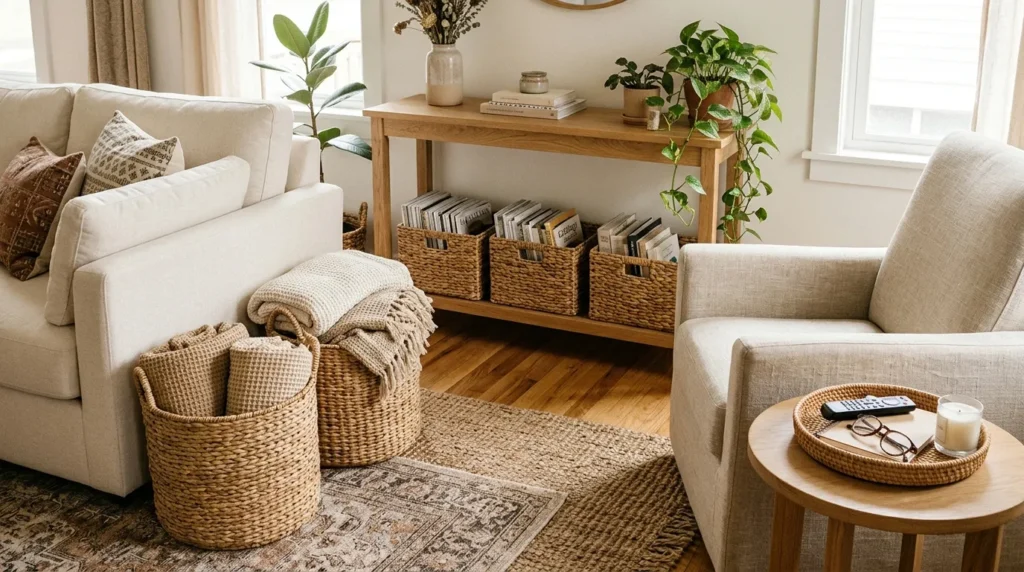
DO
- Gather baskets from different rooms and assign each one a clear purpose.
- Fold blankets neatly before storing them beside the sofa.
- Use smaller baskets to group remotes, chargers, or craft supplies.
- Place heavier items in stable baskets on lower shelves or directly on the floor.
DON’T
- Overfill baskets until their handles or woven sides become strained.
- Store damp towels or wet textiles in closed baskets.
- Block doorways or walking paths with oversized storage.
- Use decorative baskets for sharp or heavy objects they cannot safely contain.
Baskets can make everyday belongings look tidier while adding natural texture to your decor. Move them where clutter tends to collect, such as beside the sofa, under a console, or near the front door. Keeping similar items together also makes cleanup easier because everything has a designated place. Work with baskets you already own, and leave a little empty space so they remain convenient to use.
Display Everyday Books

Visual Impact: Books add height, color, and personality to shelves and tabletops.
Best Placement: Try a coffee table, bedside table, console, or an underused shelf.
Styling Approach: Mix upright books with short horizontal stacks to create a balanced arrangement.
Practical Detail: Keep frequently used books within reach and avoid unstable piles near children or pets.
Books you already own can double as decor while keeping favorite stories and useful references accessible. Arrange covers by color if you prefer a coordinated look, or mix different shades for a more relaxed, collected feel. A small stack beside a reading chair can also make the corner feel purposeful. Leave enough space around the books for other everyday items, and avoid overcrowding shelves simply to fill every gap.
Rearrange Bathroom Accessories
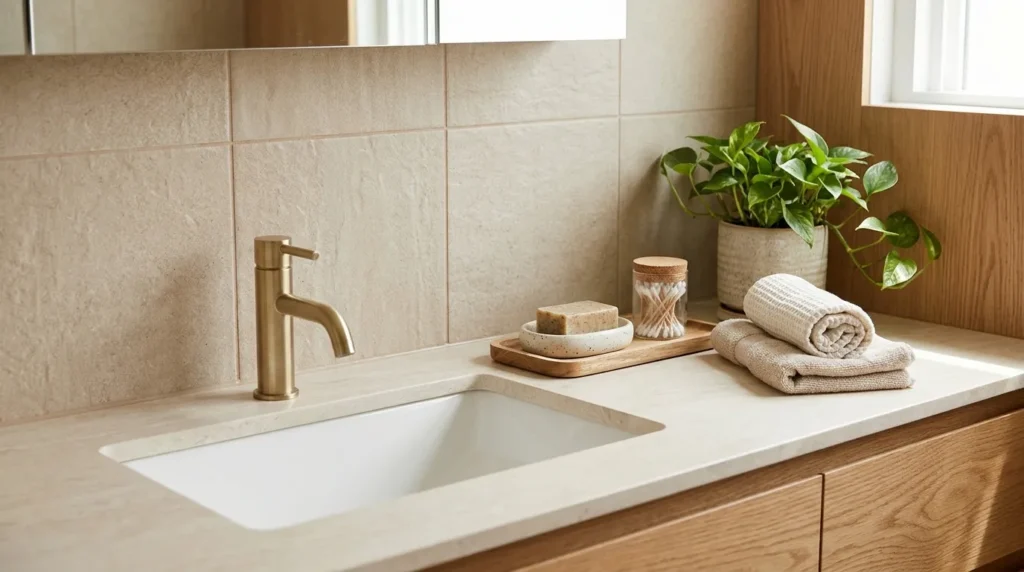
A bathroom can feel fresher with a few thoughtful changes rather than new accessories. Start by clearing the counter, sorting daily essentials, and choosing only the items that genuinely belong within reach.
Move a small tray from another room to group toiletries, fold towels neatly, and repurpose a clean jar for suitable bathroom supplies. Keep items used around water in containers that are easy to clean, and avoid placing electrical devices near the sink. A plant can add life if the room has suitable light and ventilation. The result is a calmer vanity that looks organized and remains easy to maintain.
Our Instagram : Blossom Dream Decor
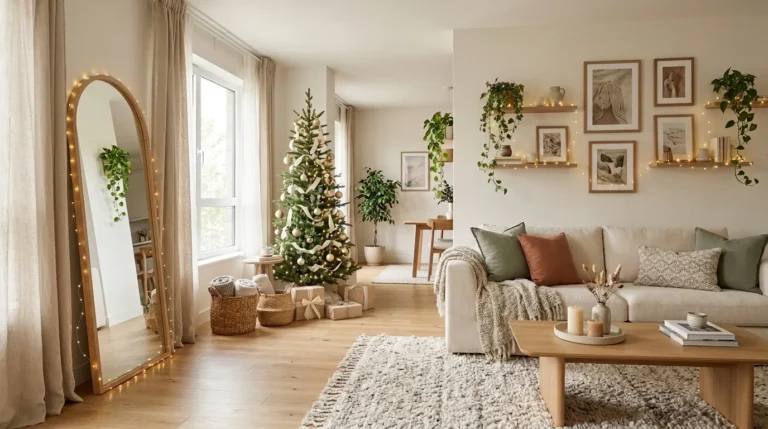
Create a Seasonal Display

Step 1: Choose a small surface. Select a console, shelf, dining table corner, or windowsill that won’t interfere with everyday activities.
Step 2: Gather natural materials. Collect suitable fallen leaves, pinecones, smooth stones, or garden branches, checking them for dirt and insects.
Step 3: Reuse existing containers. Place your finds in a bowl, vase, or tray already available at home.
Step 4: Repeat a simple palette. Combine two or three colors that suit your room, such as brown, cream, and muted green.
Step 5: Refresh as the season changes. Replace natural elements when they become brittle, moldy, or messy, and keep delicate materials away from flames.
Seasonal decorating doesn’t need a dedicated collection of decorations for every time of year. Natural finds and familiar household objects can create a display that feels connected to the weather outside. Keep the arrangement compact and easy to clear away, especially on dining surfaces. By changing just a few details throughout the year, you can enjoy a fresh look without accumulating extra storage boxes or spending money on seasonal accessories.
Reuse Fabric as Decor

BEFORE
Unused scarves, old tablecloths, and spare fabric often stay tucked away in drawers because they no longer serve their original purpose. Meanwhile, shelves and tables may feel bare or lack the color and texture the room needs.
AFTER
Bring suitable fabrics into view by draping a scarf over a console, folding a cloth across a bench, or using a clean piece as a small table runner. Choose patterns and colors that complement your existing furniture.
Fabric adds softness without requiring new decorative accessories. Check that the material is clean and colorfast before placing it on furniture, particularly light-colored upholstery. Keep loose fabric away from candles, cooking areas, and heaters, and avoid covering ventilation openings. A simple textile can introduce warmth, pattern, or a favorite color while giving something you already own a useful new purpose.
Make a Simple Desk Reset
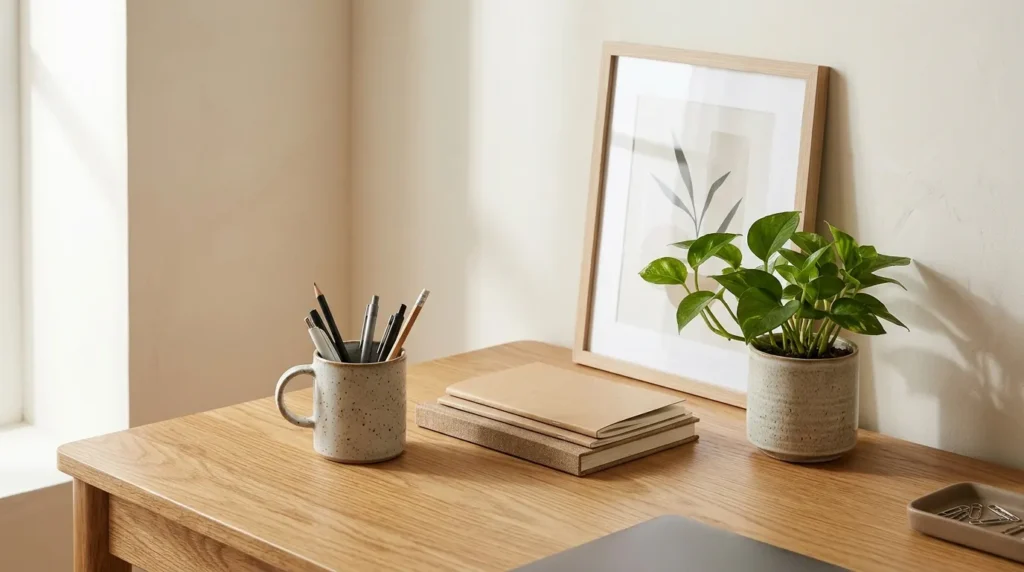
- Clear the desktop: Remove everything temporarily so you can see which items are genuinely useful.
- Group supplies: Sort pens, notebooks, charging cables, and stationery into containers you already have.
- Reuse a mug or jar: Keep frequently used pens together in a clean, stable container.
- Relocate personal touches: Bring over a small plant, favorite photograph, or existing desk lamp if it suits the space.
- Protect the work area: Leave enough clear space for your laptop, writing materials, and comfortable movement.
A more organized desk can make working or studying feel less distracting without buying matching organizers. Keep essential tools close and move rarely used supplies into an existing drawer or box. Position screens and lamps comfortably, and keep drinks away from electronics. The best workspace isn’t the one with the most accessories; it’s the one that supports your routine while still feeling pleasant to sit at each day.
Refresh Doorways With Greenery

| Approach | How to Style It | What to Check |
| Floor plants | Place an existing large plant beside the doorway | Keep the walking path clear |
| Small potted greenery | Set a compact plant on a stable stool nearby | Check light and watering needs |
| Trailing plants | Display one on a nearby shelf | Keep leaves away from door hinges |
| Outdoor greenery | Reposition suitable pots near an exterior entrance | Avoid blocking steps or access |
Greenery around a doorway can soften hard architectural lines and make the transition between rooms feel more welcoming. Start with plants you already own, choosing locations that suit their light requirements and won’t interfere with opening doors. If space is limited, one well-positioned plant can be more effective than several crowded pots. Check the area regularly for fallen leaves, excess water, and obstacles so the entrance stays attractive and safe.
Read our previous article: 21 Boho Plant Decor Ideas for an Earthy, Dreamy Home
Restyle Your Bedside Table
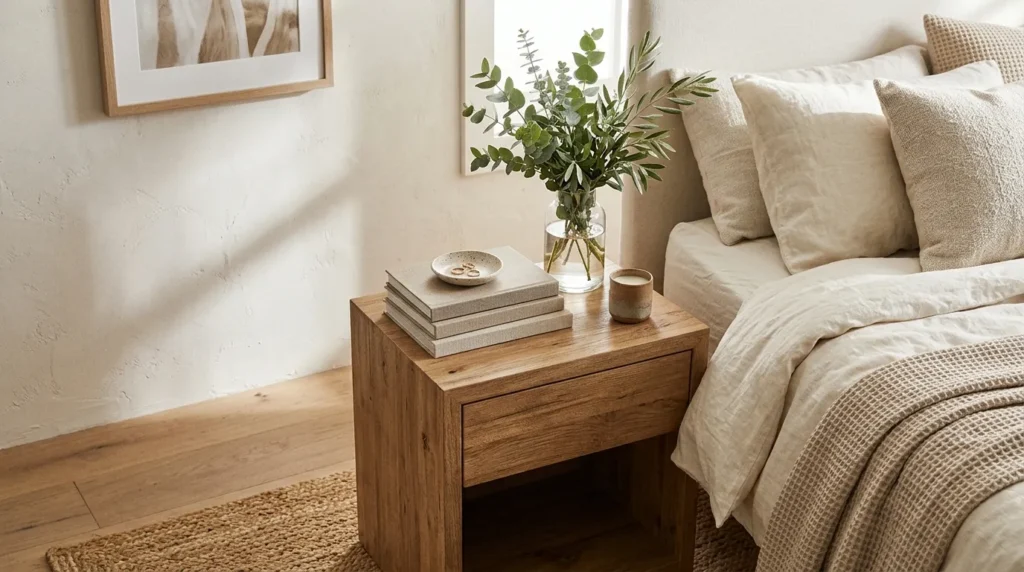
Quick Tip:
Clear your bedside table completely, then return only the items you use regularly. Stack a couple of favorite books, place jewelry in a small dish you already own, and move an existing plant or framed photo nearby if there’s room. Keep your lamp stable and leave enough space for essentials such as glasses or a glass of water.
A thoughtfully arranged bedside table can make your bedroom feel calmer without adding a single new purchase. Choose a few useful objects with complementary colors, and store less frequently used items in an existing drawer. If your table is small, prioritize function over decoration. A clear surface makes bedtime routines easier and gives the whole sleeping area a more restful appearance.
CONCLUSION
A beautiful home isn’t about buying more things. It’s about making thoughtful choices with what you already have. These no buy home decor ideas show how rearranging furniture, refreshing textiles, styling everyday objects, and moving plants can give your rooms a whole new feeling without stretching your budget. Start with one small change today and see how it inspires your next refresh. I’ve seen how simple adjustments can make familiar spaces feel more welcoming and personal. Save this article on Pinterest for your next decorating day, try your favorite ideas, and share it with someone who would love a fresh look for less. Your home can feel wonderful right where you are.