23 Apartment Storage Ideas for a Clutter-Free Haven
Small apartment, big storage struggles? You don’t need more square footage to create a home that feels calm, organised, and beautiful.
These 23 apartment storage ideas will help you make the most of every corner, from hidden spaces beneath your bed to overlooked walls, narrow entryways, and compact kitchen cabinets. Whether you’re renting a studio or living in a cozy apartment, you’ll find practical ways to reduce clutter without sacrificing your personal style.
The best part? Many of these solutions use affordable organisers, multi-functional furniture, and simple adjustments that don’t require a major renovation. I’ve noticed that giving everyday belongings a dedicated place can make even a small room feel more open and welcoming. Get ready to discover clever storage inspiration that makes daily routines easier and helps your home feel more like you.
Under-Bed Storage Bins
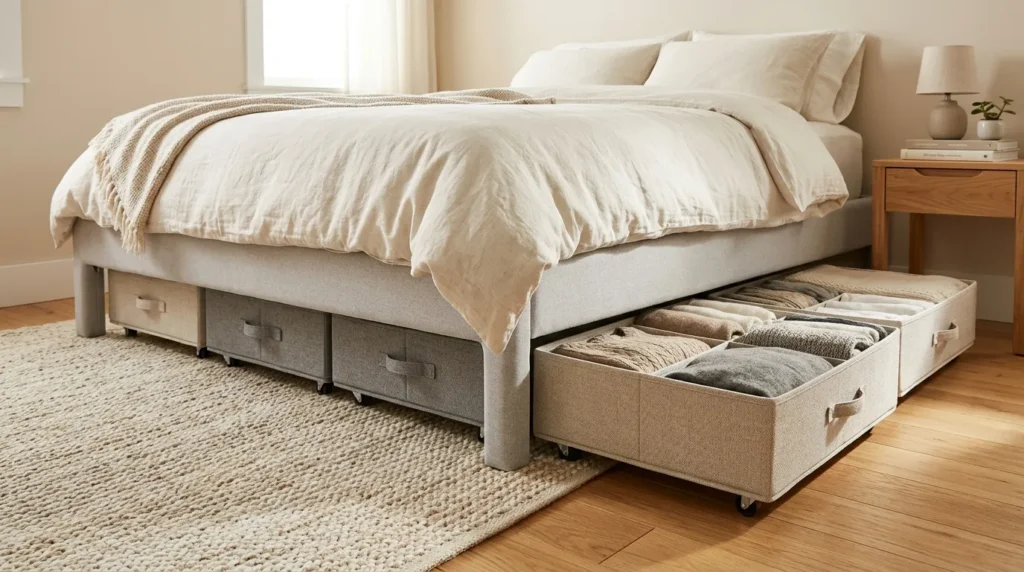
Clutter doesn’t always need another cabinet; sometimes, the most useful storage space is hiding right beneath your bed. Slide shallow containers under the frame to store seasonal clothing, spare sheets, extra blankets, or shoes you don’t wear every day.
Choose bins with wheels for easy access and lids to protect belongings from dust. Measure the clearance beneath your bed before buying containers, including space for handles. In my experience, dividing items into separate bins makes it much easier to find what you need without pulling everything out.
Floating Wall Shelves

- Use vertical space. Install shelves above a desk, sofa, or dresser to free up valuable floor area.
- Group similar items. Keep books together, place small accessories in baskets, and reserve one section for decor.
- Vary the heights. Combine stacked books with taller vases or small plants for a balanced display.
- Choose a consistent finish. Natural oak, white, or black shelves can connect with existing furniture.
- Secure them properly. Check wall construction, use suitable anchors, and respect each shelf’s weight limit.
Floating shelves help small apartments feel more organized without introducing bulky furniture. They work especially well for books, lightweight baskets, and everyday essentials that you want within reach. Keep frequently used items on lower shelves and decorative pieces higher up. Renters should check their lease before drilling and consider freestanding alternatives if permanent installation isn’t allowed.
Entryway Shoe Organisers

Quick Tip:
Keep only the shoes you regularly wear near the door, and move seasonal or occasional pairs into a separate storage area. A slim shoe cabinet with adjustable shelves can make better use of a narrow entryway than an open shoe rack.
A tidy entrance creates a calmer first impression and prevents shoes from spreading into the living area. Choose a cabinet that fits your available depth, and leave enough room for the door to open fully. A small tray for wet footwear and hooks for bags or keys can turn one compact corner into a practical drop zone.
Over-Door Organisers

BEFORE
A bedroom door often sits unused while bags, scarves, and accessories pile up on chairs or crowd dresser drawers. These small items can make a compact room feel messy even when everything else is organized.
AFTER
An over-door organizer gives those belongings a dedicated home without taking up floor space. Choose clear pockets for small accessories or sturdy hooks for bags, belts, and lightweight jackets.
The key is matching the organizer to what you actually store. Check the door thickness and clearance before purchasing, especially if the door opens into a narrow hallway. For a rental-friendly setup, removable hooks may work for lighter items when used within their stated weight limits. Keep heavier belongings in properly supported storage instead.
Storage Ottomans
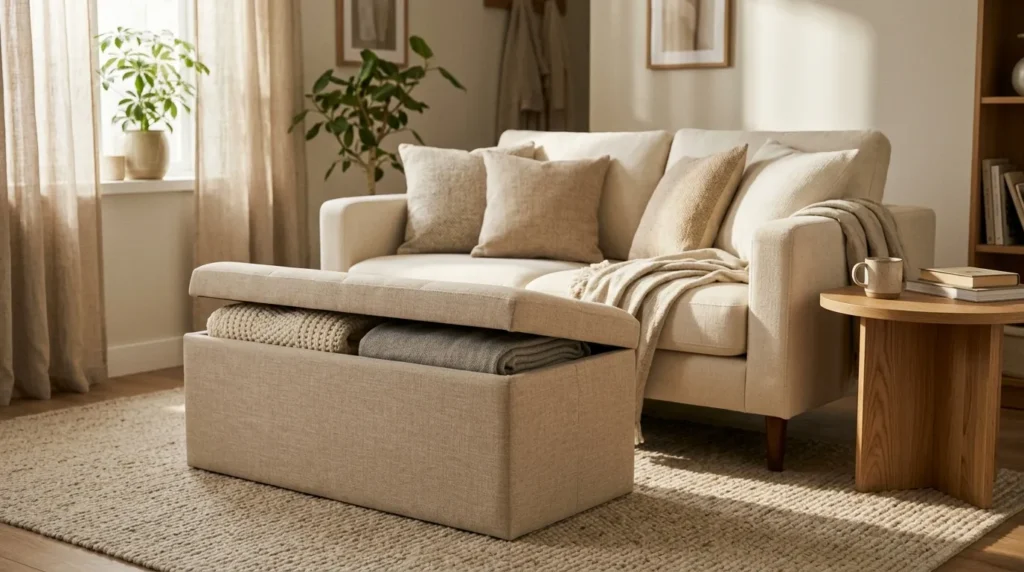
- Measure your seating area. Choose an ottoman that fits comfortably without blocking the walkway or coffee table.
- Pick a useful interior size. Store throws, board games, spare cushions, or other lightweight living room essentials.
- Choose durable upholstery. Look for fabric that suits your lifestyle and is easy to clean.
- Use simple organizers inside. Small fabric dividers help separate items and prevent the storage compartment from becoming cluttered.
A storage ottoman earns its place by serving as a footrest, extra seat, and hidden container at the same time. In a small apartment, that flexibility can reduce the need for additional furniture. Select a stable model with a lid that opens safely, and avoid storing heavy objects that make lifting awkward. Keep the items inside relevant to the room so everything is easy to retrieve.
Vertical Pantry Racks

| Feature | Option A: Fixed Rack | Option B: Rolling Rack |
| Best placement | Beside a wall or cabinet | Narrow gaps between appliances |
| Accessibility | Items stay in a set position | Rack can slide out for access |
| Stability | Usually steadier when properly installed | Needs a level surface and secure movement |
| Ideal storage | Pantry staples and jars | Lightweight cans, bottles, and packets |
A slim rack can turn an overlooked kitchen gap into useful storage for everyday ingredients. Measure the width, height, and depth carefully, and check that nearby appliance doors can still open fully. Group similar products in small bins and place heavier items on lower shelves. Keep the rack stable and avoid overloading it, especially if it rolls on wheels.
Closet Shelf Dividers

DO
- Separate folded clothing into clear categories such as sweaters, jeans, and workout wear.
- Choose adjustable dividers that fit your shelf depth and thickness.
- Place frequently worn items at eye level for easy access.
- Use matching baskets for smaller accessories and seasonal pieces.
DON’T
- Stack clothing so high that piles become unstable.
- Force dividers onto shelves that are too thick or too narrow.
- Fill every inch of the closet without leaving room to retrieve items.
- Store damp clothing or towels in enclosed containers.
Closet dividers help prevent folded clothes from sliding into one another every time you pull out a shirt. They are especially useful for wide shelves where separate piles tend to collapse. Start by removing everything, grouping similar items, and returning only what belongs in that space. A few well-placed dividers can make a shared or compact wardrobe much easier to maintain.
Behind-the-Door Hooks

Cost: Low to moderate, depending on the hook style.
Installation: Many over-door hooks require no drilling.
Best for: Bags, coats, hats, scarves, and lightweight accessories.
Space saved: Frees up chair backs, closet rods, and small surfaces.
The back of a door can provide useful storage in rooms where wall space is limited. Choose hooks with smooth edges to protect clothing and check that the door closes without catching on the frame. Keep heavier bags on hooks designed to support their weight, and avoid hanging so many items that the door becomes difficult to use. A simple row of hooks can make everyday belongings easier to grab on your way out.
Rolling Storage Carts
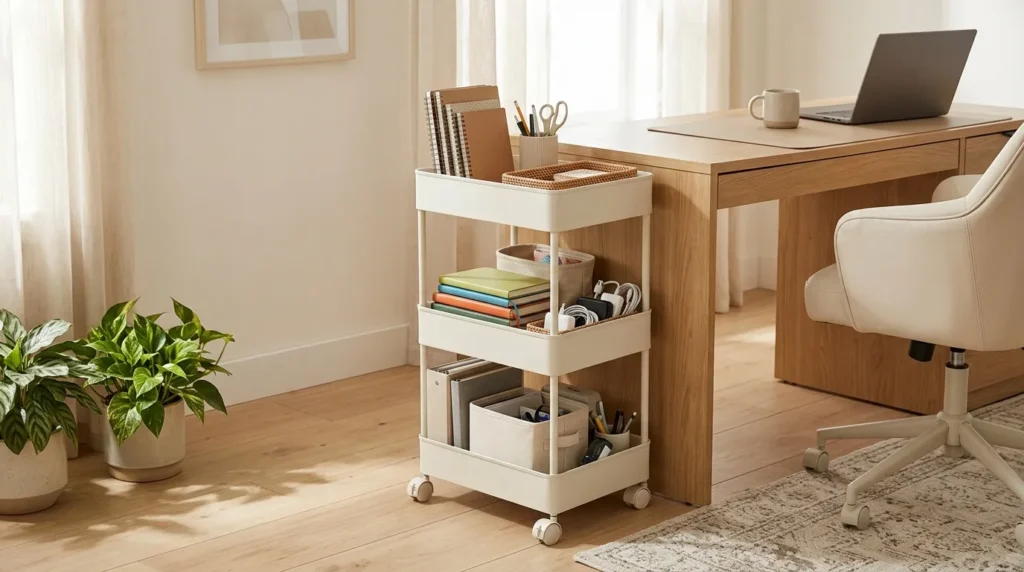
Small spaces work harder when storage can move wherever you need it. A rolling cart can hold office supplies beside a desk, toiletries in a bathroom, or cooking essentials in a kitchen.
Choose a cart with sturdy wheels and enough clearance to roll smoothly across your floor. Use separate bins on each tier to prevent small objects from shifting, and keep heavier items on the bottom shelf for stability. Before buying, measure the gap where you plan to park it so the cart can slide in and out without blocking a walkway.
Bedside Storage Caddies
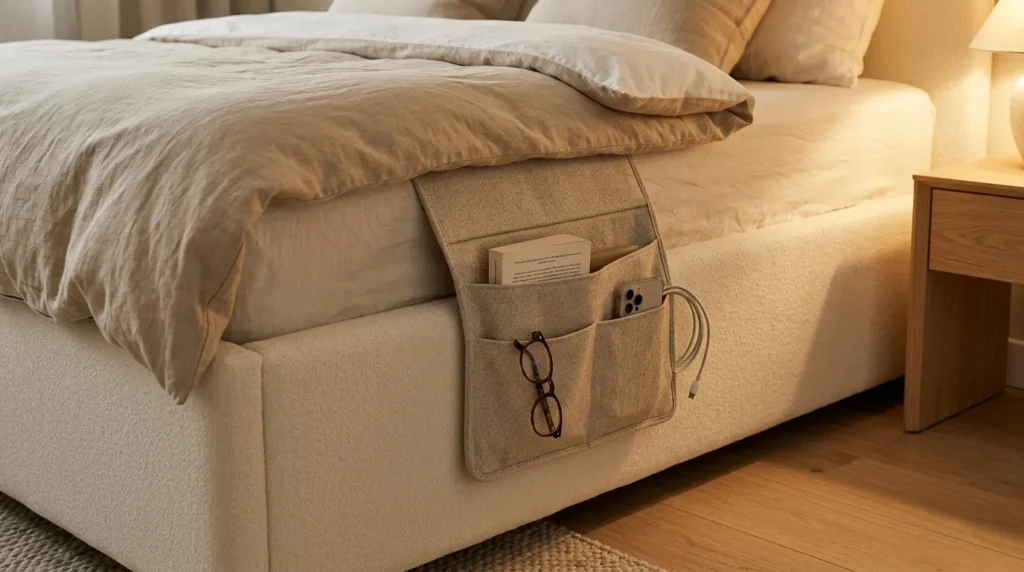
- Store bedtime essentials: Keep your phone, glasses, book, and remote within easy reach.
- Choose sturdy fabric: Look for a reinforced caddy that holds its shape when filled.
- Check mattress compatibility: Make sure the attachment fits your bed frame and doesn’t interfere with support.
- Keep cables tidy: Use a cable clip or short cord to prevent tangles near the bed.
- Limit the contents: Store only what you use regularly to avoid creating another clutter pocket.
A bedside caddy is useful when a narrow bedroom cannot accommodate a traditional nightstand. It keeps everyday items close without taking up precious floor space or making the bed feel crowded. Choose a design with separate pockets so smaller belongings don’t disappear beneath books or blankets. For a neat finish, coordinate the fabric with your bedding or curtains.
Clear Stack-able Containers

Quick Tip:
Use clear containers for items you need to identify quickly, such as cables, craft supplies, or seasonal accessories. Add simple labels to the front so you can find things without unstacking every box.
Stackable containers make use of vertical space inside closets, cabinets, and utility cupboards. Choose matching footprints so the boxes sit securely, and place heavier containers at the bottom. Transparent sides help you spot contents at a glance, while lids protect belongings from dust. Avoid stacking beyond the manufacturer’s guidance, and leave enough room to pull each container out safely when needed.
Wall-Mounted Desk Shelves
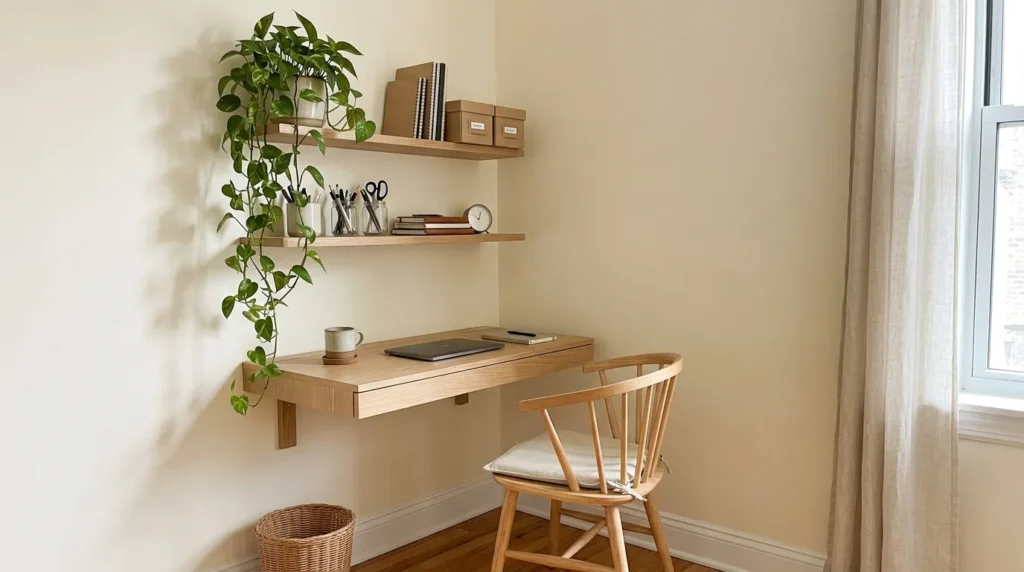
BEFORE
A small desk can quickly disappear beneath notebooks, chargers, papers, and decorative objects. When every item occupies the work surface, there is little room left for a laptop or comfortable daily tasks.
AFTER
Move less frequently used supplies onto wall-mounted shelves and keep only essential tools on the desk. Small boxes can hide loose items, while open space makes the work area feel lighter.
Before installing shelves, check the wall construction and use suitable fixings for the combined weight of the shelves and their contents. Renters should confirm whether drilling is permitted. Keep heavy objects low and secure, and position shelves so they don’t interfere with your head or monitor. A clear work surface makes even a tiny apartment office feel more functional.
Expandable Drawer Organisers
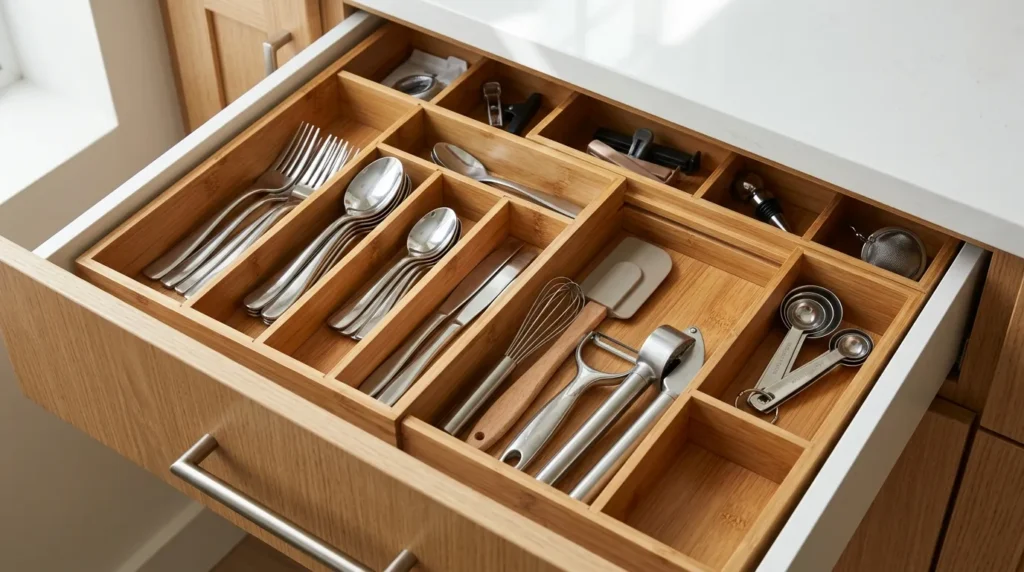
- Empty the drawer. Remove everything and group similar items together before choosing an organizer.
- Measure the interior. Check the drawer’s width, depth, and height to ensure the dividers fit properly.
- Adjust the compartments. Expand or reposition the dividers to suit cutlery, utensils, or small household supplies.
- Return everyday essentials. Keep frequently used items near the front and occasional tools farther back.
Expandable organizers help turn crowded drawers into practical storage that is easy to maintain. Bamboo and other durable materials add a natural finish, while adjustable sections accommodate changing needs. I’ve noticed that assigning each category its own space makes it easier to put things away after cooking or cleaning. Avoid packing compartments too tightly, since items should be easy to lift out without disturbing everything nearby.
Our Facebook Page : Blossom Dream Decor
Slim Bathroom Cabinets

| Feature | Option A: Freestanding Cabinet | Option B: Wall-Mounted Cabinet |
| Floor space | Occupies a small floor footprint | Keeps the floor clear |
| Installation | Usually requires minimal setup | Needs secure wall fixing |
| Storage access | Easy to reposition when empty | Stays in a fixed location |
| Best use | Renters needing flexibility | Bathrooms with suitable walls |
A narrow cabinet can provide valuable storage for toiletries, towels, and cleaning supplies without taking over the bathroom. Measure the available gap and leave enough clearance for drawers, doors, and nearby fixtures. Choose moisture-resistant materials and keep ventilation in mind. If you select a wall-mounted model, confirm the wall can support its loaded weight and use appropriate fixings.
Label-ed Storage Baskets

DO
- Label baskets by category so everyone knows where items belong.
- Choose sizes that fit your shelves or storage cubbies.
- Use fabric liners for delicate accessories and small loose objects.
- Keep daily essentials in easy-to-reach baskets.
DON’T
- Mix unrelated items into every basket.
- Choose containers that are too heavy to lift comfortably.
- Place damp belongings in tightly enclosed woven storage.
- Fill baskets so completely that retrieving items becomes difficult.
Labeled baskets make shared storage easier because belongings have a clear place to return to after use. They work well for toys, cables, blankets, hobby supplies, and miscellaneous household items that otherwise collect on surfaces. Use short labels with specific categories rather than vague names. Matching baskets create a consistent look, but clear labels matter more than buying a perfectly coordinated set.
Fold-able Storage Furniture
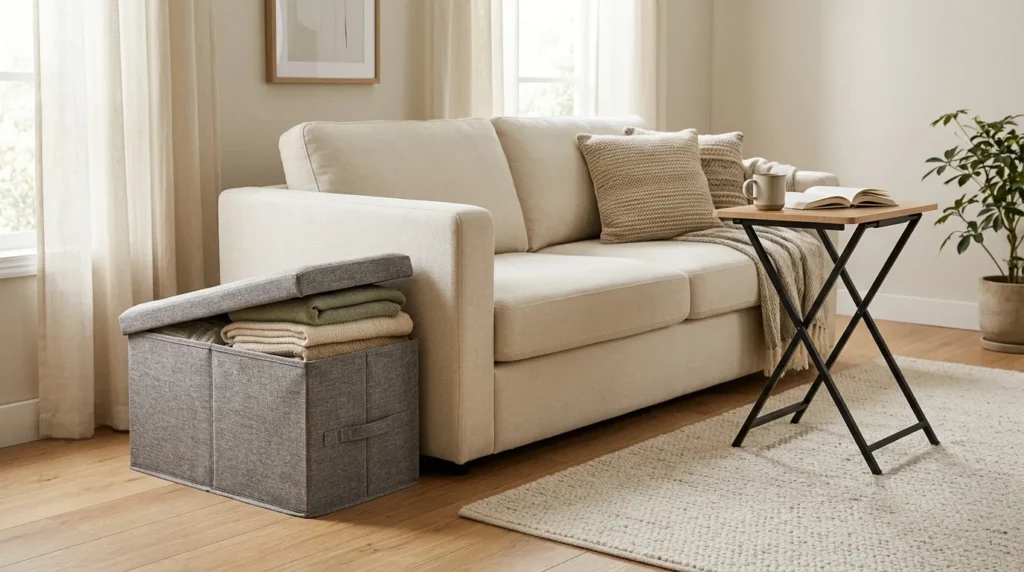
Fact: Space efficiency
Foldable furniture serves more than one purpose without occupying permanent floor space.
Best for: Small living rooms, guest rooms, studio apartments, and flexible work areas.
Storage options: Folding benches, collapsible stools, nesting tables, and storage cubes.
Key consideration: Check the folded dimensions and weight capacity before purchasing.
Multifunctional furniture can make a compact home easier to adapt throughout the day. A storage bench can provide seating while hiding spare cushions, and a folding table can create a temporary workspace when needed. Choose sturdy hinges and stable legs, and avoid placing heavy objects inside compartments that aren’t designed for storage. Keep folding mechanisms clear so furniture can open and close safely.
Kitchen Cabinet Risers
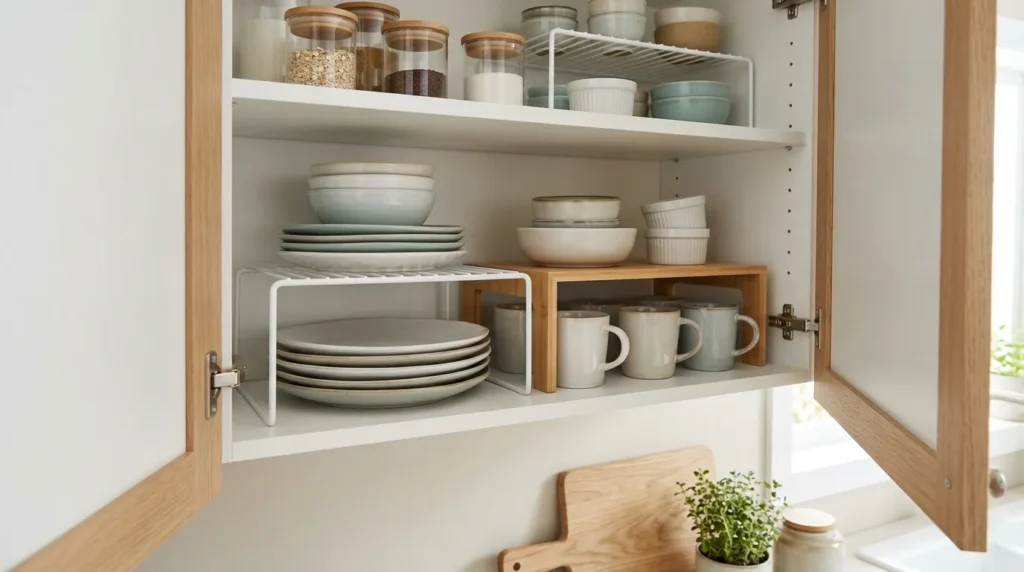
- Create extra levels: Use risers to separate plates, bowls, and cups within tall cabinets.
- Measure shelf clearance: Make sure taller items still fit beneath the cabinet above.
- Group similar dishes: Keep everyday plates together and occasional serving pieces in a separate area.
- Choose stable materials: Metal and sturdy wood can support heavier dishes when rated appropriately.
- Keep access practical: Leave enough room to lift items out without knocking over nearby pieces.
Cabinet risers can reveal storage space that often goes unused above shorter kitchen items. Instead of stacking every plate into one tall pile, you can create separate levels and reach individual pieces more easily. Select a riser that fits the cabinet depth, and check its weight limit before loading it. Reserve upper levels for lighter items if reaching them requires stretching.
Pegboard Wall Storage

BEFORE
Small accessories often spread across desks and countertops because they lack a dedicated place. Drawers can become crowded, while useful tools disappear beneath papers or other belongings.
AFTER
A pegboard creates an adaptable vertical storage area where hooks, shelves, and small containers keep frequently used items visible. Rearrange the layout whenever your needs change.
Choose a pegboard size that suits the wall and the objects you plan to store. Secure it with appropriate fixings, especially when hanging heavier tools or equipment. For rental homes where drilling isn’t permitted, consider a freestanding pegboard or a removable alternative rated for the intended load. Keep heavier objects low and leave enough space between hooks for easy access.
Our Instagram : Blossom Dream Decor
Sofa Arm Organisers

Quick Tip:
Choose an armrest organizer with several pockets in different sizes. Place your remote and phone in the smaller compartments, and reserve wider pockets for magazines or notebooks.
This simple accessory keeps everyday essentials close without requiring an extra side table. It is especially useful in narrow living rooms where furniture needs to stay compact. Look for a nonslip backing or weighted design that stays in place when you reach for something. Match the fabric to your sofa for a subtle appearance, or choose a contrasting neutral shade for a little visual interest.
Corner Shelving Units
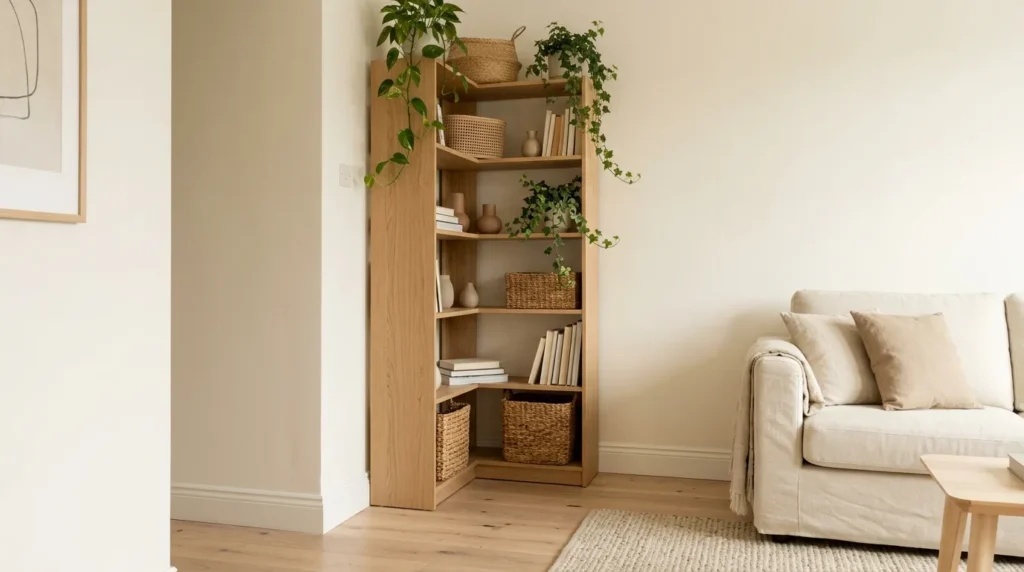
- Use overlooked corners: Position shelves where they won’t interfere with doors or walking paths.
- Mix storage and decor: Combine baskets for small belongings with a few decorative objects.
- Keep the bottom practical: Store heavier books and frequently used items on lower shelves.
- Choose the right shape: A triangular or curved footprint can fit tight corners more comfortably.
- Avoid overcrowding: Leave some open space so the shelves feel organized rather than packed.
Corner shelving can make an awkward empty area useful without adding a wide cabinet to the room. It works well for books, small baskets, plants, and decorative accessories that need a permanent home. Measure both walls and check the unit’s depth before buying. If the shelves are tall, secure them according to the manufacturer’s instructions to reduce the risk of tipping.
Hanging Closet Organisers

BEFORE
Closet rods can fill up quickly, leaving little room for folded clothes, bags, and accessories. Small belongings may end up in loose piles on shelves or at the bottom of the wardrobe.
AFTER
A hanging organizer adds several fabric compartments beneath the rail, creating separate spaces for sweaters, handbags, or lightweight accessories. It makes use of vertical space without needing another cabinet.
Before choosing one, check the length of your hanging clothes and the space available beneath the rail. A bulky organizer may crowd long dresses or coats, so reserve it for areas with enough clearance. Keep heavier items on shelves designed to support them, and avoid overloading fabric compartments. For flexible storage, choose a collapsible design that can be folded away when not in use.
Over-Toilet Shelving

Space saved: Uses vertical wall space above the toilet instead of occupying valuable floor area.
Best for: Spare towels, toilet paper, skincare products, and lightweight bathroom essentials.
Style options: White metal frames, natural bamboo shelves, or simple wood finishes.
Installation note: Choose a stable unit that fits around your toilet and allows comfortable access to the tank, flush handle, and plumbing.
Bathrooms often have unused vertical space, making over-toilet shelving a practical choice for compact homes. Use baskets to group smaller products and keep frequently used essentials on the lowest shelf. Measure the available height and width before buying, and check that the unit doesn’t obstruct the toilet or nearby fixtures. Keep heavy items low and secure the shelving according to the manufacturer’s guidance.
You may also like: 25 Small Apartment Decor Ideas That Feel Truly Chic
Multi-functional Room Dividers
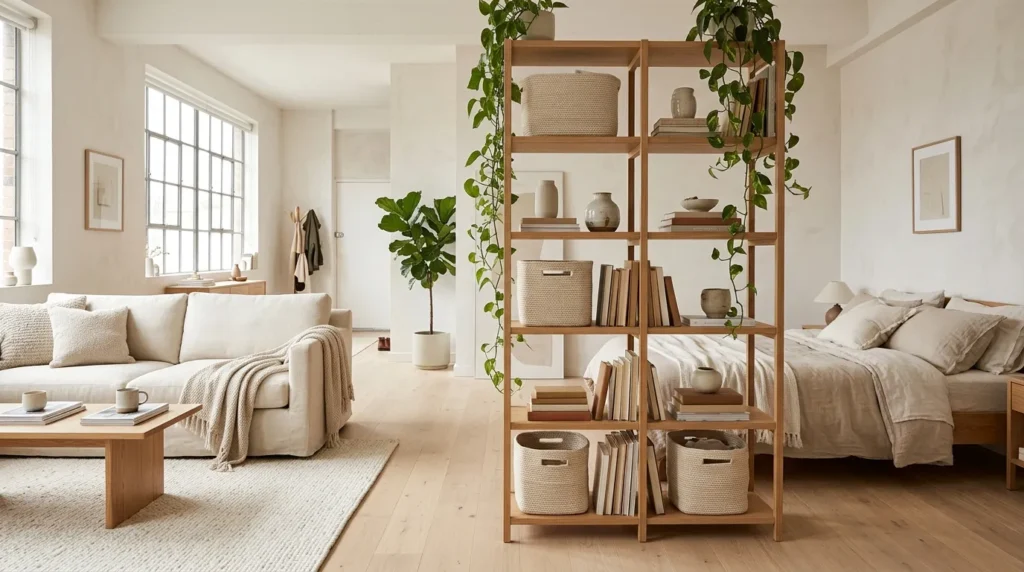
A single piece of furniture can help define separate areas while giving you extra places to store everyday belongings. In a studio or open-plan apartment, a shelving divider creates a visual boundary between your bed and living area without requiring a permanent wall.
Choose open shelves to preserve natural light, or use baskets to conceal personal items and reduce visual clutter. Keep heavier belongings on lower levels for stability, and secure tall units if the manufacturer recommends it. Among practical apartment storage ideas, multi-functional dividers are especially useful because they organise belongings while helping a small home feel more structured.
In my experience, the best room divider is one that serves a clear purpose without making the apartment feel smaller. Measure the walkway before positioning it, leave enough space to move comfortably, and avoid blocking windows or heating vents. A balanced combination of open shelving and closed baskets can separate zones while keeping the overall room bright and welcoming.
CONCLUSION
A clutter-free apartment doesn’t happen overnight, and you don’t need to change everything at once. These apartment storage ideas offer simple ways to reclaim unused corners, organise everyday essentials, and create a home that feels more spacious and inviting. Start with one area that frustrates you most, whether it’s a crowded closet, a messy entryway, or a kitchen drawer that never stays organised. Small improvements can make a meaningful difference in how your home looks and feels. Save this article on Pinterest for inspiration, try your favourite ideas, and share it with someone who could use a little extra space and style!