
14 Small Kitchen Organisation Ideas for a Smarter Space
A tiny kitchen can feel crowded surprisingly fast, especially when every cabinet, drawer, and counter-top has to work harder. These small kitchen organisation ideas will help you create smarter storage, reduce everyday clutter, and make cooking feel easier without needing a complete kitchen makeover.
From pull-out pantry bins and cabinet door storage to shelf risers, clear containers, and rolling carts, each idea focuses on making better use of space you already have. In my experience, the biggest improvement often comes from giving frequently used items a clear, convenient home. Whether you have limited cabinets, awkward corners, or crowded counters, these 14 practical solutions can help your kitchen feel calmer, cleaner, and easier to use.
Vertical Cabinet Dividers
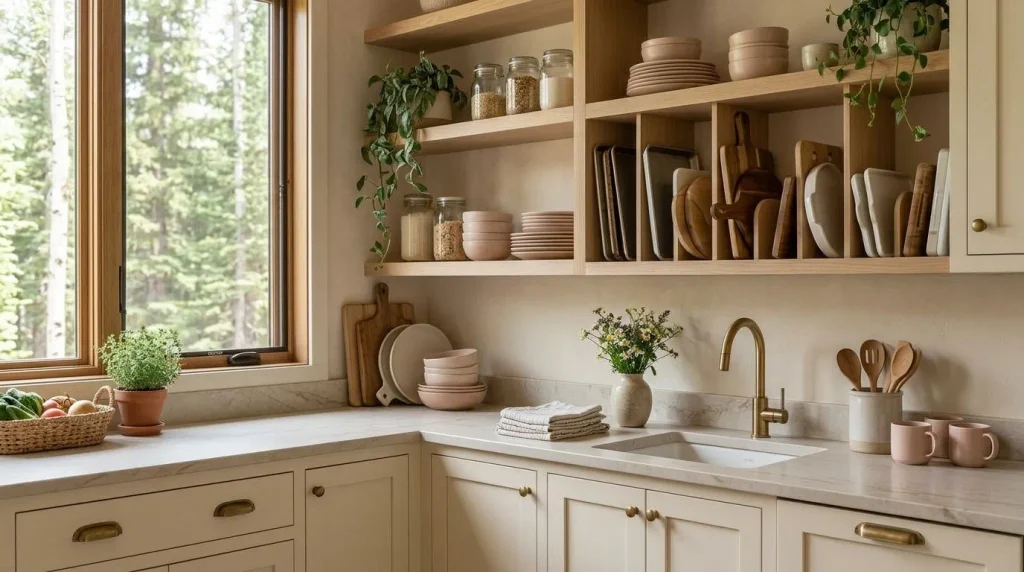
Flat kitchen essentials quickly become frustrating when they are stacked in one deep pile. Vertical dividers let you store cutting boards, baking sheets, muffin tins, and trays upright, so each item stays visible and accessible. Place them inside a lower cabinet or tall narrow cupboard near your main food-prep area.
In my experience, this setup works best when similar items are grouped by purpose rather than size alone. Keep everyday cutting boards toward the front and occasional baking pieces farther back. Leave enough space between dividers to remove one item without shifting the others. The cabinet immediately feels easier to use.
Under-Sink Storage Zones

That awkward cabinet beneath the sink can hold much more when every category has a defined place.
- Keep everyday sprays together in one removable caddy for quick cleaning.
- Use shallow pull-out bins for sponges, gloves, and dishwasher supplies.
- Position taller bottles where plumbing leaves enough vertical clearance.
- Store reusable cloths upright or folded inside a small container.
- Keep hazardous cleaning products secured and inaccessible to children and pets.
Many small kitchen organization ideas work because they make existing storage easier to use rather than simply adding more containers. Measure around pipes before buying organizers, and check periodically for leaks or moisture. A few correctly sized bins can turn the under-sink cabinet into functional storage while keeping cleaning essentials easy to find.
Drawer Organiser System

Quick Tip:
Empty the entire drawer before buying organizers. Group similar tools first, measure the drawer’s interior dimensions, then choose adjustable dividers or trays that match what you actually use instead of forcing utensils into predetermined compartments.
A divided drawer prevents small tools from disappearing beneath larger utensils and makes cooking routines faster. Keep frequently used pieces near the front, while specialty gadgets can sit farther back. I’ve noticed that removing duplicate or rarely used utensils before organizing often creates more useful space than squeezing another storage insert into the drawer.
Our Instagram : Blossom Dream Decor
Pull-Out Pantry Bins

BEFORE:
Deep pantry shelves hide smaller packages behind taller containers, making ingredients difficult to see and reach. Duplicate groceries often collect at the back because existing supplies are easy to overlook.
AFTER:
Pull-out bins create clear categories that slide forward for easy access. Similar foods stay together, and the back of each shelf becomes usable instead of forgotten storage.
Pantry bins work best when they match the depth of your shelves and hold genuine categories rather than random items. Keep frequently used foods between waist and eye level, and check expiration dates while reorganizing. Clear containers also make it easier to notice what needs restocking before your next grocery trip.
Cabinet Door Storage

An unused cabinet door can provide valuable storage without taking another inch of countertop space.
- Choose a suitable door. Check that racks will not collide with shelves or stored items when closed.
- Measure carefully. Record the available width, height, and interior clearance.
- Select lightweight items. Store wraps, measuring tools, or other slim essentials.
- Install securely. Follow the organizer manufacturer’s mounting instructions and cabinet limitations.
- Test the door. Open and close it fully before loading everything.
Door-mounted storage is especially useful for compact kitchens where drawers and shelves already feel crowded. Keep the load light so hinges are not unnecessarily stressed, and avoid placing items where they interfere with handles or shelving. The result is hidden organization that uses space many kitchens otherwise leave completely untouched.
Our Facebook Page : Blossom Dream Decor
Stack-able Shelf Risers

| Storage Detail | Single Shelf | Shelf Risers |
| Vertical space | Often unused | Divided into useful levels |
| Item access | Stacks require lifting | Categories stay separated |
| Best for | Taller objects | Plates, bowls, mugs |
| Visibility | Lower items get hidden | More items remain visible |
Shelf risers help make use of empty vertical space between short dishes and the shelf above. Choose sturdy risers that fit the cabinet depth without blocking the door. Separating plates from bowls or mugs also reduces unnecessary stacking, making everyday dishes quicker to reach and easier to return after washing.
Counter-top Storage Tray

DO:
- The group frequently used cooking essentials on one compact tray.
- Keep the tray near the area where those items are actually used.
- Choose washable containers for ingredients exposed to cooking splashes.
- Leave a generous section of countertop completely clear.
DON’T:
- Fill the tray with decorative objects that serve no daily purpose.
- Store rarely used appliances in valuable preparation space.
- Place oils or sensitive ingredients beside strong heat or direct sunlight.
- Let the tray become a collection point for unrelated clutter.
A defined tray creates a visual boundary that helps everyday essentials look organized rather than scattered. In my experience, limiting countertop storage also makes cleaning noticeably easier. Keep only the items you reach for regularly, and reassess the tray occasionally. If something remains untouched for weeks, it probably belongs inside a cabinet.
Magnetic Fridge Storage

Cost: Low to Moderate
Time: About 15 minutes
Skill Level: Beginner
Best For: Kitchens with usable magnetic refrigerator sides
The refrigerator side can become practical storage when cabinets are limited, but keep the arrangement slim and lightweight. Confirm that magnets hold securely on your refrigerator’s actual surface, and avoid blocking ventilation or manufacturer-required clearances. Use the area for appropriate lightweight essentials while keeping the front visually calm and uncluttered.
Clear Food Containers
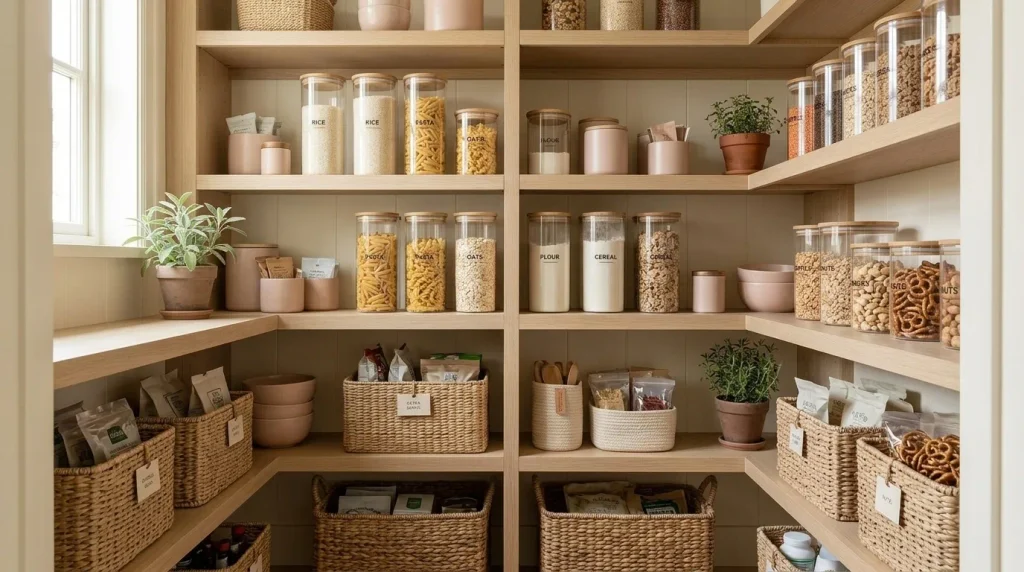
Clear containers make dry ingredients easier to identify and can help you notice low supplies before discovering an empty package halfway through cooking. Choose food-safe containers that fit your shelves, then group similar ingredients together. Square or rectangular shapes often use shelf space more efficiently than an assortment of mismatched packages.
I’ve seen this work well when containers are used selectively rather than for every grocery item. Label contents clearly, include expiration or best-before information when useful, and follow appropriate food-storage guidance. Keep frequently used staples within easy reach. The goal is better visibility and access, not transferring food purely for appearance.
Hanging Utensil Rail

Freeing a crowded utensil drawer can make everyday cooking noticeably smoother.
- Position the rail close to your main prep area without crowding the work surface.
- Hang only lightweight tools you reach for regularly.
- Leave small gaps between utensils so each piece is easy to grab.
- Match the rail finish with existing cabinet hardware for a coordinated look.
- Use appropriate fixings for the wall or backsplash material.
A utensil rail turns unused vertical space into accessible storage while keeping frequently used tools visible. Before installing one, check that hanging items will not sit too close to burners, heat, or food preparation areas. Keep the selection edited so the rail functions as practical organization rather than another source of visual clutter.
Lazy Susan Storage

Quick Tip:
Place taller bottles toward the center and shorter containers around the outer edge when visibility allows. Avoid packing the turntable so tightly that bottles catch against surrounding items when it rotates.
A lazy Susan makes awkward cabinet corners and deep shelves easier to access because stored items rotate toward you. It works particularly well for condiments, jars, and frequently used cooking supplies. Measure both shelf width and height first, then choose a turntable with enough clearance to rotate freely when fully loaded.
Looking for more home decor inspiration? Check out: Blossom Dream Decor
Decluttered Prep Zone

BEFORE:
The main preparation counter holds appliances, unopened groceries, dishes, and decorative accessories. Chopping vegetables or preparing meals requires moving several objects before cooking can even begin.
AFTER:
Only genuinely useful preparation items remain nearby, leaving a clear section of countertop ready for daily tasks. Small appliances and occasional accessories are relocated to cabinets or designated storage areas.
Among practical small kitchen organization ideas, protecting one clear work zone can have an immediate impact on how the kitchen functions. I’ve noticed that a usable countertop often feels more valuable than extra decorative styling in a tight room. Give frequently used appliances to dedicated homes whenever practical, then keep your prep area intentionally open.
Rolling Kitchen Cart

A narrow rolling cart can create flexible storage where permanent cabinetry will not fit.
- Measure the gap. Check the width, depth, and nearby door clearance before choosing a cart.
- Assign each level. Keep frequently used supplies on top and heavier items lower down.
- Group loose items. Use small baskets to prevent packages from shifting.
- Keep it mobile. Avoid overloading the cart so it remains easy to move.
- Park it safely. Use locking casters when available and keep walkways clear.
Mobile storage works especially well in rentals and kitchens with awkward unused gaps. The cart can serve as a pantry extension, produce station, or extra supply shelf depending on your needs. Keep its contents organized by purpose so it solves a storage problem instead of becoming another place for miscellaneous clutter.
Label-ed Storage Zones
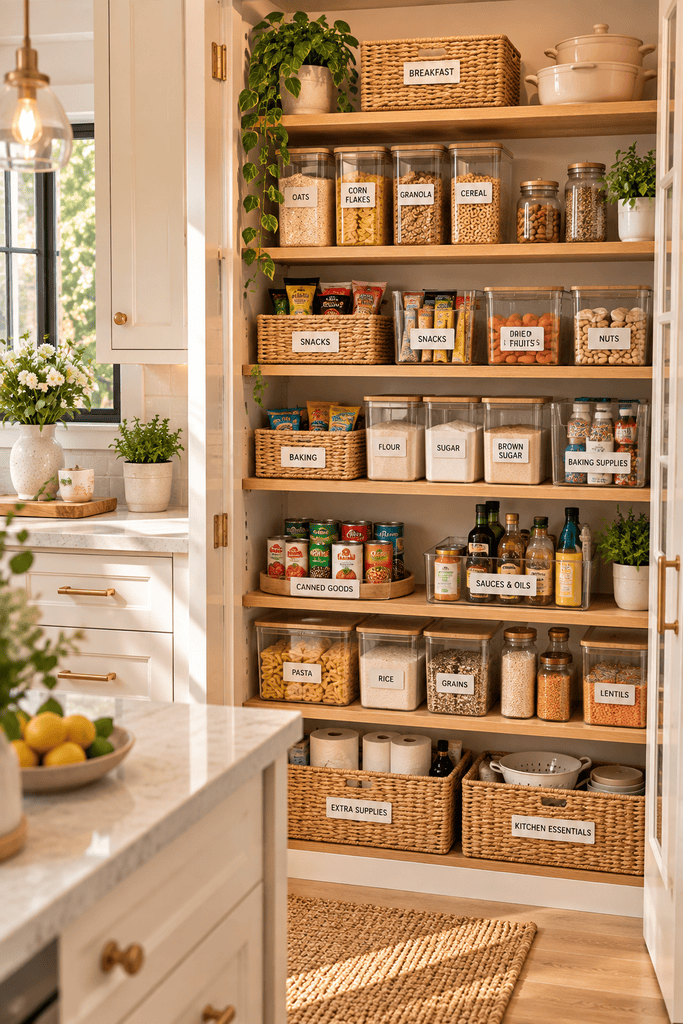
| Storage Detail | Random Storage | Labeled Zones |
| Finding items | Requires searching | Categories are easy to locate |
| Grocery unpacking | Items go anywhere | Each product has a home |
| Stock visibility | Duplicates are easily missed | Supplies are easier to check |
| Daily upkeep | Clutter returns quickly | Resetting feels more straightforward |
The strongest small kitchen organization ideas should make daily routines easier to maintain, not just create a tidy photo. Assign practical zones based on how your household cooks and shops, then use simple labels where they genuinely help. A clear system makes putting groceries away faster and helps everyone return items consistently.
Conclusion
A smaller kitchen can still feel organized, practical, and enjoyable when every storage area has a clear purpose. These small kitchen organization ideas help you use cabinets, drawers, walls, counters, and overlooked spaces more wisely without making the room feel crowded.
I’ve noticed that starting with one frustrating area often creates the motivation to organize the rest. Choose one or two ideas that solve your biggest storage problem and begin there. Save this post on Pinterest for later, test your favorite solutions at home, and share it with someone who could use a smarter, tidier kitchen too.


One Comment