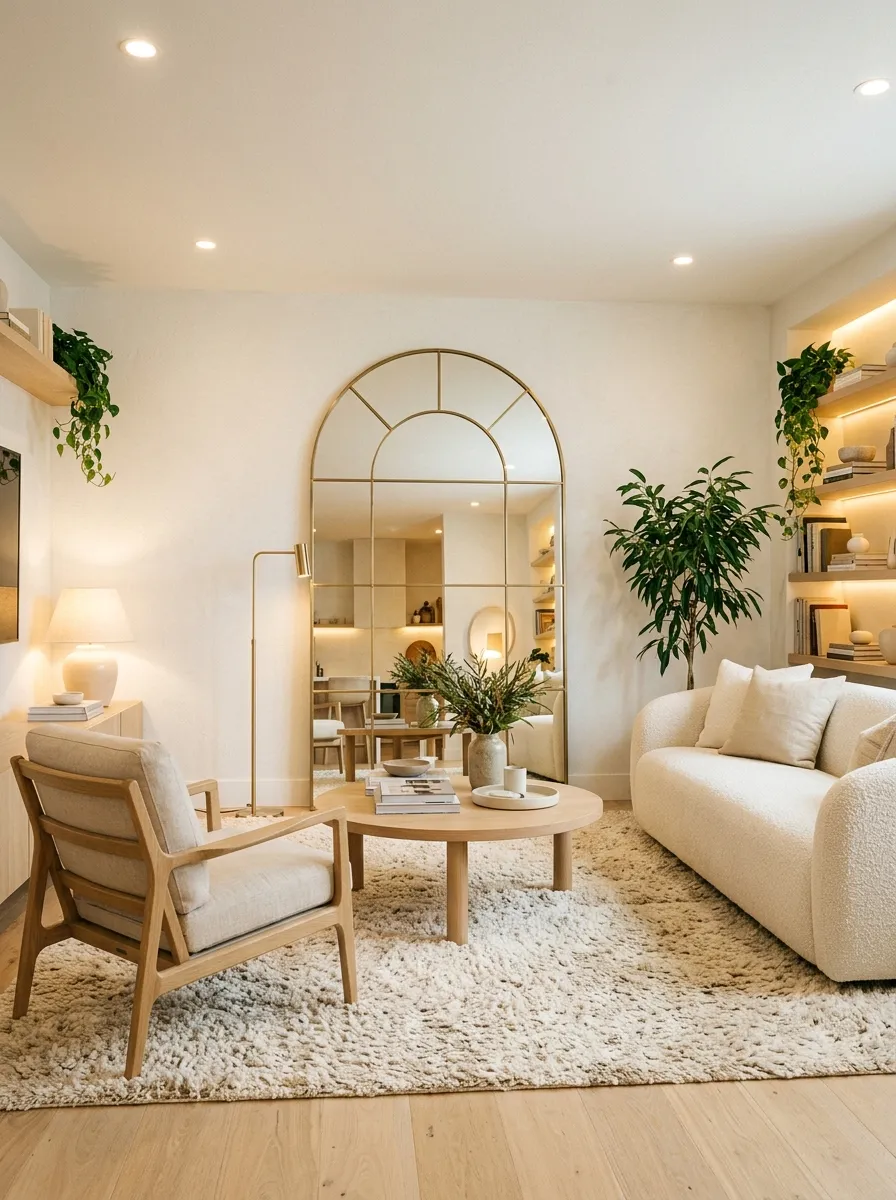
Decorating a Room Without Windows: 17 Brightness Tricks
A room without windows can feel dark, cramped, and a little uninspiring, but it doesn’t have to stay that way. The right decorating tricks can make even the darkest corner feel brighter, warmer, and more inviting.
Decorating a room without windows starts with understanding how artificial lighting, reflective surfaces, and carefully chosen colors work together. Whether you’re refreshing a small bedroom, updating an interior bathroom, or making a windowless home office feel more comfortable, simple changes can create a noticeable difference without a major renovation.
I’ve noticed that rooms often feel more welcoming when light is layered instead of coming from a single ceiling fixture. Pair that approach with oversized mirrors, pale wood furniture, soft neutral colors, and uncluttered layouts to create a space that feels open and thoughtfully styled.
Ahead, you’ll find 17 practical brightness tricks to help you rethink your space, discover fresh decor inspiration, and find ideas worth saving on Pinterest. Many are easy to try with furniture and accessories you already own.
Oversized Wall Mirrors

A well-placed mirror can make a windowless room feel noticeably more open without changing its layout. Choose an oversized round or rectangular mirror and hang it where it reflects your brightest light source, such as a ceiling fixture, wall sconce, or table lamp. The reflection creates visual depth and helps light travel farther across the room.
For a polished look, position the mirror above a console table or opposite a softly illuminated wall. Keep the surrounding decor simple so the reflection stays clear. When decorating a room without windows, mirrors work best alongside layered lighting rather than as a replacement for it.
Layered Lighting Fixtures

- Start overhead: Choose a flush-mount ceiling light that spreads illumination evenly instead of creating harsh shadows in the corners.
- Add wall sconces: Place matching sconces beside artwork or a mirror to brighten darker wall sections.
- Include a floor lamp: Position one beside a sofa or reading chair to create a comfortable pool of light.
- Finish with table lamps: Use linen or frosted glass shades for a softer glow on shelves and side tables.
- Choose warm white bulbs: A color temperature around 2700K to 3000K creates a cozy atmosphere without making the room feel overly yellow.
Relying on one bright ceiling bulb often leaves a room looking flat in the center and gloomy around the edges. Multiple light sources distribute brightness more evenly and make the space feel intentional. For the most balanced result, choose bulbs with similar color temperatures and keep the lighting controls easy to reach.
Glossy Light-Coloured Walls

Quick Tip:
Choose warm white, pale ivory, or a very light greige for the walls, then use a satin finish where practical to reflect more light than a flat matte surface. Test paint samples under your actual bulbs before committing, because artificial lighting can change how a color appears.
The right wall color helps artificial light spread throughout a room instead of making the walls feel heavy or shadowy. I’ve noticed that creamy neutrals often feel more inviting than stark white in spaces without daylight. Pair them with a lighter ceiling and understated trim for a brighter, more connected appearance.
Glass and Acrylic Furniture
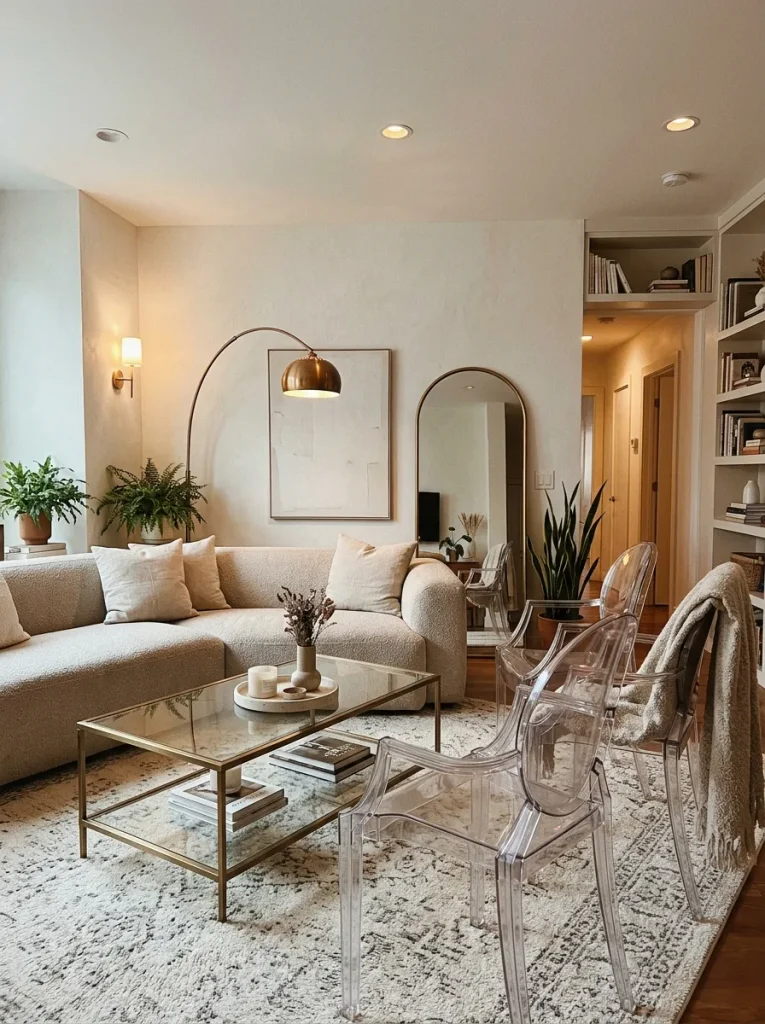
BEFORE: A small room with bulky wooden tables and dark furniture can feel crowded, especially when there is no natural light to soften the space. Solid furniture blocks sightlines and makes the floor area appear smaller.
AFTER: Replace a heavy coffee table with a clear glass or acrylic design. Choose transparent side tables and slim furniture legs to keep the room visually open while maintaining practical surfaces.
Transparent furniture allows your eyes to travel through the room instead of stopping at every piece. For decorating a room without windows, this visual openness helps the layout feel less enclosed. Pair clear materials with warm wood, soft upholstery, and layered lighting so the space feels inviting rather than cold. Keep glass surfaces clean to maintain their light, airy effect.
Recessed Ceiling Lights

- Map the layout: Identify dark corners, wardrobes, and walking paths before deciding where the lights should go.
- Choose suitable fixtures: Select dimmable recessed LED lights with a color temperature that complements your room’s decor.
- Space lights evenly: Ask a qualified electrician to plan placement according to ceiling height, fixture output, and room dimensions.
- Add a second layer: Include bedside lamps or wall sconces to soften the overall lighting and reduce harsh shadows.
Recessed lighting keeps the ceiling visually uncluttered while spreading illumination across the room. It works especially well in compact bedrooms, interior bathrooms, and windowless hallways where hanging fixtures might feel bulky. Dimmers offer flexibility, allowing you to use brighter settings for daily tasks and gentler lighting when you want to relax. Choose suitable damp-rated fixtures wherever moisture requires them.
Light Curtains and Sheer Panels

| Design Detail | Option A: Heavy Curtains | Option B: Sheer Panels |
| Visual effect | Makes walls feel heavier | Creates a softer, lighter look |
| Light interaction | Absorbs more light | Allows light to glow through when backlit |
| Best placement | Concealing storage | Framing a decorative wall or alcove |
| Fabric choice | Thick velvet or blackout fabric | Lightweight voile or sheer linen |
| Overall style | Dramatic and cozy | Airy and relaxed |
Sheer curtains can create the visual suggestion of a window even when none exists. Hang them across a recessed wall or in front of concealed storage, then place suitable LED lighting behind the fabric for a gentle, diffused glow. Keep the light source hidden to avoid visible hotspots. This decorative treatment adds softness and depth without pretending to provide actual daylight.
Reflective Metallic Accents
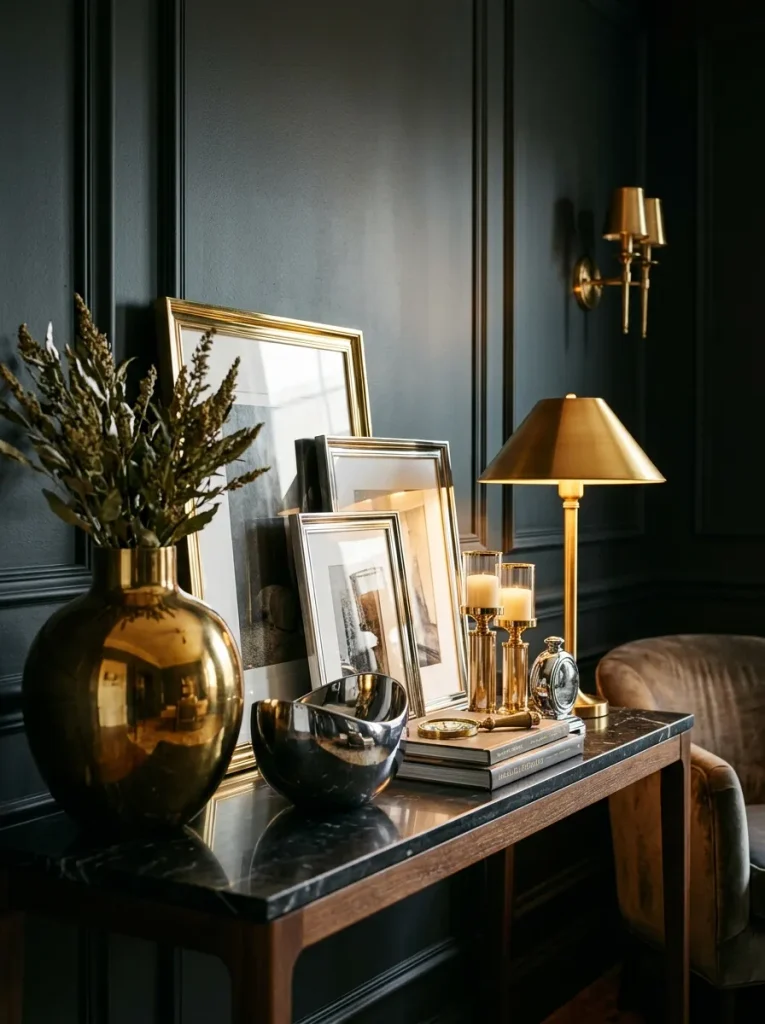
DO
- Place a brass-framed mirror near a wall sconce to reflect its glow.
- Display one or two polished metal trays on a console or coffee table.
- Choose chrome, brushed brass, or nickel finishes that complement your existing fixtures.
- Repeat the same metallic finish in small accessories for a cohesive look.
DON’T
- Cover every surface with shiny decorative objects.
- Mix too many competing metallic finishes in a small room.
- Position reflective pieces where exposed bulbs create uncomfortable glare.
- Use dark, oversized accessories that overpower the lighter palette.
Metallic accents help artificial light catch the eye and create small points of brightness throughout a windowless space. In my experience, a brass lamp base, a slim gold frame, and one reflective tray can provide enough sparkle without making the decor feel busy. Let these finishes complement your main lighting rather than compete with it.
Light Wood Furniture
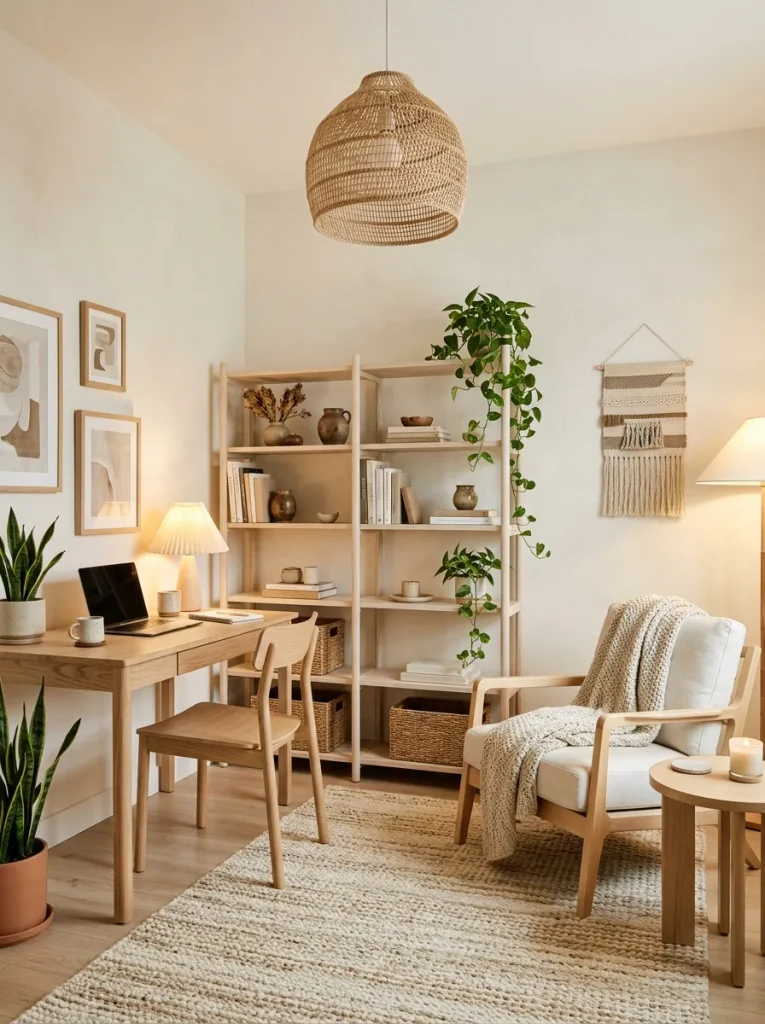
Cost: Moderate, depending on furniture size and wood type.
Time: One afternoon for rearranging existing pieces.
Skill Level: Beginner.
Best For: Small bedrooms, interior offices, and compact living rooms.
Visual Result: A lighter, more open appearance with natural warmth.
Pale wood furniture brings warmth into rooms that lack daylight without adding the visual weight of dark finishes. Look for oak, ash, maple, or light wood veneers with simple shapes and slender legs. If replacing furniture is outside your budget, consider refinishing an existing dresser or switching dark drawer fronts for lighter alternatives. Keep the surrounding walls and textiles neutral so the wood grain becomes a subtle design feature rather than another competing element.
Our Facebook Page :Blossom Dream Decor
Oversized Botanical Artwork

Large botanical artwork brings the colors and shapes of nature into a room without windows. Choose a generous print featuring pale green leaves, delicate branches, or soft landscape-inspired foliage against a light background. Hang it above a sofa, bed, or console where it can become the room’s main visual focal point.
Keep the frame slim and the surrounding wall relatively uncluttered. A single oversized print often feels calmer than a gallery wall filled with small, competing images. Pair sage green artwork with cream textiles and light wood furniture to create a fresh, grounded atmosphere. If you love the look of greenery but the room receives no daylight, consider adding realistic faux plants nearby.
Back-lit Wall Panels
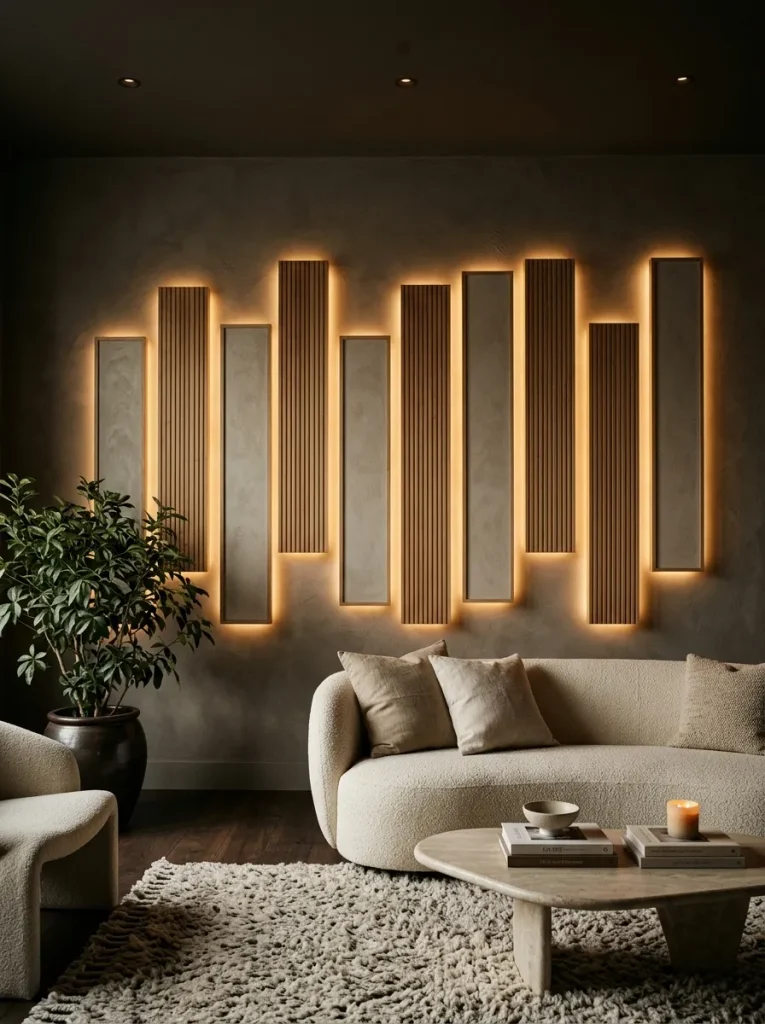
- Choose the wall: Select the wall behind your bed, sofa, or desk to create a focal point.
- Select the finish: Consider fluted wood panels, upholstered fabric panels, or light-colored decorative wall boards.
- Install concealed lighting: Position LED strips behind the panel edges so the light washes gently across the wall.
- Control the brightness: Use dimmable lighting to adjust the glow for relaxing evenings or brighter everyday activities.
- Keep accessories simple: Let the illuminated panel provide the visual interest instead of filling the wall with extra decor.
Backlit panels add depth to a room that might otherwise feel flat under overhead lighting. The concealed glow highlights wall textures and creates a gentle separation between furniture and the background. For a balanced result, choose warm white LEDs and avoid overly bright strips that create harsh outlines. This treatment works particularly well behind a bed or along a living room feature wall.
Warm LED Strip Lighting
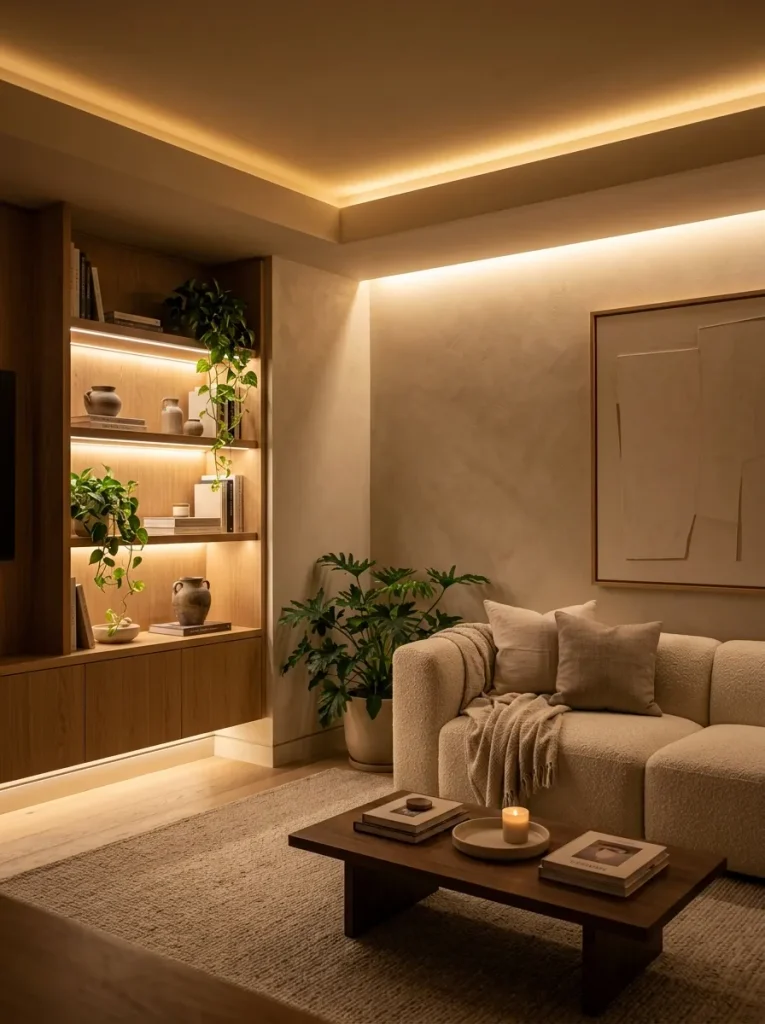
Quick Tip:
Hide LED strips behind furniture edges, beneath floating shelves, or along the back of a desk. Choose dimmable strips with a consistent color temperature, and use diffusers to prevent visible dots of light.
Strategic strip lighting brightens areas that a ceiling fixture often misses. A soft glow beneath shelves makes stored items easier to see, while lighting behind a desk adds depth without taking up valuable surface space. I’ve found that concealed lighting looks more polished than exposed strips. Check the manufacturer’s instructions before installation, especially around heat-sensitive materials and electrical connections.
Pale Flooring and Rugs
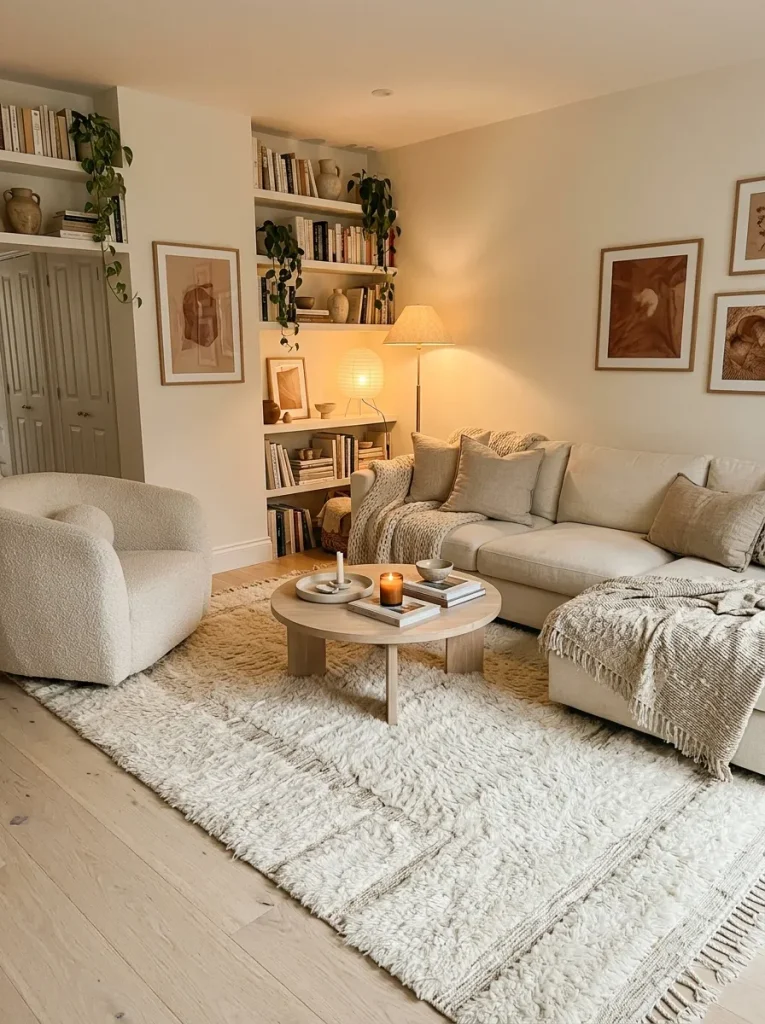
BEFORE: Dark flooring and a heavy patterned rug can make a windowless room feel visually dense, particularly when the walls and furniture are also dark. The floor becomes a large, uninterrupted area of shadow.
AFTER: Introduce pale oak flooring, a light neutral floor finish, or a cream rug with a subtle woven pattern. The lighter surface helps the room feel more cohesive under artificial lighting.
Flooring influences how bright and spacious a room appears, even without sunlight. If replacing the floor is impractical, a large ivory, oatmeal, or pale greige rug can soften a dark surface and connect the furniture visually. Choose a low-pile or flatweave design for compact rooms, and use a nonslip pad to keep the rug securely in place.
Our Instagram : Blossom Dream Decor
Floating Shelves and Storage
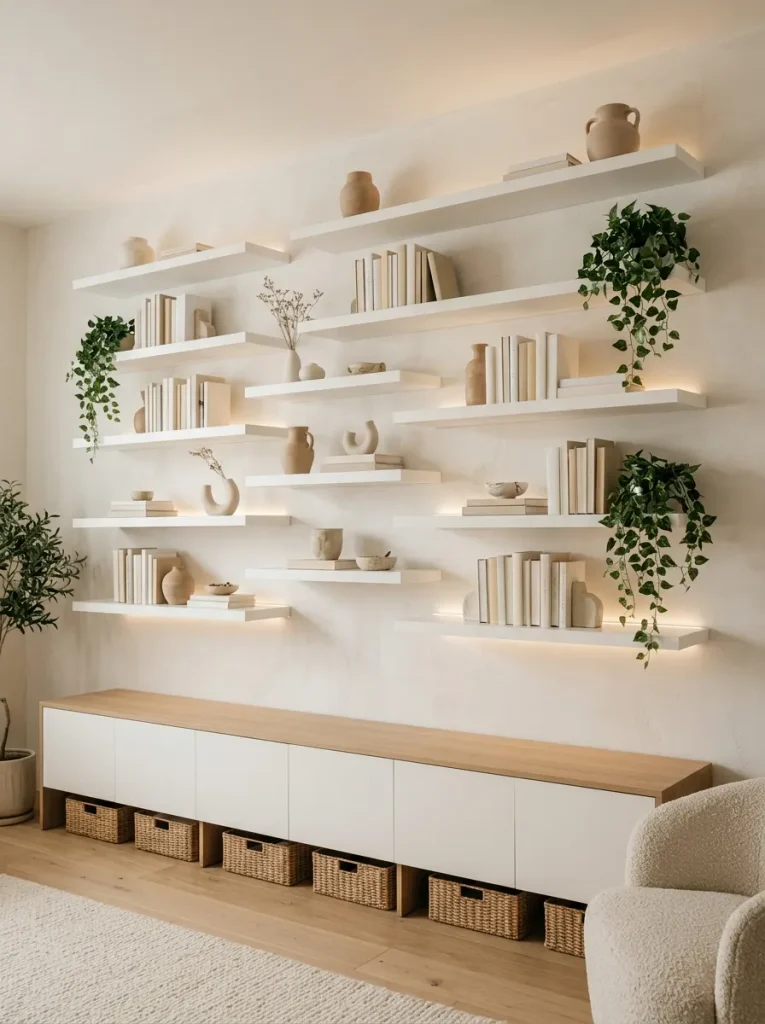
- Choose a light finish: Select white, pale oak, or natural ash shelves to keep the walls visually bright.
- Mount shelves strategically: Position them above a desk, beside a bed, or along an empty wall without obstructing walkways.
- Edit your display: Arrange a few books, small ceramic pieces, and one framed print, leaving visible space between objects.
- Add subtle lighting: Install suitable LED strips beneath shelves to illuminate the wall and highlight decorative pieces.
Floating shelves provide useful storage without the bulky appearance of a large bookcase. In a windowless room, keeping the floor visible and limiting visual clutter helps the layout feel more open. Use closed storage for everyday items that tend to accumulate, then reserve the shelves for a few attractive pieces. The result is practical, organized, and easier to maintain.
Glossy Decorative Surfaces

| Design Element | Option A: Matte Finish | Option B: Glossy Finish |
| Light reflection | Creates a soft, muted appearance | Produces more noticeable highlights |
| Best materials | Linen, unglazed pottery, matte wood | Glazed ceramics, glass, lacquered surfaces |
| Visual texture | Subtle and understated | Smooth and reflective |
| Best placement | Large furniture and textiles | Small accessories and accent pieces |
Glossy accents can help artificial light catch the eye, especially in rooms with limited visual depth. Choose a glazed ceramic vase, a glass bowl, or a small lacquered tray rather than making every surface shiny. Combining reflective accessories with matte fabrics creates a more balanced finish. Keep glossy pieces away from direct glare so their highlights remain soft and comfortable.
Minimalist Furniture Layout
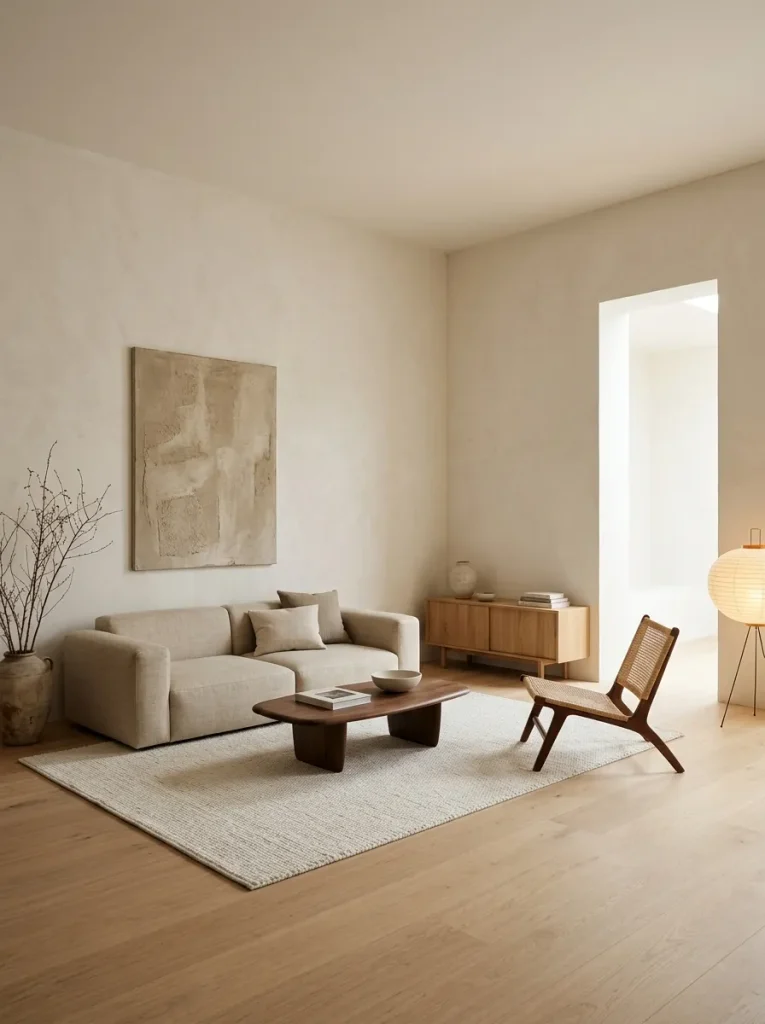
DO
- Keep the main walking path clear from the doorway into the room.
- Choose furniture with slim legs and simple silhouettes.
- Leave small gaps between larger pieces when the layout allows.
- Use wall-mounted storage to free up valuable floor space.
DON’T
- Push oversized furniture into every available corner.
- Block doorways with side tables or decorative baskets.
- Fill every empty surface with accessories.
- Choose bulky furniture simply because it offers extra storage.
A thoughtful furniture layout makes a windowless room feel less confined without requiring expensive renovations. Start by removing pieces that serve no clear purpose, then arrange the essentials around a comfortable walking path. A smaller sofa and a narrow console may provide everything you need while leaving more visible floor area. Give each item enough breathing room to let the room feel calm and functional.
Soft Neutral Colour Palette

Cost: Low if you work with existing furniture and accessories.
Time: One afternoon to update textiles and rearrange decor.
Skill Level: Beginner.
Best For: Small bedrooms, interior offices, and compact living spaces.
Visual Result: A cohesive, softly illuminated room with less visual clutter.
A coordinated neutral palette helps a room without windows feel calmer and more spacious. Combine warm ivory walls with beige upholstery, creamy textiles, and pale wood rather than relying on a single shade of white. These gentle differences add depth without creating strong visual divisions. Introduce texture through linen cushions, woven baskets, and a soft rug so the room feels welcoming instead of plain. Before buying paint or fabric, check how each color looks under your existing artificial lights.
For more ideas, check out our previous article: Blossom Dream Decor
Faux Window Wall Feature
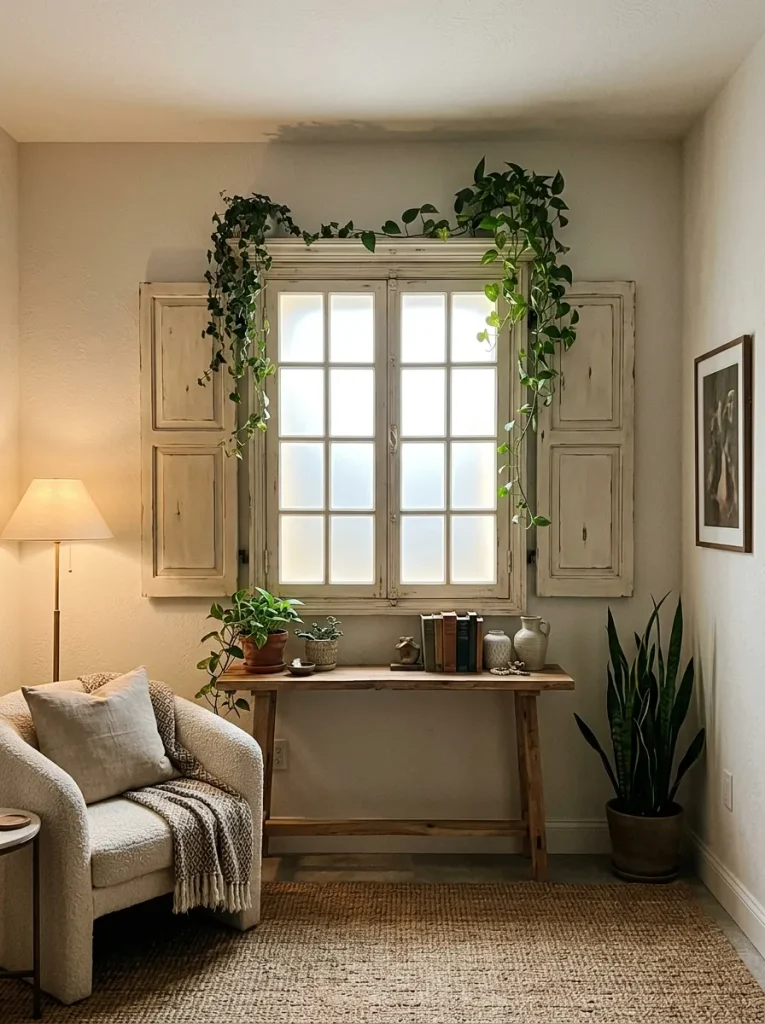
A faux window feature can give a windowless room a visual focal point that suggests openness. Mount a decorative window frame on an empty wall, then use a purpose-designed illuminated panel or concealed LED lighting to create a soft, window-like glow. Choose a simple white frame, translucent panels, and lightweight curtains for a clean finish.
For a more realistic effect, consider a professionally designed artificial daylight panel with an even light distribution. Avoid relying on a bright rectangle of exposed LEDs, which can look harsh and artificial. Remember that a decorative faux window does not provide ventilation, an outdoor view, or natural daylight. Pair the feature with functional room lighting to keep the space comfortable for everyday use.
Conclusion
A windowless room doesn’t have to feel dull or confined. With the right combination of layered lighting, oversized mirrors, light-colored walls, reflective accents, and thoughtful furniture placement, you can create a space that feels brighter and more comfortable.
The secret to decorating a room without windows is to work with the light you have and make every design choice count. Start with one simple change, such as adding a mirror or introducing a warm table lamp, then build from there.
Save this article on Pinterest for your next decorating project, try your favorite ideas, and share it with someone who could use a little brightness in their home. Your coziest room may be waiting for a fresh start.


One Comment