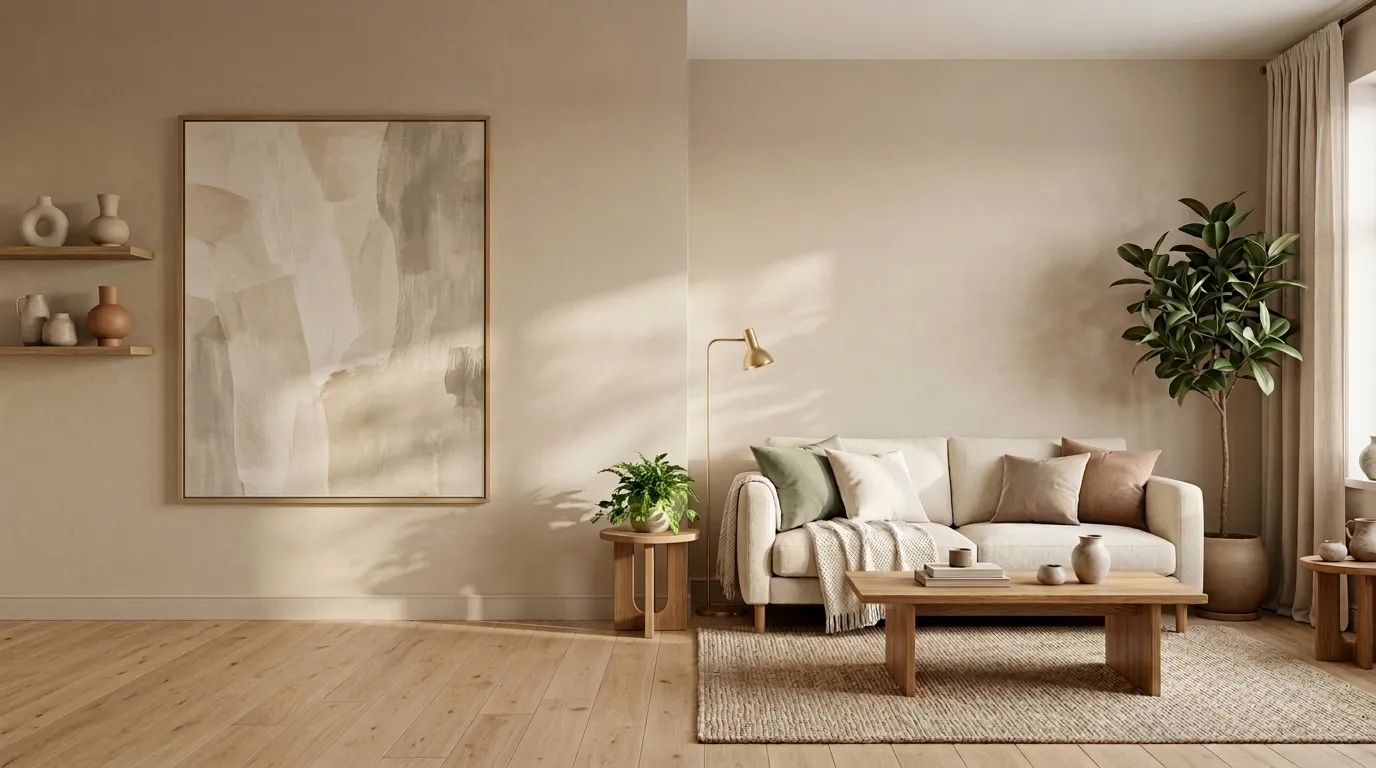
15 Small Home Decorating Mistakes to Avoid for Better Flow
A small home can feel cramped even when it is beautifully decorated. Sometimes, a bulky sofa, crowded shelves, or poorly placed rug is all it takes to disrupt the entire room.
The good news? A few thoughtful changes can make your space feel brighter, calmer, and easier to enjoy.
Knowing the small home decorating mistakes to avoid can help you create a home that looks beautiful while supporting your everyday routine. From blocked walking paths to clashing colors, the smallest details often have the biggest impact on how a room feels and functions.
I’ve noticed that improving a small space does not always require buying new furniture or spending a lot of money. Moving a chair, clearing a surface, or choosing better lighting can make a noticeable difference. In this guide, you’ll discover practical decorating tips, visual inspiration, and simple solutions to help your home feel more open, balanced, and welcoming.
Oversized Furniture
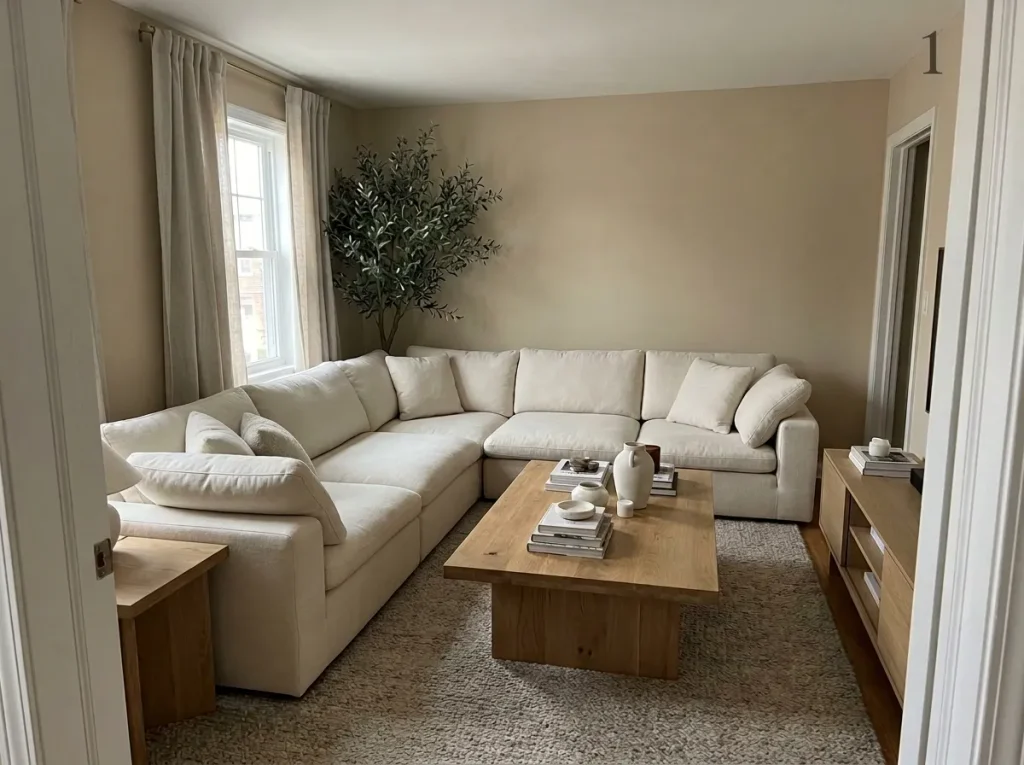
Large furniture can make a small room feel cramped before you even add accessories. A bulky sectional, oversized coffee table, or deep armchair may block walkways and leave little space to move comfortably. Before buying anything, measure your room and mark the furniture footprint with painter’s tape.
Choose pieces with slim legs, compact frames, and proportions that suit your layout. I’ve noticed that furniture raised slightly off the floor often makes a room feel lighter because more flooring remains visible. Keep at least 30 inches of walking space along main routes whenever possible, adjusting for your room’s needs.
Blocked Walking Paths
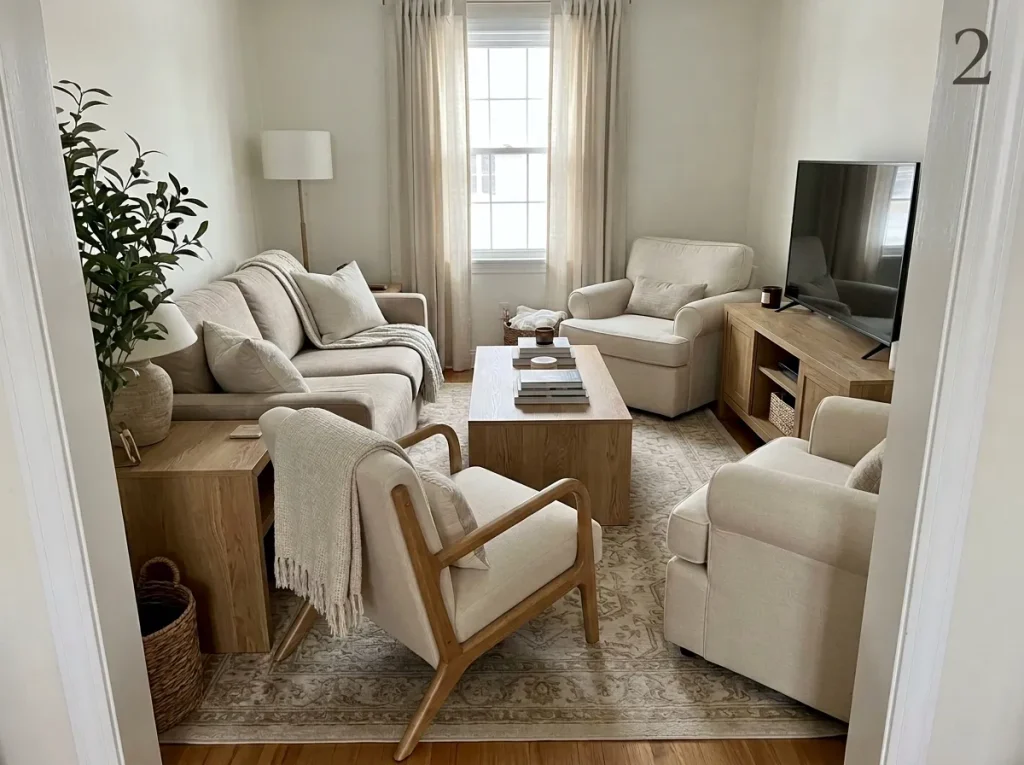
Even beautiful furniture loses its appeal when you have to squeeze past it every day. Narrow gaps between a sofa, dining chairs, and coffee table can make a small home feel awkward and difficult to navigate. The solution is to plan your walking routes before deciding where each piece belongs.
- Clear the main route: Keep the path from the entrance to the next room open.
- Pull back chairs: Leave enough room to sit down and stand up comfortably.
- Check door swings: Avoid placing furniture where doors or cabinet drawers need to open.
- Reduce obstacles: Move floor baskets, decorative stools, and plant stands away from busy walkways.
- Test the layout: Walk through the room carrying a laundry basket to spot tight corners.
A clear route makes even a compact apartment feel more comfortable and organized. Aim for about 30 to 36 inches along primary walkways where your layout allows, and adjust secondary spaces to fit safely. The goal is simple: move naturally through your home without constantly shifting furniture or sidestepping clutter.
Too Many Small Accessories
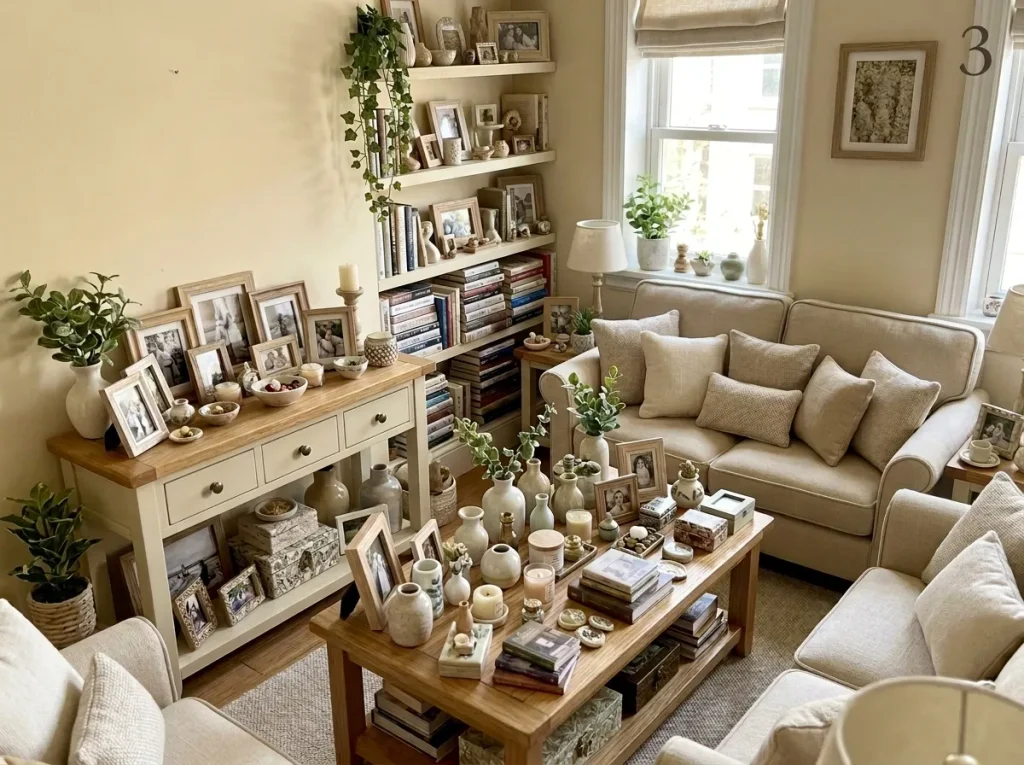
Tiny decorative pieces can quietly create visual clutter, especially when every shelf, table, and windowsill holds something different. A collection of miniature vases, candles, frames, and ornaments may seem charming individually, but together they compete for attention and make limited surfaces feel crowded.
Quick Tip: Group accessories in odd numbers, such as three objects with different heights and textures. Leave some empty space around each arrangement so the eye has somewhere to rest. Store the pieces you love but do not need to display all at once.
For a coffee table, combine a small stack of books, one sculptural vase, and a simple natural accent. On shelves, alternate decorative groupings with open space instead of filling every gap. Rotating accessories seasonally keeps your home feeling fresh without buying more items or sacrificing precious surface area.
Pushing Furniture Against Walls
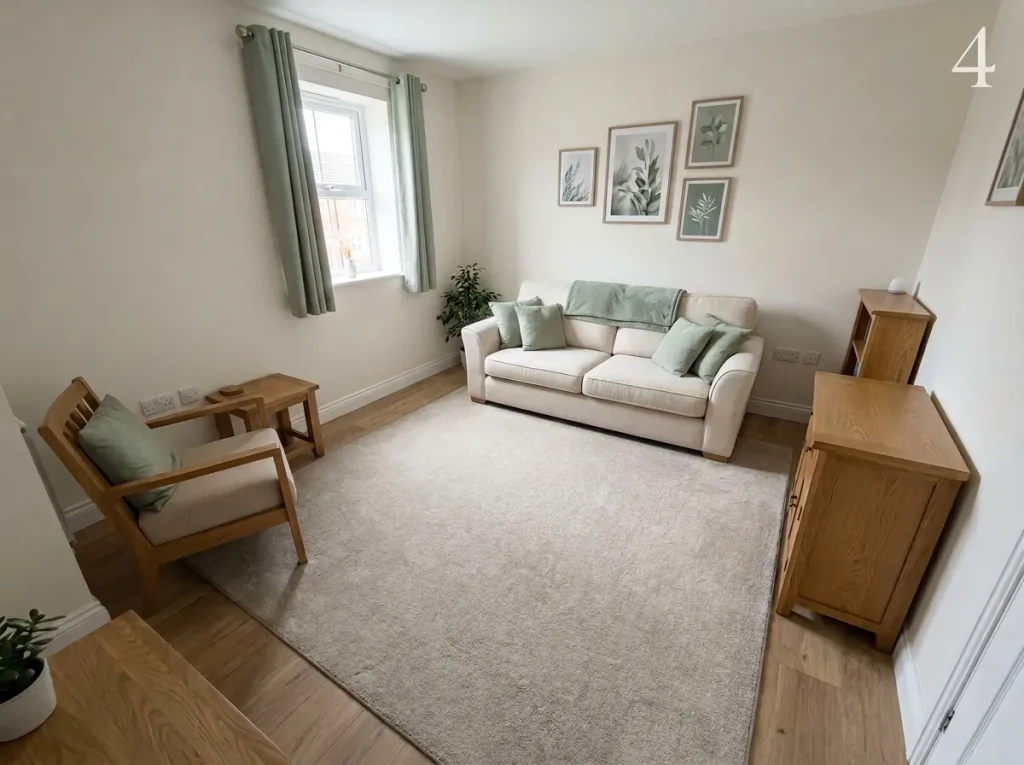
Pushing every piece of furniture against the walls might seem like the easiest way to create more space, but it can leave a room feeling disconnected. The center may look empty while the edges feel crowded, especially when the sofa and chairs are spread too far apart.
BEFORE
The sofa sits flat against the wall, while an accent chair occupies the opposite corner. The coffee table feels detached, and conversation requires raising your voice across the room.
AFTER
Pull the sofa forward slightly and angle the accent chair toward it. Position the coffee table within easy reach to create a comfortable seating group while preserving a clear route around the furniture.
A small room does not need furniture floating in the middle to feel balanced. Even moving a sofa a few inches away from the wall can add depth. Keep the arrangement practical, and leave larger gaps only where they improve movement or access to windows and doors.
Ignoring Vertical Space
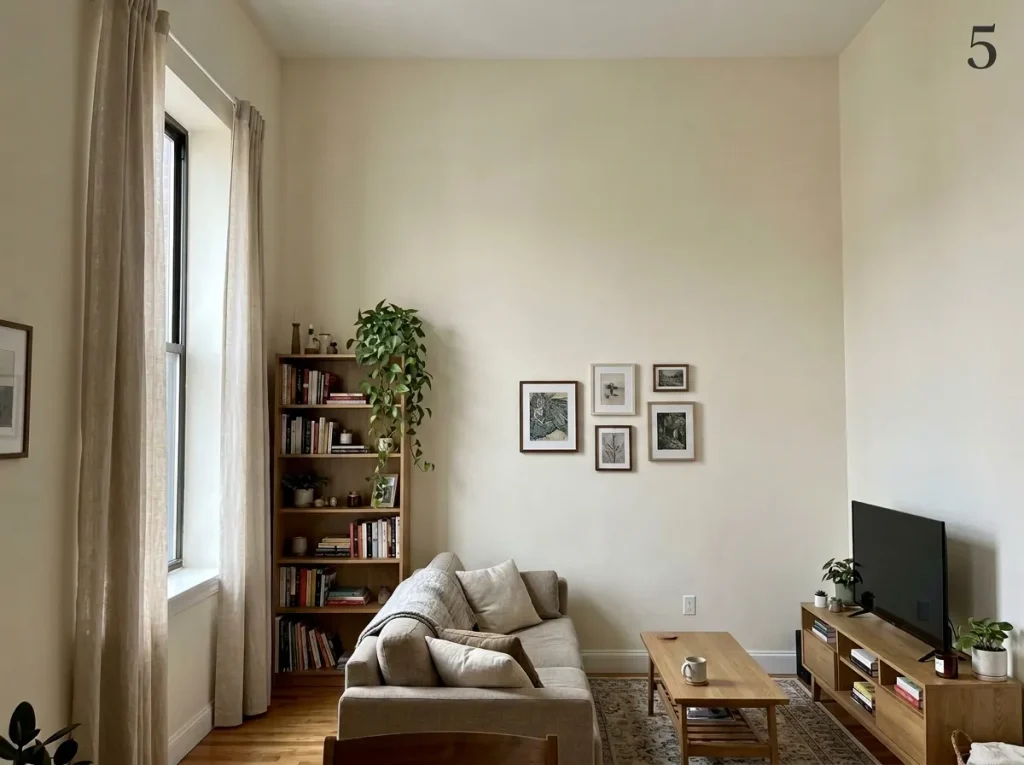
When floor space is limited, the walls can do more of the decorating work. Leaving them bare while crowding the room with low storage units wastes useful space and makes everyday items harder to organize. Vertical storage draws the eye upward and gives belongings a dedicated place.
- Install tall shelving: Choose a narrow bookcase that uses height without taking up much floor area.
- Hang curtains higher: Mount the curtain rod closer to the ceiling to create a taller visual line.
- Use wall-mounted storage: Add floating shelves or hooks for books, bags, and small accessories.
- Hang artwork thoughtfully: Position frames at a comfortable viewing height instead of scattering them randomly.
Keep the arrangement balanced rather than filling every inch of wall. Closed cabinets can hide everyday clutter, while a few open shelves display favorite objects. In a small home, combining vertical storage with clear surfaces helps the room feel organized without sacrificing its cozy character.
Choosing Heavy Window Treatments
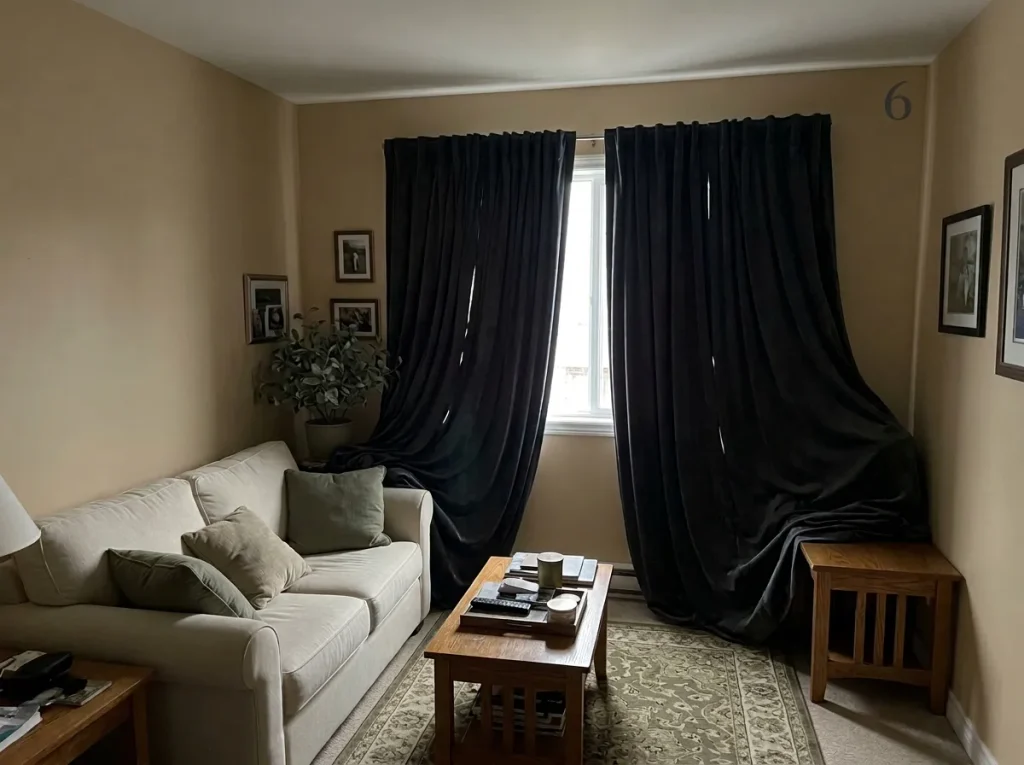
| Heavy, bulky curtains | Light, streamlined curtains |
| Thick fabric blocks more daylight | Sheer or lightweight fabric filters daylight |
| Dark colors can dominate a small room | Soft neutrals create a quieter backdrop |
| Short panels can visually lower the ceiling | Floor-length panels emphasize height |
| Deep curtain folds occupy more visual space | Simple panels keep the window area clean |
Window treatments influence how spacious a room feels, even when the furniture stays exactly the same. Choose lightweight linen or sheer curtains in warm white, ivory, or soft beige. Mount the rod slightly above the window frame and extend it beyond the sides so the panels can sit clear of the glass when open.
You do not need to remove all privacy or shade to brighten a room. Layer sheer curtains with discreet blinds if needed, and use heavier panels only where insulation or darkness matters. The best choice balances natural light, privacy, and comfort without making the window feel smaller.
Clashing Colour Palettes
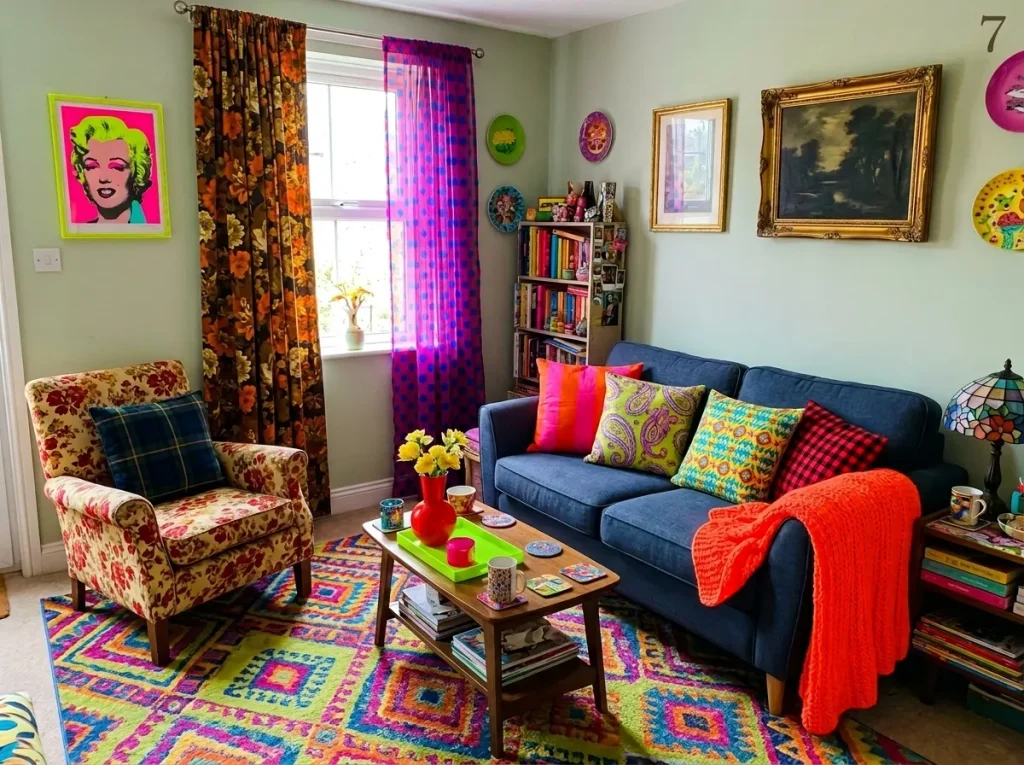
Too many competing colors can make a small room feel visually busy, even when it contains very little furniture. Bright cushions, contrasting rugs, colorful accessories, and mismatched curtains may pull attention in several directions instead of allowing the room to feel connected.
DO
- Choose two or three main colors and repeat them throughout the room.
- Use cream, beige, or warm white as a calming base.
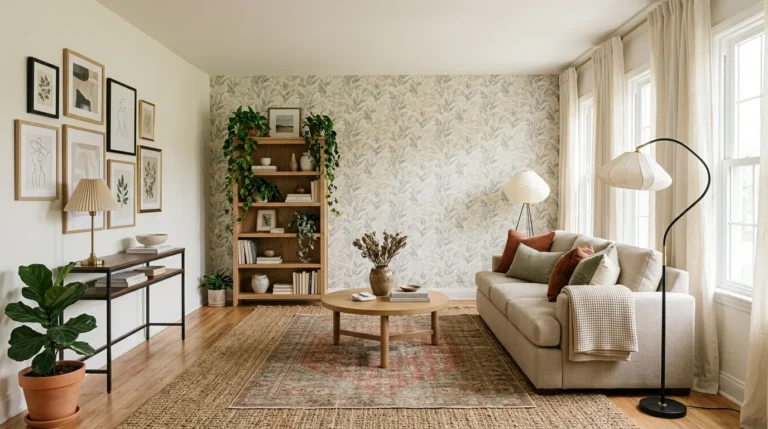
- Introduce muted green through cushions, plants, or artwork.
- Repeat wood tones in furniture and small decorative accents.
DON’T
- Mix several bold accent colors without a connecting element.
- Choose every accessory in a different shade.
- Ignore undertones when combining whites, beiges, and grays.
- Replace all existing décor before testing a new palette.
A consistent color scheme helps the eye move naturally from one area to another. You can still include personality through patterned cushions, artwork, or a colorful vase. Keep the largest surfaces relatively calm, then repeat accent colors in small doses to create a room that feels coordinated rather than crowded.
Our Facebook Page : Blossom Dream Decor
Poor Lighting Placement
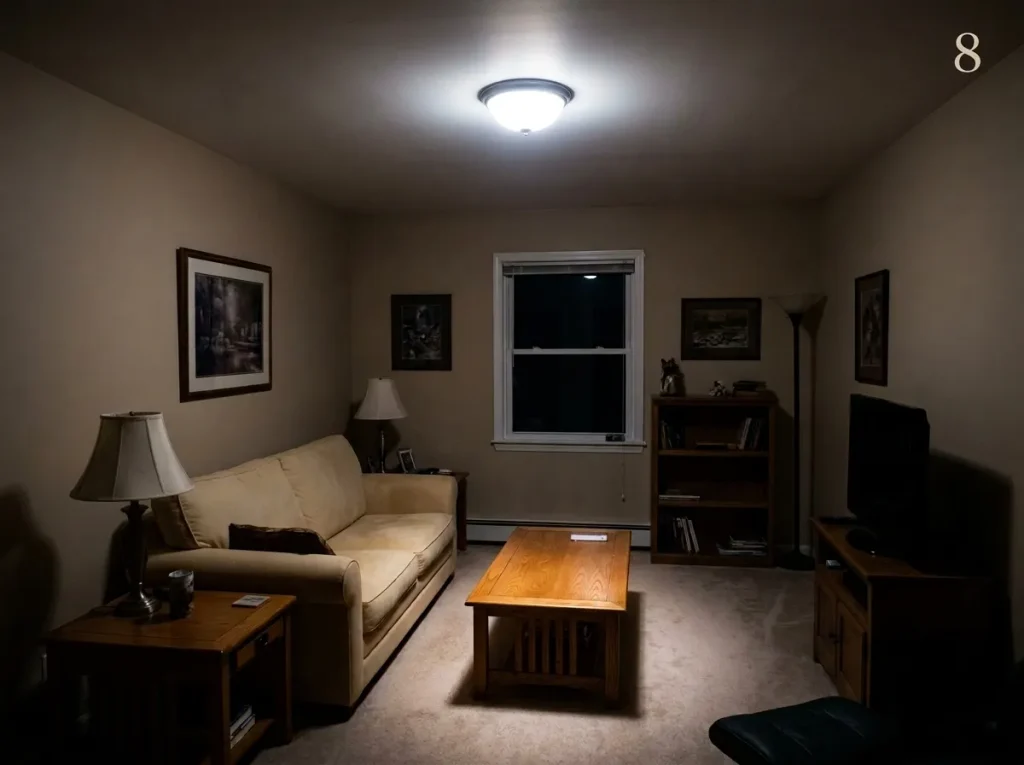
Cost: Low to moderate, depending on existing fixtures.
Time: Around 30 to 60 minutes for repositioning lamps.
Skill Level: Beginner.
Best For: Small living rooms, bedrooms, and apartments with limited natural light.
Dark corners and a single harsh ceiling light can make even a beautifully decorated room feel flat. Instead of relying on one central fixture, spread light across different heights to create depth and make the space more comfortable after sunset.
In my experience, a floor lamp beside a sofa and a small table lamp on a console can change the mood without requiring major renovations. Choose warm-white bulbs for a cozy atmosphere, and direct task lighting toward reading areas. Keep lamp bases compact so your lighting improves the room without creating new obstacles.
Undersized Area Rugs
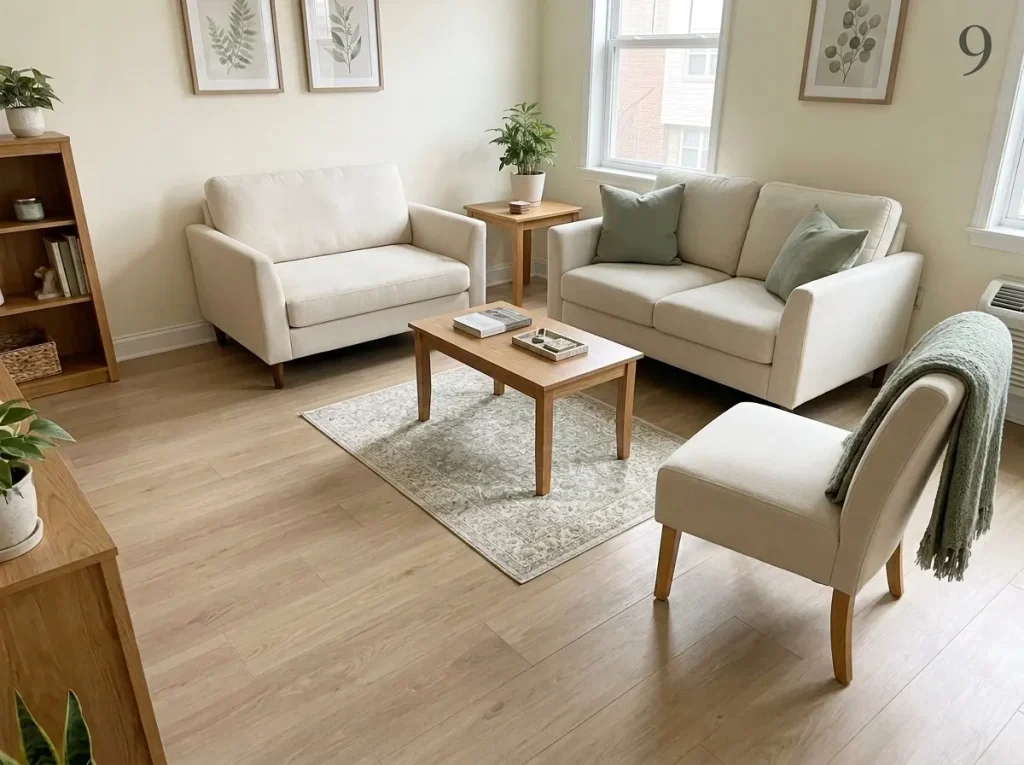
A tiny rug can make a small living room feel fragmented, as though each piece of furniture belongs to a separate zone. When the rug sits alone in the center, surrounded by wide strips of bare flooring, the seating arrangement may look smaller and less connected than it really is.
Start by measuring the seating area, not just the coffee table. Choose a rug large enough for the front legs of the sofa and nearby chairs to rest on it. If a standard size is too expensive or too large, position a smaller rug carefully beneath the central seating group rather than leaving it floating in an empty gap.
A low-pile rug in a light neutral shade can help maintain an open appearance while adding warmth underfoot. Subtle patterns and visible texture bring character without overwhelming the room. Before purchasing, mark the proposed rug dimensions on the floor with painter’s tape to check how it fits your furniture and walking paths.
Overcrowded Wall Decor
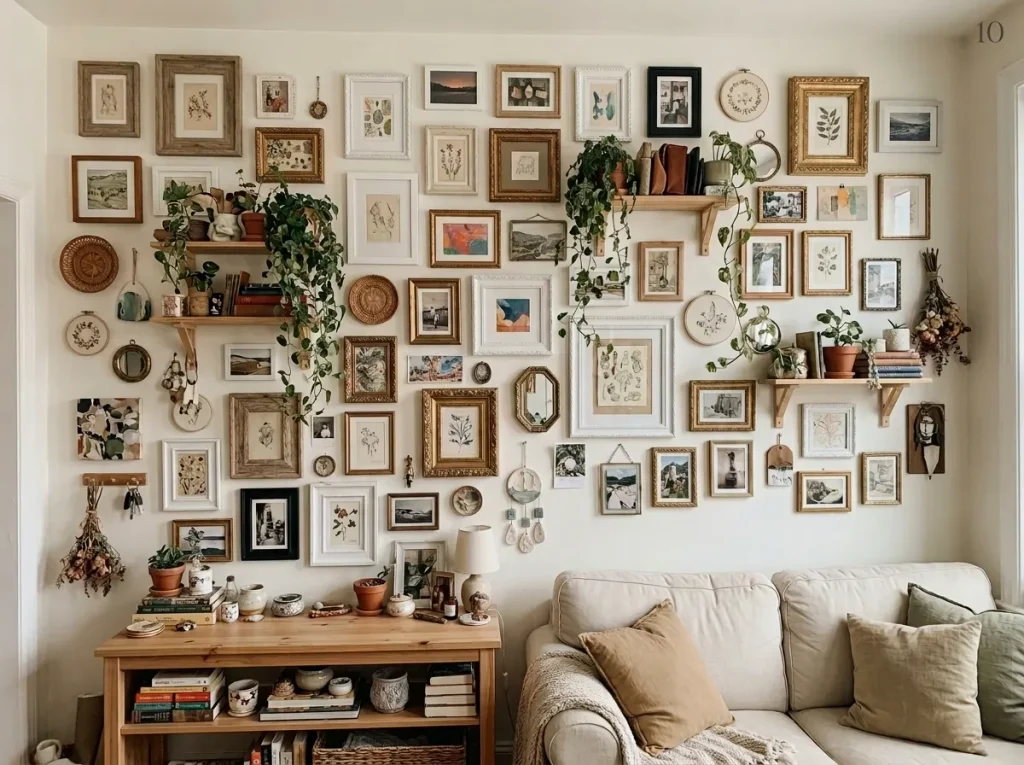
Walls filled with too many frames, shelves, and decorative objects can compete with your furniture for attention. Even meaningful artwork loses its impact when every available space is covered. A more deliberate arrangement creates a focal point and allows the room’s colors, textures, and furnishings to work together.
- Choose a focal point: Hang one larger artwork above the sofa instead of scattering many tiny frames.
- Create balanced spacing: Leave consistent gaps between pictures in a gallery wall.
- Match the furniture scale: Keep artwork proportional to the wall and the furniture beneath it.
- Leave breathing room: Allow some wall space to remain completely empty.
You do not have to remove every favorite print to achieve a calmer look. Group smaller frames into one organized arrangement, or rotate seasonal artwork instead of displaying everything simultaneously. In a compact home, thoughtful placement often creates more impact than adding another decorative piece.
Our Instagram : Blossom Dream Decor
Excessive Open Storage
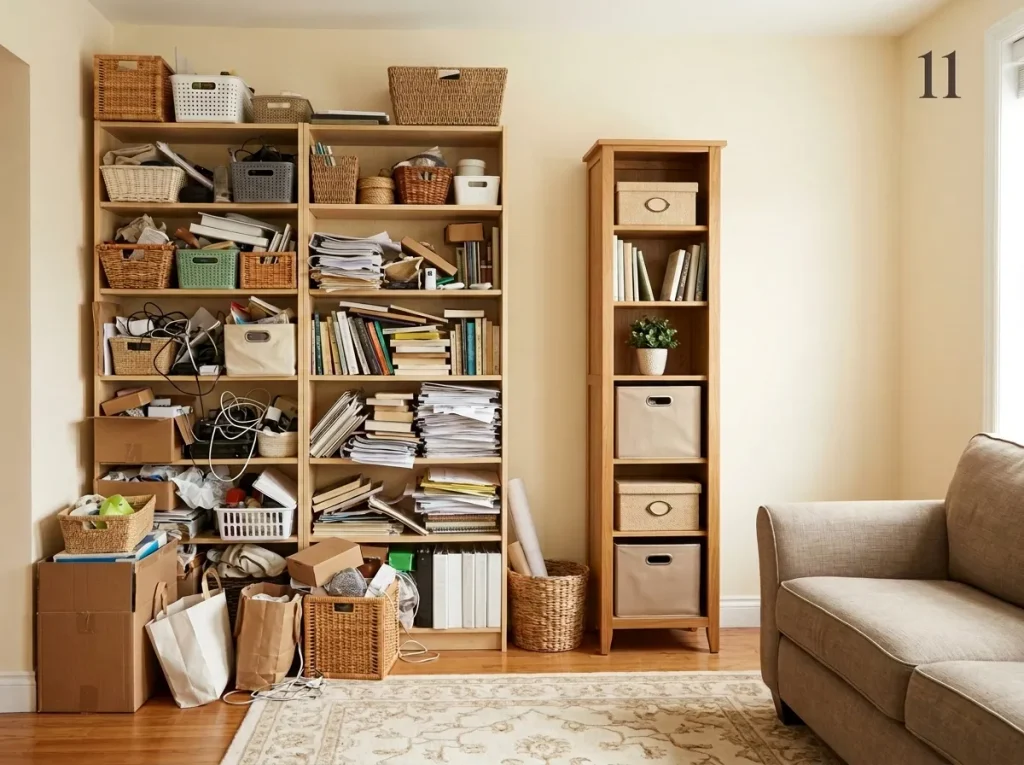
Open shelves can make everyday belongings easy to reach, but too many exposed items can leave a small home looking untidy. Rows of mismatched containers, stacked papers, visible cables, and crowded bookcases create constant visual activity, even when everything is technically in its place.
- Use closed cabinets for paperwork, chargers, toys, and other everyday essentials.
- Group similar items in matching baskets or storage boxes.
- Keep frequently used belongings on accessible shelves.
- Display only a few decorative objects between practical storage items.
- Hide loose cables with clips or simple cable covers.
The secret is balancing display space with hidden storage. A narrow cabinet with doors can conceal visual clutter while preserving valuable floor space. Keep open shelves for objects worth seeing, such as favorite books, pottery, and greenery. This arrangement makes tidying easier and helps the room maintain a calmer appearance between cleaning sessions.
Poor Mirror Placement
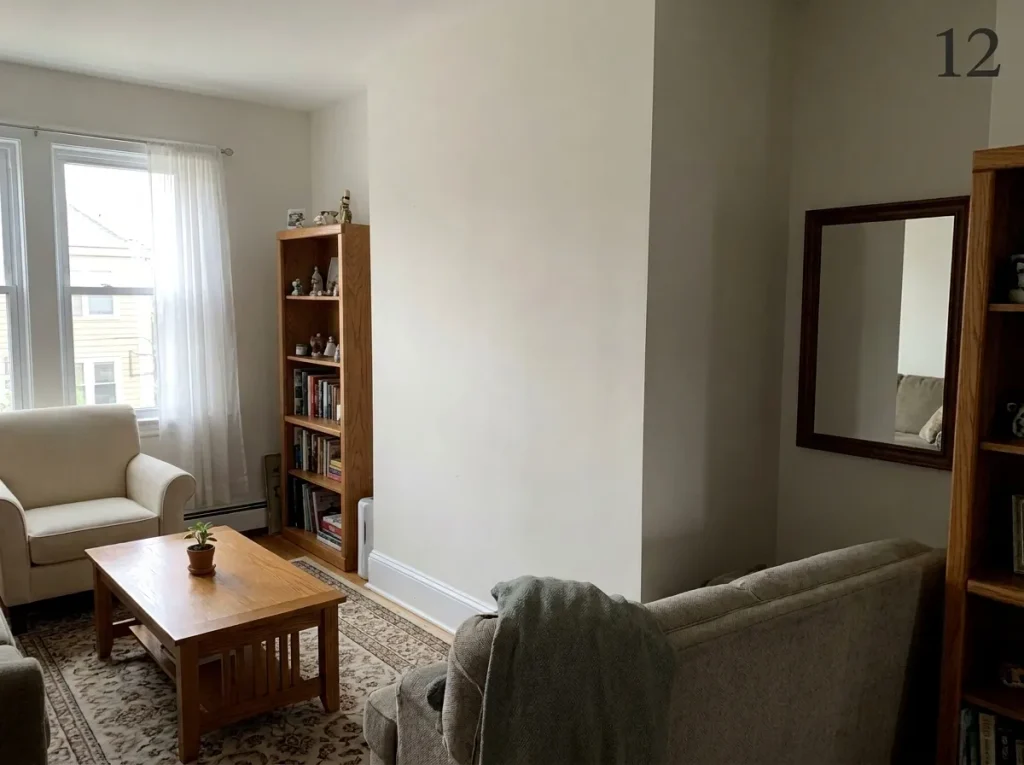
BEFORE
A mirror hangs in a dim corner facing a blank wall. It reflects little of interest, and the room still feels dark despite the reflective surface.
AFTER
The mirror sits where it catches daylight from a nearby window and reflects a pleasant view, such as greenery, curtains, or an attractive part of the room. The reflection adds visual depth without taking up extra floor space.
Mirrors work best when you consider what they reflect, not simply where they fit. A large vertical mirror can make a narrow entryway feel more open, while a horizontal mirror can visually widen a small wall. Secure heavier mirrors properly, and avoid positioning them where they create distracting glare or reflect clutter.
Ignoring Hidden Clutter
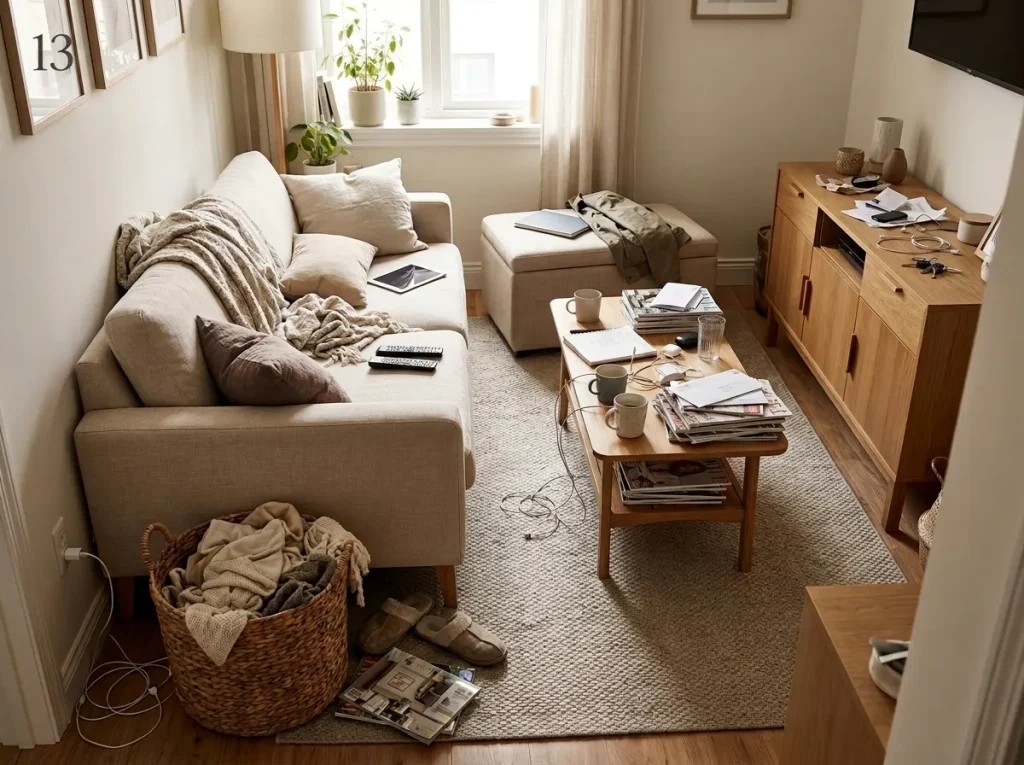
A room can look beautifully decorated and still feel crowded because everyday belongings have nowhere to go. Remotes, charging cables, blankets, magazines, and shopping bags quickly collect on visible surfaces. Without a simple storage routine, even a thoughtful layout becomes harder to maintain.
- Choose furniture with storage: Look for an ottoman with a lift-up lid or a coffee table with drawers.
- Create a drop zone: Place a small tray near the entrance for keys, wallets, and everyday essentials.
- Use attractive baskets: Keep blankets and frequently used items together in one designated spot.
- Reset surfaces daily: Spend five minutes returning loose items to their proper places.
Hidden storage works especially well in small apartments because it reduces visible clutter without requiring extra cabinets. In my experience, the easiest systems are those placed close to where items are actually used. Keep storage accessible, avoid overfilling containers, and give every frequently used belonging a clear home.
Mismatched Furniture Scales
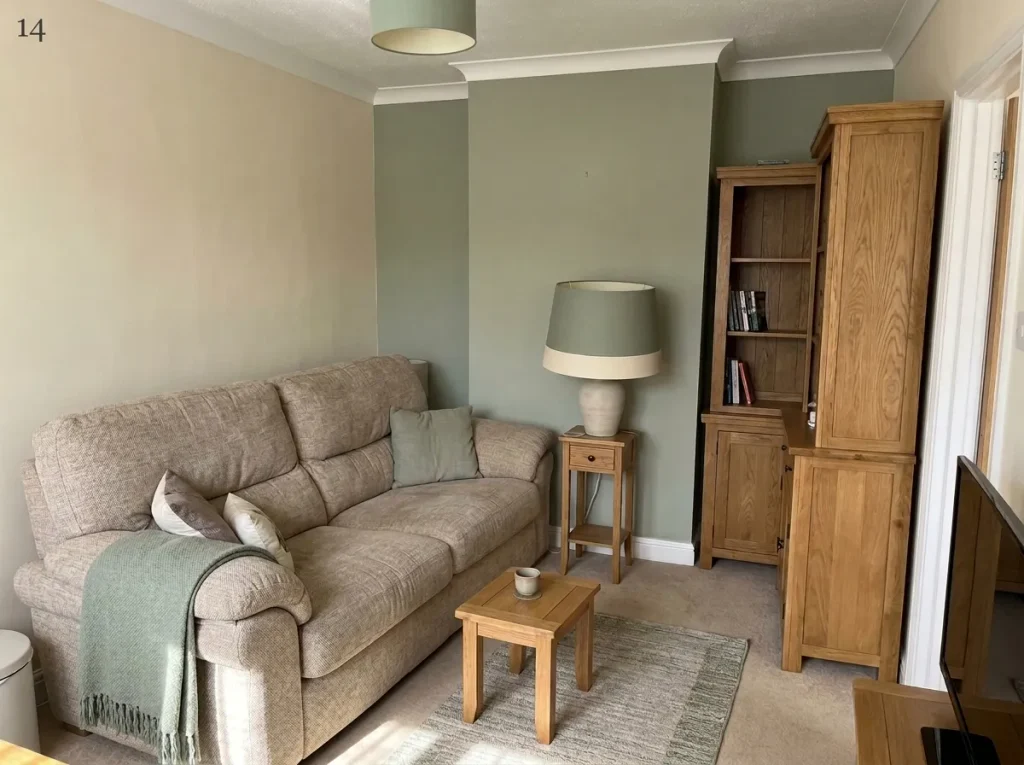
| Oversized or undersized choice | Better proportion |
| A tiny coffee table beside a deep sofa | A table sized to suit the sofa’s width |
| A bulky lamp on a narrow side table | A slim lamp with a stable base |
| A massive cabinet on a short wall | A compact cabinet with suitable height |
| Several equally heavy furniture pieces | A mix of solid and visually light pieces |
Furniture does not need to match perfectly, but its proportions should make sense together. A massive sofa beside delicate tables can feel unbalanced, while tiny artwork above a large sofa may look lost. Compare the width, height, and visual weight of each item before bringing it home.
Measure the available area and use painter’s tape to outline larger purchases on the floor. Check product dimensions carefully, including depth, because a piece that fits along the wall may still obstruct a walkway. Combining substantial anchor pieces with slimmer accents creates a room that feels intentional without appearing overcrowded.
If you missed our previous post, read it here: Blossom Dream Decor
Neglecting Room Function
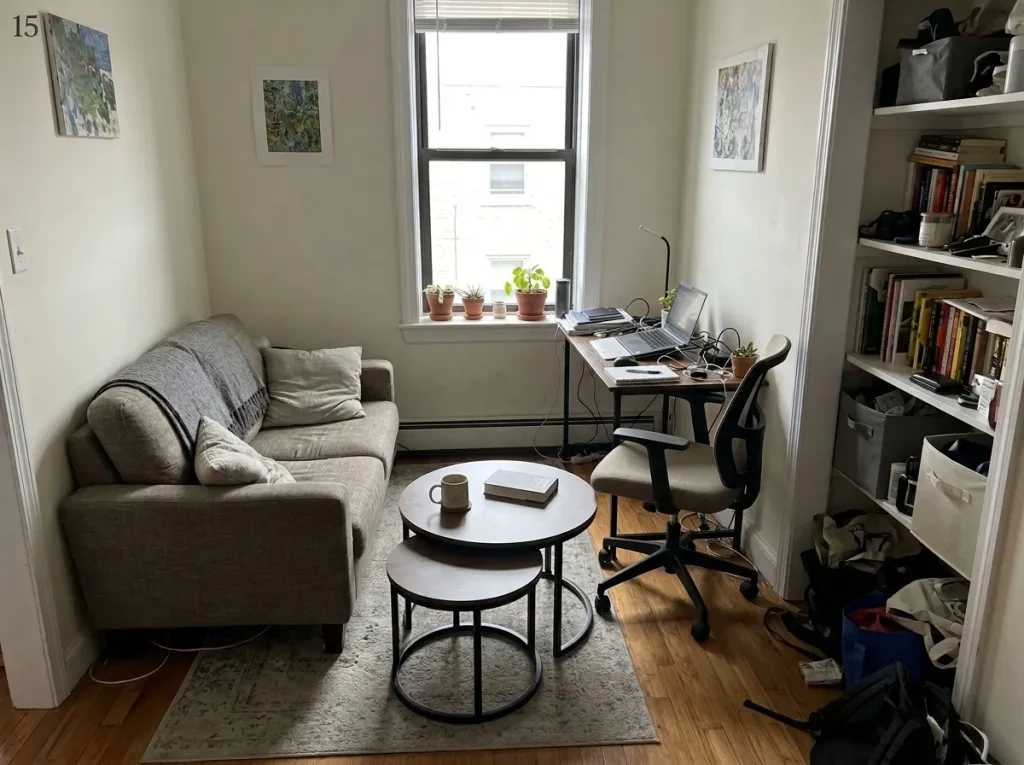
DO
- Decide how each room will be used before arranging furniture.
- Keep frequently used items close to the activities they support.
- Choose nesting tables or folding furniture for flexible layouts.
- Leave enough clearance for doors, drawers, and everyday movement.
DON’T
- Block a window with a tall cabinet.
- Place a desk where chair movement obstructs the main walkway.
- Fill a small bedroom with furniture that serves no clear purpose.
- Sacrifice comfortable movement just to fit another decorative item.
A beautiful room should support your daily routine, not make it more difficult. A small living room may need space for relaxing, working, and entertaining, while a compact bedroom may require accessible clothing storage and clear bedside access. Prioritize your most frequent activities, then choose furniture and décor that serve those needs. Good design starts with how you live.
Conclusion
Creating a beautiful small home is less about having more space and more about making thoughtful decorating choices. By avoiding common mistakes, you can improve walking paths, reduce visual clutter, balance your furniture, and make every corner feel more comfortable.
Start with one change that will make your daily routine easier. Rearrange your furniture, simplify a crowded shelf, or bring more natural light into your room. Small adjustments can have a meaningful impact without stretching your budget.
Save this guide on Pinterest for your next decorating project, try your favourite ideas, and share it with someone who wants a more functional, welcoming home. Your dream space can begin with one simple change.



One Comment