
18 Ways: How to Make a Small Living Room Look Bigger?
Does your living room feel cramped even after you tidy it? Learning how to make a small living room look bigger can help you create a brighter, calmer space without knocking down walls or replacing everything you own.
Often, the real problem is not the room’s size. Bulky furniture, blocked pathways, poor lighting, heavy curtains, and too much visual clutter can all make limited space feel tighter. In my experience, correcting the layout and removing unnecessary pieces often produces the biggest improvement first.
This guide walks you through 18 practical changes you can test at home, from furniture placement and mirrors to color, lighting, rugs, storage, and styling.
Assess Your Small Living Room Layout

Before moving furniture, figure out exactly what is making the small living room feel smaller. Walk through the space and notice where you squeeze between pieces, where doors or drawers struggle to open, and whether bulky furniture blocks windows or important sight-lines. These clues reveal the layout problems worth fixing first.
In my experience, measuring before rearranging saves a lot of unnecessary work. Note the small living room dimensions and the width and depth of your largest furniture. Then identify pieces you rarely use. Understanding the actual problem gives you a practical starting point instead of randomly moving everything around the room.
Create Clear Walking Paths

Clear walking routes are one of the first things to address when learning how to make a small living room look bigger. A room feels cramped when you constantly step around tables, chairs, baskets, or sofa corners, even if the actual floor area is reasonable.
- Find the main route. Walk naturally from the entrance toward the sofa, window, and adjoining rooms.
- Move obstacles aside. Relocate stools, baskets, plants, and occasional tables that interrupt that route.
- Check furniture corners. Reposition larger pieces if their edges project awkwardly into circulation areas.
- Test daily movement. Walk through the finished arrangement several times and make sure doors and drawers still open comfortably.
- Keep the route clear. Avoid allowing bags, toys, or decorative items to gradually reclaim the pathway.
Choose Smaller Scale Furniture

Quick Tip:
Measure the small living room and existing furniture before buying replacements. Focus on physical width and depth rather than labels such as “apartment size,” since product dimensions can vary significantly between brands.
Oversized seating can dominate a compact room even when it technically fits. Choose pieces that provide the seating you genuinely need while leaving visible flooring and comfortable circulation around them. Slim arms, shallower profiles, raised legs, and compact tables usually create less visual weight than bulky furniture with thick bases and oversized proportions.
Pull Furniture From Walls

Common Mistake:
Pushing every piece of furniture tightly against the walls can make the small living room feel rigid and emphasize its boundaries. It may also leave an awkward empty area in the middle without improving useful circulation.
The Fix:
Move the sofa or chairs a few inches forward where the floor plan allows. Group seating around the coffee table while protecting the main walking paths, rather than automatically using every wall as a furniture line.
Even a small gap behind a sofa can create visual depth and make the seating arrangement feel more intentional. I’ve seen this work best when furniture still leaves comfortable circulation around the room. Do not force the technique in extremely narrow spaces where pulling furniture forward would obstruct everyday movement.
Use Light Wall Colours for Small Living Room

Image Description:
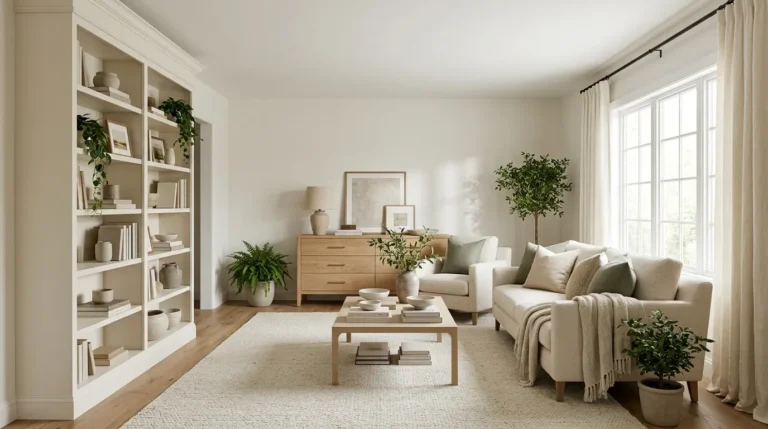
A bright small living room with warm off-white walls, a soft cream sofa, pale oak flooring, and a light beige textured rug. Blush cushions, muted sage accessories, sheer ivory curtains, and leafy plants add gentle color. Abundant window light creates a fresh, open, realistic Pinterest-style interior.
What You Need:
- Warm white paint: Creates a bright neutral backdrop without feeling overly stark.
- Paint samples: Test several shades directly on different walls before choosing.
- Neutral furnishings: Cream, oatmeal, and pale beige help maintain visual continuity.
- Soft accent colors: Sage, dusty pink, or muted lavender can add personality in controlled amounts.
- Natural daylight: Check each paint sample during morning, afternoon, and evening conditions.
Light walls can reflect more available light and reduce the visual weight of a compact room, but pure white is not your only choice. Soft cream, warm beige, pale greige, or gentle pastels can work too. Test samples first because orientation and artificial lighting can noticeably change how a color appears.
Maximise Natural Light

Before:
Heavy curtains, tall furniture, and crowded window sills reduce incoming daylight and make the brightest wall feel visually blocked. Dark corners become more noticeable, making the small living room appear enclosed.
After:
Lightweight window treatments frame the glass without covering unnecessary portions of it. Low furniture stays away from the main window area, while a cleaner sill allows daylight to spread farther across the room.
Natural light helps reveal more of the room at once, which can create a brighter and more open impression. Keep windows clean, remove unnecessary objects from the sill, and avoid placing tall storage directly in front of the glass. For privacy, consider sheer curtains paired with practical blinds suited to your needs.
Our Facebook Page : Blossom Dream Decor
Hang Curtains Higher

Higher curtains guide the eye upward and can make both the window and surrounding wall appear taller.
Do This:
- Mount the curtain rod closer to the ceiling when the wall and window proportions allow.
- Extend the rod beyond both sides of the window so open curtains reveal more glass.
- Choose panels long enough to reach the floor cleanly.
- Use lightweight fabrics that allow the window area to feel bright.
Avoid This:
- Hanging the rod directly above the window without considering wall height.
- Choosing curtains that stop awkwardly above the floor.
- Covering large sections of glass with bulky fabric when curtains are open.
- Using overly heavy patterns that dominate a compact room.
I’ve noticed that curtain placement can change the perceived proportions of a room surprisingly quickly. Keep the panels wide enough to look full when closed, but let them stack mostly beyond the glass when open. The result is a taller-looking wall, a broader-looking window, and better access to valuable daylight.
Add Strategic Mirrors in Small Living Room

Best For: Reflecting daylight and extending visual depth
Difficulty: Easy
Cost: Low to moderate, depending on mirror size
Pro Tip: Reflect an open, attractive view rather than a cluttered storage area
A well-positioned mirror can bounce available light around the living room while visually extending what the eye sees. Before hanging one, test several positions and inspect the reflection from your main seating area. One substantial mirror often creates a cleaner result than several small mirrors scattered across already busy walls.
Choose Leggy Furniture

Seeing more continuous floor area helps furniture feel less bulky in a compact living room. Sofas, chairs, consoles, and tables raised on visible legs allow your eye to travel underneath them instead of meeting solid bases. This creates lighter visual boundaries while keeping the furniture practical for everyday living.
You do not need every piece raised from the floor. Start with the largest items, particularly the sofa or media console, and balance them with simpler shapes elsewhere. Slim legs are most effective when the floor underneath stays uncluttered, so avoid filling those visible gaps with baskets, boxes, or loose cables.
Use One Large Rug

A properly sized rug visually connects separate furniture pieces and helps the seating area read as one calm zone rather than several disconnected objects. In a compact room, that continuity can make the floor plan feel broader and more organized while giving the furniture a clear arrangement to follow.
- Measure the seating zone. Note the full width of your sofa and chairs before shopping.
- Choose enough coverage. Aim for a rug large enough to sit beneath at least the front legs of the main seating pieces.
- Center the arrangement. Position the coffee table within the rug and balance seating around it.
- Keep flooring visible. Leave a consistent border of exposed floor where possible rather than covering the room wall to wall.
- Test before buying. Mark the rug dimensions with removable painter’s tape to check proportions.
Add Vertical Storage in Living Room

Quick Tip:
Use wall height before sacrificing more floor area. Keep frequently used items within comfortable reach, and reserve higher shelves for lightweight decor or belongings you access less often.
Vertical storage can provide useful capacity while keeping the room’s footprint relatively open. Choose shallow shelving, floating shelves, or wall-mounted cabinetry that suits the available wall. Keep displays edited rather than filling every shelf. Tall freestanding furniture should also be properly secured according to its manufacturer’s instructions to reduce tipping risk.
Simplify the Colour Palette

Common Mistake:
Too many unrelated colors can divide a compact room into small visual sections. Strong competing shades across furniture, curtains, rugs, and accessories may make the space feel busier than necessary.
The Fix:
Choose one light base color, one supporting neutral, and one or two restrained accent shades. Repeat those colors across cushions, artwork, textiles, and small accessories so the eye moves smoothly around the room.
If you’re learning how to make a small living room look bigger, color continuity is one of the easiest principles to apply without changing the floor plan. You can still use personality-rich shades. Simply repeat them intentionally and give lighter neutrals more visual space, especially across larger surfaces and furniture.
Our Instagram : Blossom Dream Decor
Reduce Visual Clutter

A room can have plenty of floor space and still feel cramped when every surface competes for attention. Start by removing items that have no regular use or clear decorative purpose, then organize what remains so the eye can rest.
- Clear flat surfaces. Remove unnecessary objects from the coffee table, console, and side tables.
- Group small decor. Display a few related objects together instead of scattering them around the room.
- Hide everyday clutter. Give remotes, chargers, toys, and paperwork dedicated drawers, baskets, or boxes.
- Control visible cables. Route cords neatly behind furniture using suitable cable-management accessories.
- Leave empty space. Resist filling every shelf, tabletop, and corner simply because space is available.
Choose Multipurpose Furniture for Small Living Room

Quick Tip:
Before buying a new piece, ask whether it can perform two useful jobs. Furniture that combines storage, seating, or surface space can reduce the total number of objects needed in a compact room.
A storage ottoman can hold blankets while serving as a table or occasional seat, while nesting tables provide extra surfaces only when required. Choose functions that match your actual routine rather than buying complicated furniture you rarely use. Always check dimensions first, since multipurpose pieces can still overwhelm a room if oversized.
Layer the Lighting
Common Mistake:
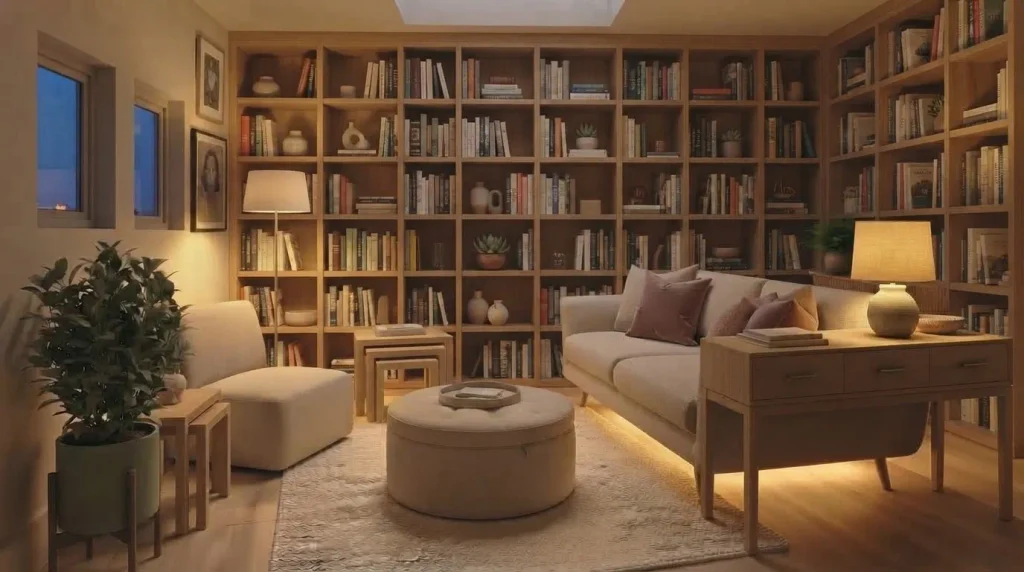
Relying on one central ceiling fixture can leave corners dim while creating harsh light in the middle of the small living room. Those darker edges can make the usable space feel visually limited, especially after sunset.
The Fix:
Combine general lighting with smaller light sources at different heights. Place a floor or table lamp near a darker corner, use warm bulbs with compatible fixtures, and keep lamps positioned where they support real activities such as reading.
Layered lighting helps reveal more of the small living room after natural daylight fades, giving walls, corners, and furniture better visual definition. Choose fixtures with slim profiles so they do not create new clutter. You do not need many lamps. A few well-positioned sources usually produce a calmer, more balanced evening atmosphere.
Use Larger Decor Sparingly

A few larger decorative pieces can create stronger focal points than dozens of tiny accessories, helping the small living room feel calmer and less fragmented. The goal is not oversized everything. It is choosing fewer objects with enough visual presence to stand on their own.
- Choose one focal piece. Start with substantial artwork, a mirror, or another appropriately scaled wall feature.
- Reduce tiny accessories. Remove decorative objects that make shelves and tables look crowded.
- Create breathing room. Leave visible space around larger pieces rather than surrounding them with extra decor.
- Repeat selectively. Carry one or two colors from the focal piece into cushions or smaller accessories.
- Check the scale. Make sure large decor complements nearby furniture instead of visually overpowering it.
For more ideas, check out our previous article: 24 Cozy Small Bedroom Ideas for a Blissful Retreat
Avoid Common Space-Shrinking Mistakes

Quick Tip:
Before buying anything new, check whether your existing choices are making the small living room feel more crowded. Correcting one oversized furniture piece, undersized rug, blocked window, or cluttered surface can sometimes accomplish more than adding another decorative feature.
Common problems often work together. Heavy curtains reduce daylight, bulky furniture narrows pathways, and a tiny rug visually breaks the seating area into smaller sections. Review the room from the doorway and remove the biggest source of visual weight first. Change one element at a time so you can judge the actual improvement.
Make Small Changes First

Common Mistake:
It is easy to assume a cramped small living room needs new furniture, new paint, and a complete makeover. Buying several pieces before testing the existing layout can waste money and introduce even more clutter.
The Fix:
Start with free changes such as removing unnecessary objects, clearing pathways, repositioning furniture, and opening the curtains fully. Then test inexpensive adjustments before investing in larger furniture or permanent updates.
The best approach to how to make a small living room look bigger is often gradual. I’ve seen simple changes reveal that a room needs far less work than expected. Rearrange first, observe how the space functions for several days, and spend money only where a specific problem still remains.
CONCLUSION
Knowing how to make a small living room look bigger gives you a practical way to improve your space without starting an expensive renovation. Better furniture placement, clearer pathways, natural light, thoughtful colors, smart storage, and simpler styling can all contribute to a room that feels calmer and more open.
I’ve seen how making even one well-chosen change can completely shift the result. Start with the easiest tip, live with it for a few days, then adjust what still feels crowded. Save this article on Pinterest for future reference, try these ideas at home, and share it with someone who needs a little more breathing room.


One Comment