
24 Cozy Small Bedroom Ideas for a Blissful Retreat
A small bedroom can feel warm, restful, and deeply inviting without being filled with furniture or expensive decor. These cozy small bedroom ideas focus on simple changes that bring comfort, personality, and better function to even the tightest sleeping spaces.
From layered bedding and warm lighting to hidden storage, soft curtains, natural wood, and thoughtful decorative details, each idea gives you something practical to try. In my experience, the coziest rooms are not necessarily the largest or most decorated. They are the ones where color, texture, lighting, and layout work together naturally. Whether your bedroom feels cramped, unfinished, or simply needs more warmth, these 24 ideas will help you create a peaceful retreat that feels comfortable from morning to night.
1. Layered Cozy Bedding

Nothing makes a small bedroom feel more comforting than a bed with soft, intentional layers. Start with breathable neutral sheets, add a lightweight quilt or duvet, then finish with one textured throw and two or three cushions. Mixing linen, cotton, and knit textures creates depth without requiring additional furniture or floor space.
In my experience, restraint matters just as much as softness in compact rooms. Too many pillows and heavy blankets can overwhelm a smaller bed and create daily clutter. Keep the largest layers cream or beige, then introduce blush, lavender, sage, or another muted accent through smaller textiles for a restful finish.
2. Warm Bedside Lighting
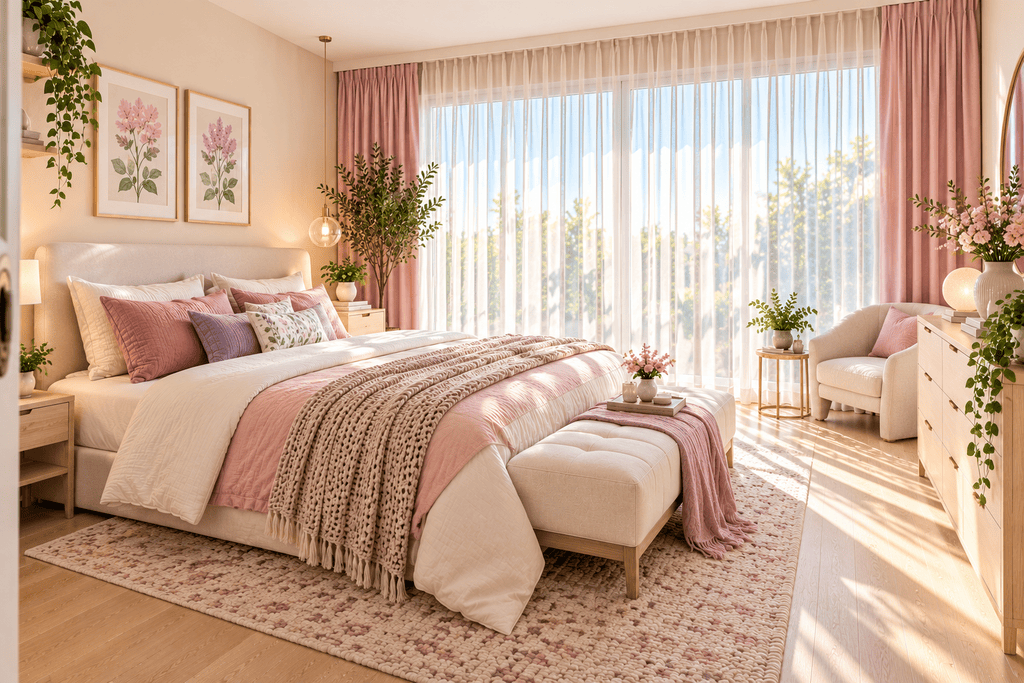
Harsh overhead lighting can make even a beautifully decorated bedroom feel less relaxing.
- Choose warm white bulbs rather than cool, blue-toned lighting for the bedside area.
- Place a small lamp close enough for comfortable reading without flooding the whole room.
- Use a fabric or frosted shade to soften glare and spread light gently.
- Keep the lamp proportional to a narrow nightstand or floating shelf.
- Add dimming control where practical so brightness can change between reading and winding down.
Among practical cozy small bedroom ideas, lighting delivers a noticeable mood change without consuming much space. I’ve noticed that several gentle light sources usually feel calmer than one bright ceiling fixture. Keep task lighting functional, but avoid making every corner equally bright. A little contrast helps the room feel warmer and more restful.
3. Soft Neutral Palette
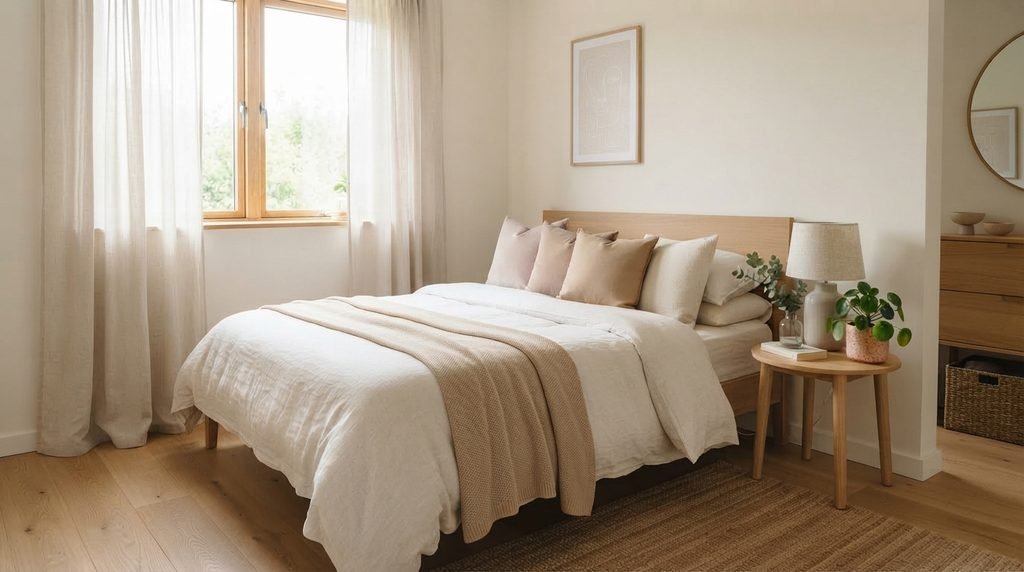
Quick Tip:
Choose three main tones before decorating, such as warm white, oatmeal, and dusty rose. Repeat them across bedding, curtains, rugs, and small accessories so the room feels connected rather than visually fragmented.
Color can make a compact bedroom feel comforting without making it heavy. Warm neutrals create a quiet foundation, while subtle variations keep the scheme from appearing flat. Add texture through linen, boucle, woven fibers, or wood instead of introducing too many competing colors. Save stronger shades for a few controlled accents.
4. Cozy Window Nook

BEFORE:
The area beneath the window sits unused or becomes a drop zone for clothes and bags. The empty corner feels disconnected from the rest of the bedroom and offers no practical purpose.
AFTER:
A slim cushioned bench turns the same footprint into a comfortable reading spot. Soft textiles and natural light give the corner a clear function while making the room feel more welcoming.
A window nook works best when it does not interfere with curtains, vents, or walking space. Choose a narrow bench or storage seat that fits completely within the available area. I’ve seen this work especially well in bedrooms where there is no room for a full armchair but a cozy sitting spot is still wanted.
5. Textured Area Rug

Cold, exposed flooring can make a compact bedroom feel less inviting, especially first thing in the morning.
- Measure the bed area. Choose a rug large enough to extend beyond the sides where your feet naturally land.
- Pick a soft texture. Wool, washable woven fibers, or low-pile styles add comfort without excessive bulk.
- Use quiet colors. Cream, beige, taupe, or a subtle pattern keeps the floor visually calm.
- Secure the rug. Add an appropriate rug pad to reduce slipping and bunching.
A well-sized rug visually connects the bed and nearby furniture, helping separate the sleeping zone without adding walls or bulky pieces. Avoid undersized rugs that appear to float awkwardly beside the bed. For easier maintenance in a frequently used bedroom, prioritize a material you can realistically clean and care for.
6. Sheer Layered Curtains
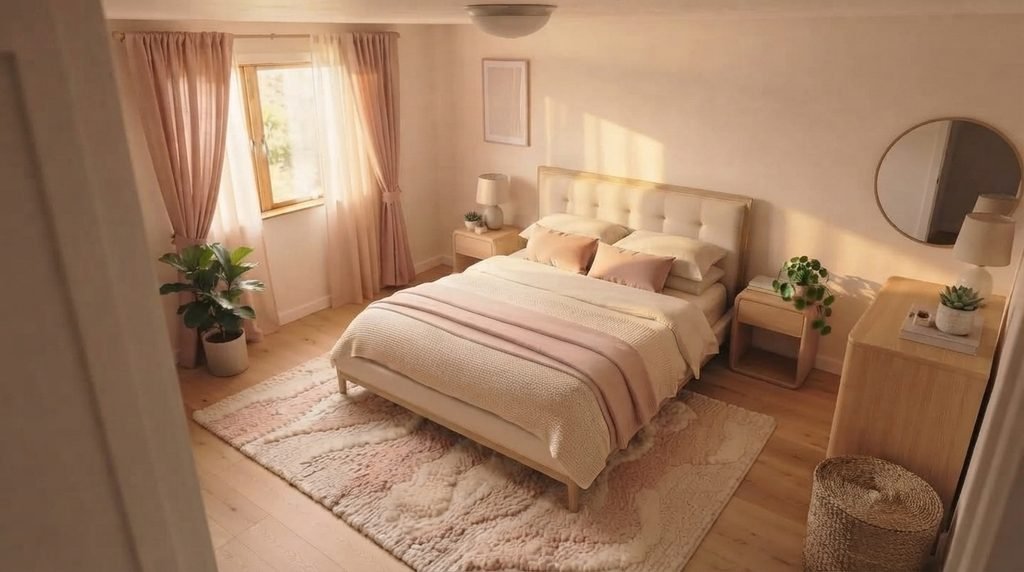
| Feature | Single Heavy Curtain | Layered Curtains |
| Daytime light | Often blocks more light | Sheers soften natural light |
| Privacy control | Limited flexibility | Adjustable throughout the day |
| Visual texture | One fabric layer | Soft layered appearance |
| Mood | Heavier and darker | Warm and airy |
Curtain layers let you control privacy and softness without making a small bedroom permanently dark. Keep the sheer panel light and translucent, then choose simple outer drapes for nighttime coverage. Mounting both layers high can also emphasize vertical space. Avoid overly thick fabrics unless strong light blocking is genuinely needed.
Our Facebook Page : Blossom Dream Decor
7. Canopy Bed Draping
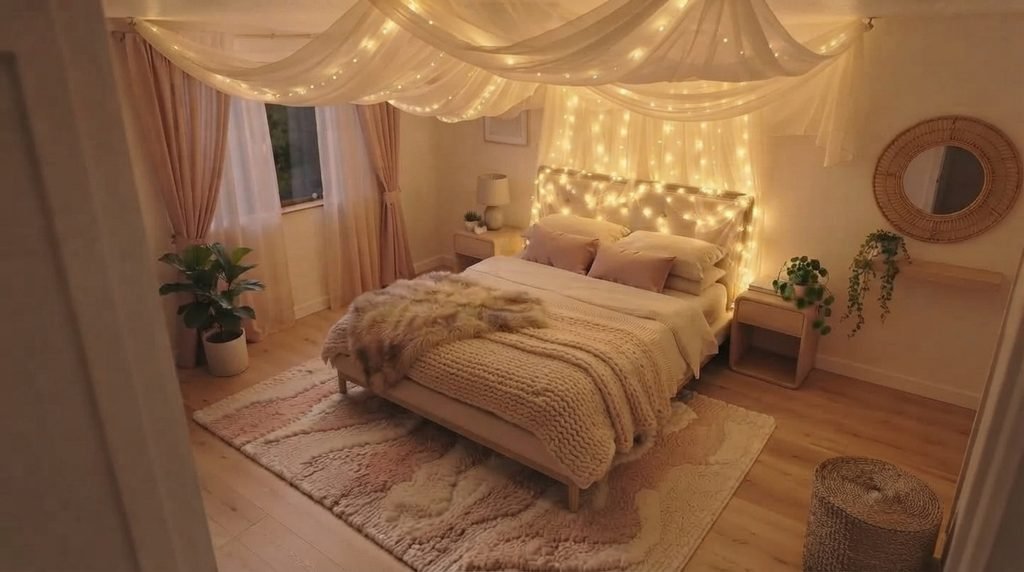
DO:
- Choose lightweight, breathable fabric in ivory, cream, or soft beige.
- Keep the draping simple so the bed remains visually open.
- Secure all ceiling fixtures properly with suitable hardware.
- Leave fabric safely away from lamps, heaters, candles, and other heat sources.
DON’T:
- Use thick, dark fabric that visually closes in the bed.
- Hang excessive layers around every side.
- Allow loose material to obstruct walkways.
- Place decorative lights against fabric unless they are suitable for that use.
Canopy styling can give a compact sleeping area a softer sense of enclosure without adding bulky furniture. The key is keeping the material light and restrained. A simple overhead treatment draws attention upward while framing the bed as the room’s main comfort zone. Safety and secure installation should always come first.
8. Candlelight Corner
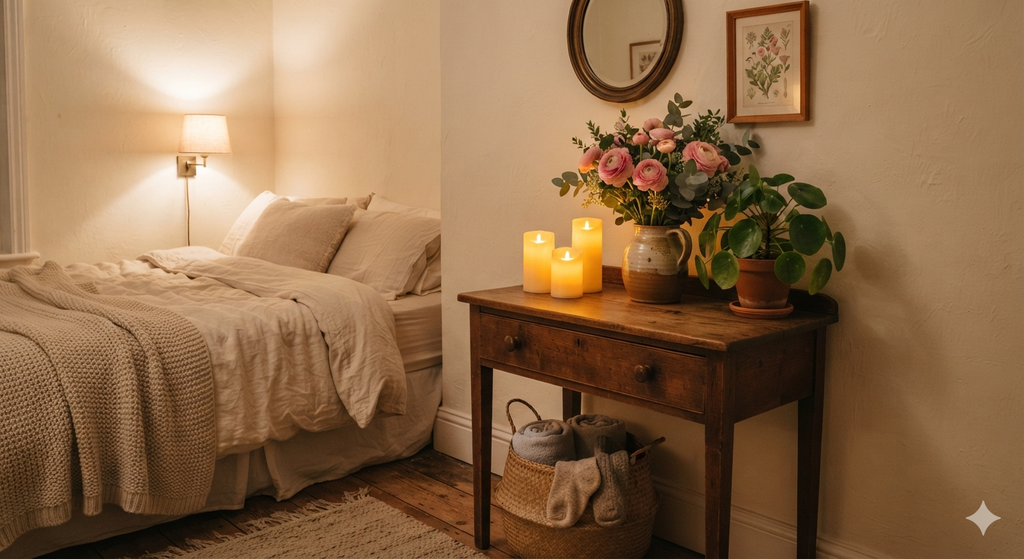
Cost: Low | Time: 10 Minutes
Skill Level: Beginner
Best For: Creating a softer evening atmosphere
Safer Choice: Quality flameless candles
A little warm glow can change the mood of a bedroom once daylight fades. Group two or three flameless candles at different heights on a stable surface for depth without introducing another lamp. Battery-operated options also work well on narrow shelves where cords would look messy. Keep the arrangement simple and uncluttered.
9. Natural Wood Accents

Natural wood brings warmth into a bedroom without relying on dark colors or excessive decoration. A pale oak nightstand, simple timber frame, or small floating shelf introduces visible grain and texture while keeping the palette calm. In compact rooms, repeating one similar wood tone also helps separate pieces feel more connected.
I’ve noticed that two or three wooden elements are usually enough to establish warmth. Mixing many strongly different finishes can make a limited room look busier than intended. Pair lighter timber with cream textiles, woven fibers, soft pink accents, and greenery for a relaxed look that still feels visually organized.
10. Bedside Basket Storage
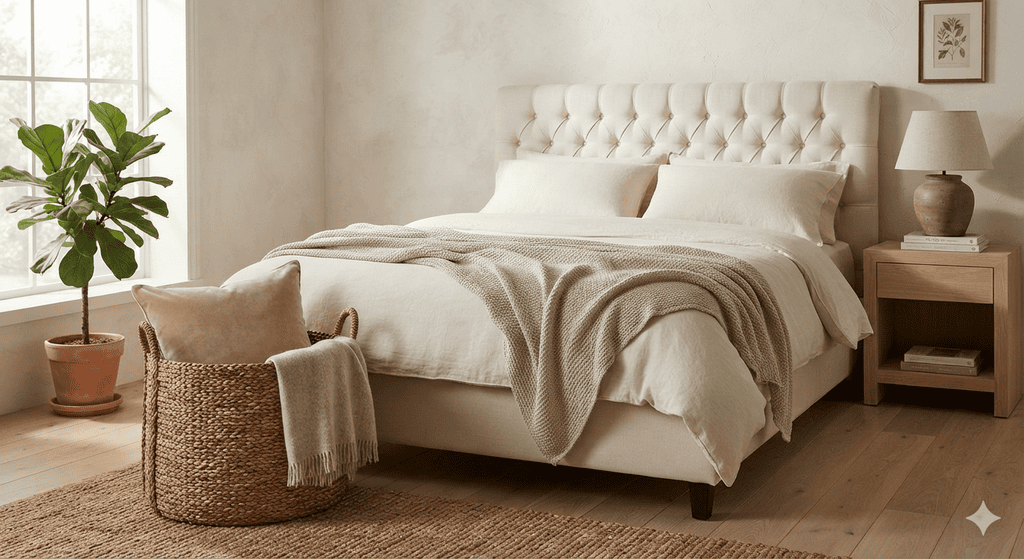
Soft items often end up piled on chairs or dropped at the foot of the bed.
- Place one medium woven basket beside the bed or in an unused corner.
- Store extra blankets, throws, or decorative pillows inside instead of leaving them exposed.
- Choose a basket with handles so it can be moved easily during cleaning.
- Match the basket tone to nearby wood or neutral textiles for visual consistency.
- Avoid filling it above the rim, which can make the room look cluttered again.
A single basket gives loose textiles a designated home while adding natural texture to the bedroom. I’ve found this especially useful for throws that are used every evening but do not need permanent drawer space. Measure the available floor area first, and choose a basket that does not narrow your walking path.
11. Fairy Light Headboard
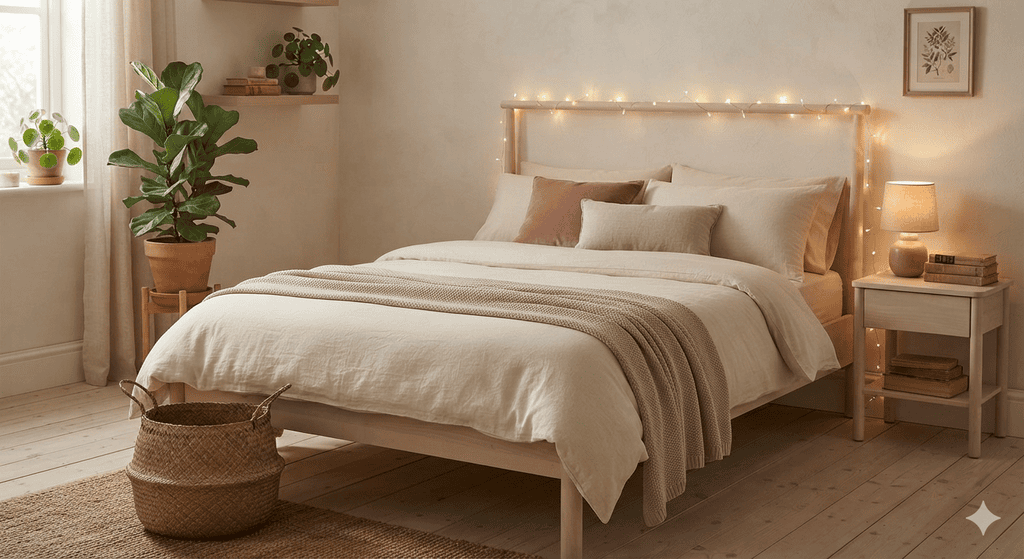
Quick Tip:
Choose low-heat LED string lights intended for indoor decorative use, and follow the manufacturer’s installation instructions. Keep cords tidy, avoid damaged wiring, and never wrap unsuitable lights tightly around fabric or other materials.
Gentle points of warm light can make the bed feel more inviting without occupying a nightstand or floor area. Keep the arrangement restrained rather than covering the entire wall. For the most relaxing effect, combine the lights with neutral bedding and one warm bedside lamp instead of bright overhead lighting.
12. Plush Reading Chair

BEFORE:
An empty corner collects laundry, bags, or miscellaneous items because it has no clear purpose. A full-size lounge chair would overwhelm the limited floor area and interrupt movement around the bed.
AFTER:
A compact upholstered chair gives the corner a defined function without dominating the room. One cushion, a small throw, and focused lighting create a comfortable spot for reading or winding down.
Comfort depends on scale as much as softness. Measure the corner and walking clearance before choosing a chair, then look for a compact silhouette with modest depth. Among cozy small bedroom ideas, this works best when the chair replaces clutter rather than adding to an already crowded layout. Keep nearby accessories intentionally minimal.
13. Under-Bed Storage

Hidden space beneath the bed can handle everyday storage without adding another bulky cabinet.
- Measure the clearance. Check the exact height, width, and available pulling space before buying containers.
- Group similar items. Store spare bedding, seasonal clothes, or less frequently used linens together.
- Choose covered storage. Lidded boxes or built-in drawers help protect belongings from dust.
- Label discreetly. Small labels make stored items easier to find without creating visual clutter.
- Keep access clear. Avoid placing baskets or furniture where drawers need to open.
Under-bed storage works because it uses an area that often contributes nothing to daily function. In my experience, it is most effective when contents are organized by category rather than packed randomly. Leave frequently used essentials elsewhere, and reserve this hidden zone for items that need occasional rather than constant access.
our previous article : 22 Small Bedroom Ideas That Feel Surprisingly Spacious
14. Upholstered Headboard

| Feature | Wooden Headboard | Upholstered Headboard |
| Surface feel | Firm and structured | Soft and cushioned |
| Visual effect | Crisp and natural | Warm and inviting |
| Reading comfort | May need extra pillows | Provides padded support |
| Texture | Wood grain | Fabric adds softness |
An upholstered headboard adds comfort exactly where it matters without taking valuable usable floor space. Choose a slim profile and durable fabric rather than an oversized, deeply padded design. Warm beige, oatmeal, or muted blush works especially well with neutral bedding, giving the bed a softer focal point without overwhelming compact proportions.
15. Clutter-Free Nightstand

DO:
- Keep only nightly essentials within easy reach.
- Use a drawer or small tray for chargers and personal items.
- Choose one decorative object instead of several tiny accessories.
- Clear the surface regularly before clutter begins accumulating.
DON’T:
- Stack unread books beside the lamp indefinitely.
- Leave tangled charging cables across the tabletop.
- Choose decor that blocks useful surface space.
- Treat the nightstand as storage for unrelated items.
A calmer bedside surface helps the entire sleeping area look more restful, especially when every object is visible from the bed. Keep practical necessities nearby but give smaller items a concealed home. The goal is not an empty nightstand. It is a useful surface that remains easy to maintain each evening.
16. Warm Wall Sconces

Cost: Low to Moderate
Installation Time: About 1 to 2 hours
Best For: Freeing bedside surfaces
Result: Softer, focused evening lighting
Wall sconces create a warm pool of light around the bed while leaving nightstands available for practical essentials. Adjustable designs are especially useful for nighttime reading. Choose warm white bulbs and position fixtures where light reaches comfortably without shining directly into your eyes. For hardwired models, use a qualified professional where required.
17. Blush Accent Layers

Blush works beautifully in compact bedrooms because it introduces warmth without the visual heaviness of deeper reds. Start with a neutral cream or oatmeal foundation, then repeat muted pink through two or three smaller details. Cushions, a folded throw, artwork, or flowers provide enough color to make the room feel thoughtfully connected.
I’ve noticed that softer, slightly muted pinks are easier to live with than highly saturated shades. Keep large furniture neutral and let blush act as an accent rather than covering every surface. Pair it with pale timber, warm white, beige, and greenery for a layered palette that still feels restful.
Check Out Our Instagram : Blossom Dream Decor
18. Floating Bedside Shelf

A narrow floating shelf gives bedside essentials a home without filling precious floor space.
- Mount the shelf near mattress height so essentials remain comfortable to reach.
- Choose a shallow depth that holds a lamp, phone, and book without projecting into the walkway.
- Use secure fixings appropriate for the wall type and expected load.
- Keep styling limited to a few useful objects rather than filling the entire surface.
- Pair it with a wall light if the shelf is too narrow for a lamp.
Floating furniture exposes more visible flooring, which can help a compact bedroom feel less crowded while preserving everyday function. Before installation, check the wall construction and nearby electrical routes. A simple shelf in pale wood or a wall-matching finish usually feels lighter than a traditional cabinet beside the bed.
19. Cozy Gallery Wall

Quick Tip:
Arrange the frames on the floor before hanging anything, keeping consistent spacing between each piece. Limit the collection to three or four coordinated prints so the wall feels personal without becoming visually crowded.
A gallery wall can bring personality into a small sleeping space without using any floor area. Choose artwork that repeats colors already found in your bedding and textiles, then use similar frames for continuity. Keep the overall arrangement narrower than the bed or dresser below it for a balanced, intentional composition.
20. Floor-Length Curtains

BEFORE:
Short curtains stop near the window frame and visually divide the wall. The window can appear smaller, while exposed wall sections create extra horizontal lines in an already compact room.
AFTER:
Long curtains extend from near the ceiling to the floor, creating a stronger vertical line. The window feels more substantial, and soft fabric introduces warmth without requiring additional furniture or decorative objects.
Curtain length can influence how the proportions of a bedroom are perceived. Mount the rod higher than the window frame where practical, then let the fabric reach the floor without excessive pooling. Light neutral materials maintain softness while reflecting daylight, making this especially useful for bedrooms with limited natural brightness.
21. Hidden Storage Ottoman
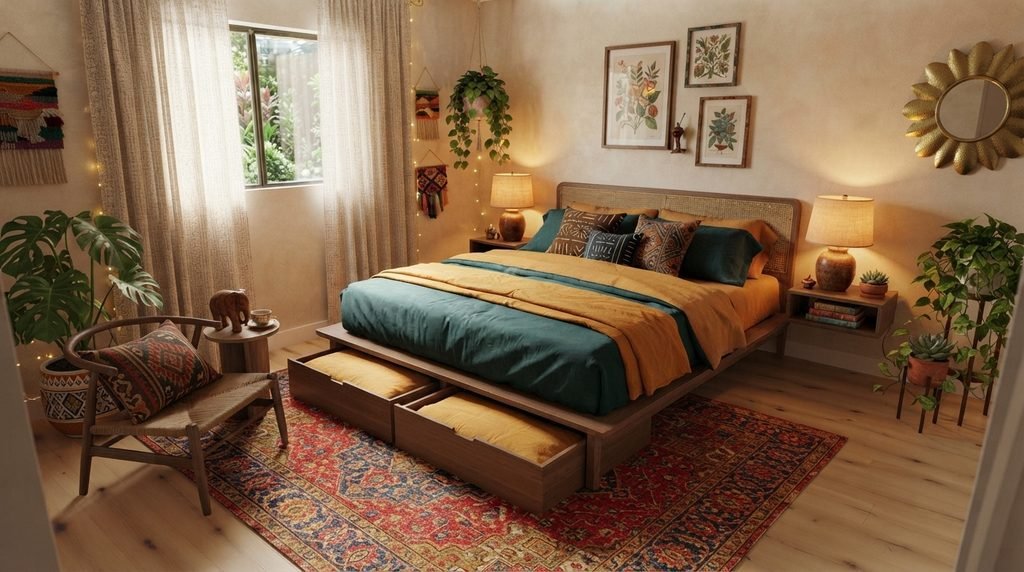
A storage ottoman earns its footprint by combining comfort, organization, and everyday function.
- Measure the walkway. Leave comfortable clearance between the ottoman, bed, and nearby furniture.
- Choose hidden storage. Look for a lift-up top with enough capacity for blankets or spare pillows.
- Match the scale. A compact round or narrow design usually feels lighter in a limited layout.
- Coordinate the fabric. Repeat a tone already present in the bedding or rug.
- Avoid overfilling. Keep the lid easy to open and close safely.
Among useful cozy small bedroom ideas, multifunctional furniture is especially valuable because every piece serves a clear purpose. A storage ottoman can hold soft items while providing occasional seating or a convenient place to set folded clothes. Keep it only if enough walking space remains around the bed.
22. Botanical Greenery
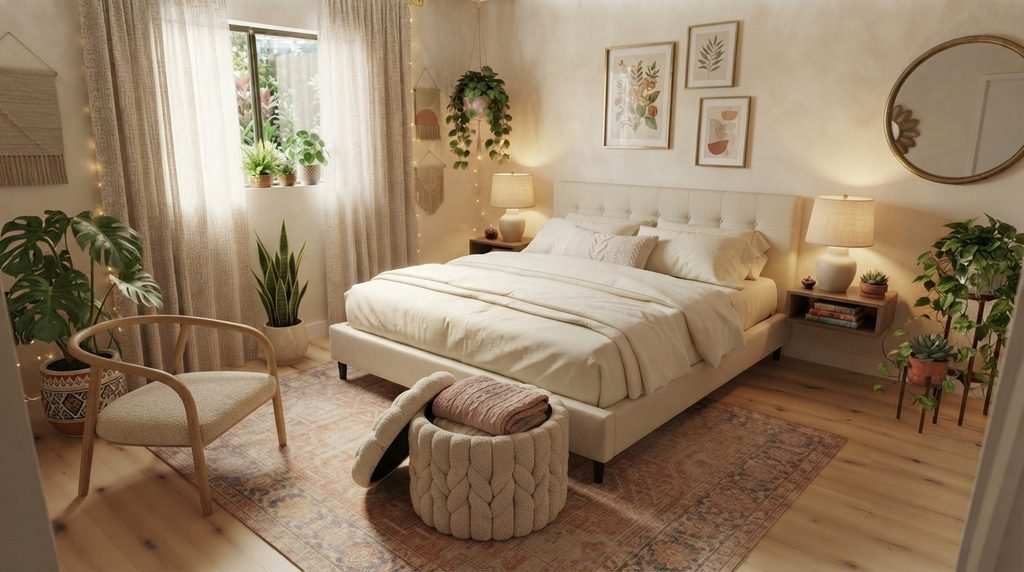
Cost: Low to Moderate
Care Level: Depends on plant variety
Best For: Adding natural color and texture
Works In: Shelves, windowsills, and bedside corners
Greenery introduces organic shape and color without requiring a complete decorating change. Choose plants suited to the actual light conditions in your bedroom rather than selecting them only for appearance. One or two well-placed plants are usually enough in a compact room. If maintenance is difficult, realistic artificial greenery can provide a similar visual accent.
23. Soft Ceiling Glow

Overhead lighting feels far more relaxing when it supports the room instead of overpowering it. A compact flush-mount fixture with a diffused shade distributes light gently while keeping the ceiling visually uncluttered. Warm white light also complements cream textiles, natural timber, and muted colors better than a harsh cool-toned bulb.
In my experience, the most comfortable bedrooms use ceiling lighting for general visibility and smaller lamps for winding down. Consider dimming capability where suitable so brightness can change throughout the evening. Keep fixture dimensions proportional to the room, and have electrical work completed safely by a qualified professional where required.
24. Bedside Flower Styling

Fresh or realistic faux flowers can add a polished finishing touch without making a small bedroom feel heavily decorated.
- Choose a short arrangement that does not compete with the bedside lamp.
- Repeat one color from the bedding, artwork, or curtains for visual connection.
- Use a simple ceramic or clear glass vase rather than an oversized decorative vessel.
- Keep fragrant varieties subtle if strong scents disturb your sleep.
- Remove wilted leaves and refresh water regularly when using fresh flowers.
Small decorative details work best after the room’s practical needs have been solved. A modest floral arrangement adds color, softness, and an organic shape to an otherwise functional bedside surface. Keep enough room for essentials such as a phone or book, and let the flowers act as the final accent rather than extra clutter.
CONCLUSION
Creating a blissful bedroom is less about having extra square footage and more about making thoughtful choices. These cozy small bedroom ideas show how warm lighting, soft textiles, smart storage, natural textures, and carefully chosen decor can make a compact room feel calmer and more inviting.
I’ve noticed that even one small adjustment can noticeably change the atmosphere of a bedroom. Choose one or two ideas that suit your space and start there. Save this post on Pinterest so you can revisit your favorites, try the ideas you love, and share it with someone who wants a cozier bedroom too.


4 Comments