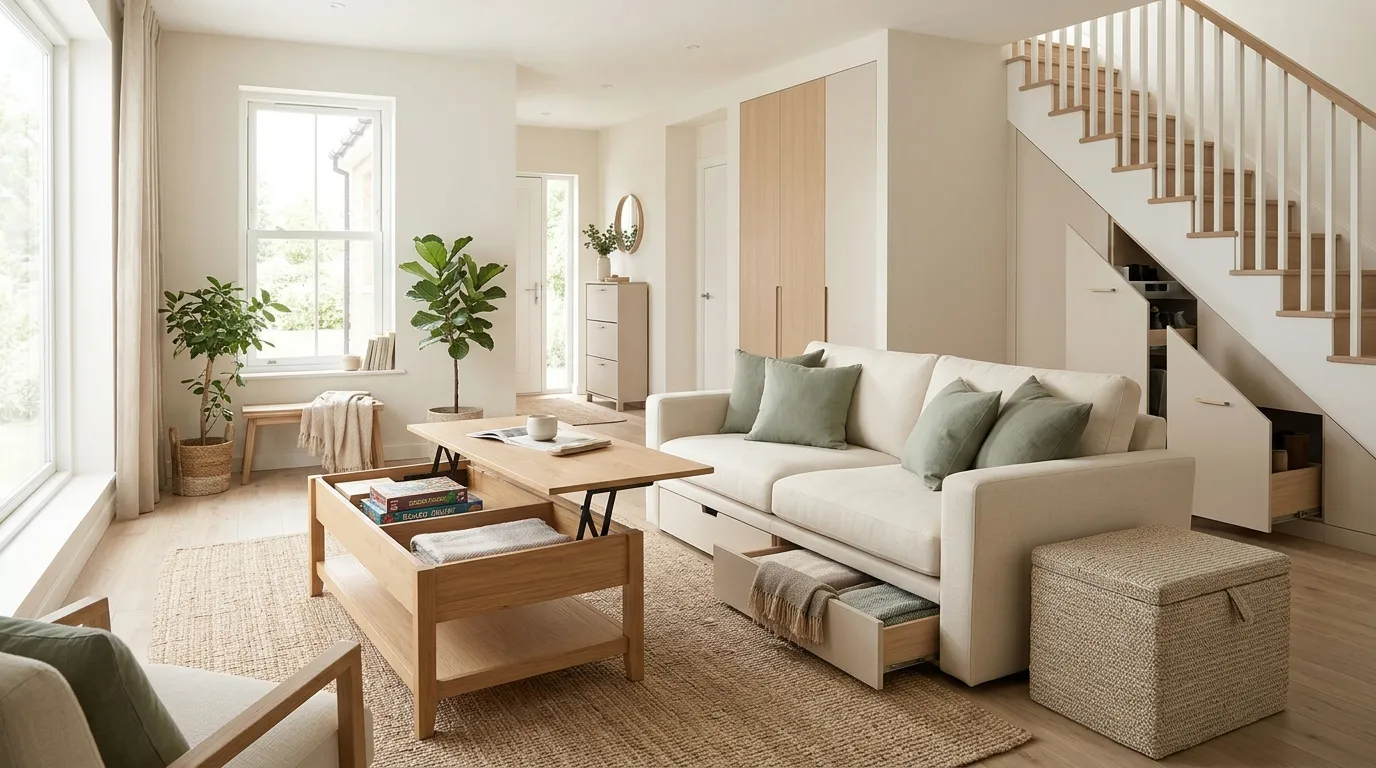
24 Hidden Storage Ideas for a Clever Clutter-Free Home
Clutter can make even a beautiful home feel cramped, especially when closets, cabinets, and shelves are already full. The secret to a tidier home might be in the spaces you’re overlooking!
These hidden storage ideas will help you find clever places to organise everyday belongings without sacrificing comfort or style. From drawers beneath your bed to storage ottomans, concealed wall cabinets, and smart kitchen organisers, you’ll discover practical ways to make every corner work harder.
Whether you live in a small apartment, share a busy family home, or simply want a calmer living space, these solutions offer inspiration for different rooms and needs. I’ve noticed that clutter often builds up when frequently used items don’t have a convenient place to go. By creating dedicated storage spots, you can make tidying easier and keep surfaces clear. Explore these ideas to discover simple changes that help your home feel more spacious, organized, and welcoming.
Under-Bed Storage Drawers

A clutter-free bedroom starts with the space you might be overlooking: underneath your bed. Low-profile storage drawers can hide extra blankets, seasonal clothing, spare sheets, and shoes without taking up valuable closet space.
Choose drawers with wheels for easy access, or use lidded containers that slide smoothly beneath the frame. Measure the available height before buying anything, and leave enough clearance for drawers to open comfortably. For a polished look, choose matching containers in neutral colors. Your floor stays clear, while everyday essentials remain close at hand.
Hidden Ottoman Compartments

- Store cozy essentials: Keep blankets, cushions, and spare pillow covers inside the ottoman.
- Choose a practical shape: A rectangular design works well against a sofa, while a round ottoman suits smaller seating areas.
- Match your furniture: Select upholstery that complements your sofa, rug, or curtains.
- Check the lid mechanism: A hinged or lift-top design makes frequent access easier.
- Keep heavy items elsewhere: Lightweight textiles are easier to lift and organize than bulky objects.
A storage ottoman earns its place by serving as seating, a footrest, and a concealed container in one compact piece. It’s especially useful in apartments where every furniture item needs to work harder. Before purchasing, check the internal capacity and stability, particularly if you plan to use it as extra seating.
Staircase Storage Drawers

Quick Tip:
Make use of the empty space beneath your stairs by installing pull-out drawers or fitted cabinets. Store shoes, bags, board games, cleaning supplies, or other items that tend to collect near the entrance. Measure each compartment carefully before planning the layout.
Built-in staircase storage can turn an awkward area into a practical organizational feature without adding freestanding furniture. Keep frequently used belongings in the easiest-to-reach drawers and reserve deeper compartments for seasonal items. If your staircase is structural or you plan to alter its supports, consult a qualified professional before making changes. For a simpler solution, freestanding cabinets may fit beneath some staircases without major construction.
Built-In Window Seats

BEFORE
A window corner often becomes wasted space or a collection point for books, blankets, and miscellaneous belongings. Adding a separate cabinet can make the area feel crowded, especially in a small bedroom or living room.
AFTER
A built-in window seat creates a comfortable place to read while concealing everyday clutter underneath. Deep drawers or lift-up bench storage can hold extra linens, toys, and seasonal accessories.
Choose a design that leaves the window unobstructed and allows drawers to open fully. If you rent, consider a freestanding storage bench with a cushioned top instead of permanent cabinetry. Finish it with washable cushions and a few coordinated pillows for a cozy nook that works hard without looking cluttered.
Floating Cabinet Storage

- Choose the right wall: Identify a suitable location with enough clearance for doors and cables.
- Measure your belongings: Check the dimensions of routers, remotes, game consoles, and other items you want to conceal.
- Plan cable access: Use suitable cable openings to keep wires organized and out of sight.
- Secure the cabinet properly: Attach it to appropriate wall framing or masonry using suitable hardware.
- Organize the interior: Use small boxes or dividers to separate electronics, chargers, and accessories.
Floating cabinets provide useful closed storage while leaving the floor visible beneath them, which can help a compact room feel more open. They work well in living rooms, bedrooms, and home offices where small items quickly accumulate. Keep ventilation in mind for electronics, and never exceed the cabinet’s rated weight capacity.
Hidden Bedside Shelves
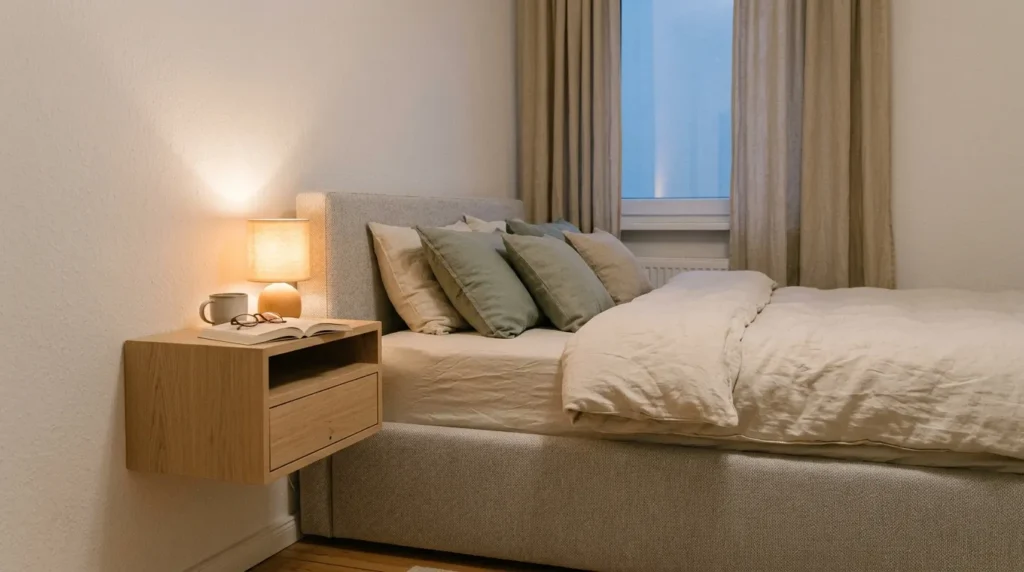
| Feature | Open Bedside Shelf | Concealed Bedside Shelf |
| Appearance | Displays books and accessories | Keeps small belongings out of sight |
| Best for | Items used throughout the day | Chargers, medications, and personal essentials |
| Cleaning | Items collect visible dust | Closed compartments reduce visual clutter |
| Space needs | Works in very narrow areas | Requires room for a drawer or door |
A compact bedside unit with a hidden drawer can keep glasses, charging cables, notebooks, and other nighttime essentials close without crowding your sleeping area. Measure the distance between your bed and wall before choosing a design. For renters, a small bedside cabinet or a shelf with a concealed compartment can provide similar benefits without permanent installation.
Toe-Kick Kitchen Drawers
DO
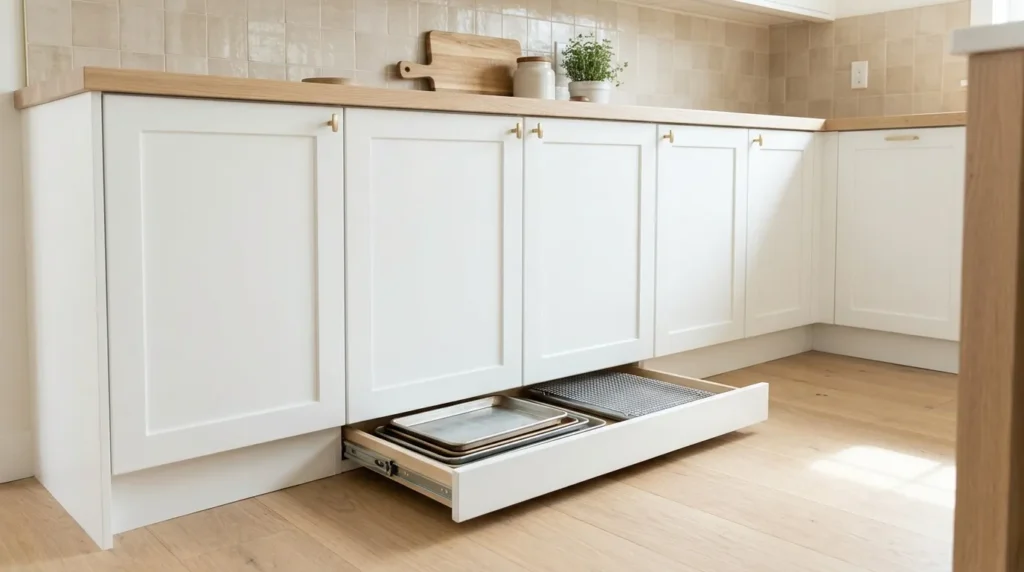
- Store flat baking trays, placemats, or rarely used kitchen linens in shallow compartments.
- Choose smooth-gliding drawer mechanisms designed for the available depth.
- Keep frequently used items in easy-to-reach cabinets.
- Check the clearance around appliances before planning the installation.
DON’T
- Store heavy pots in shallow drawers that cannot support their weight.
- Block ventilation openings or interfere with appliance access.
- Install drawers where they could catch feet or create a tripping hazard.
- Assume every existing cabinet can accommodate this modification.
Toe-kick drawers use the recessed space beneath kitchen cabinets that often goes unused. They are especially helpful in compact kitchens where additional storage is difficult to find. Since installation requires suitable cabinetry and careful measurements, ask a cabinet professional to assess the available space before making changes.
Storage Behind Mirrors
Cost: Moderate, depending on cabinet style and installation.
Time: A few hours for a straightforward replacement, potentially longer for custom fitting.
Skill Level: Beginner for a freestanding mirrored organizer; professional help may be needed for recessed installation.
Best For: Bathrooms, powder rooms, and compact dressing areas.
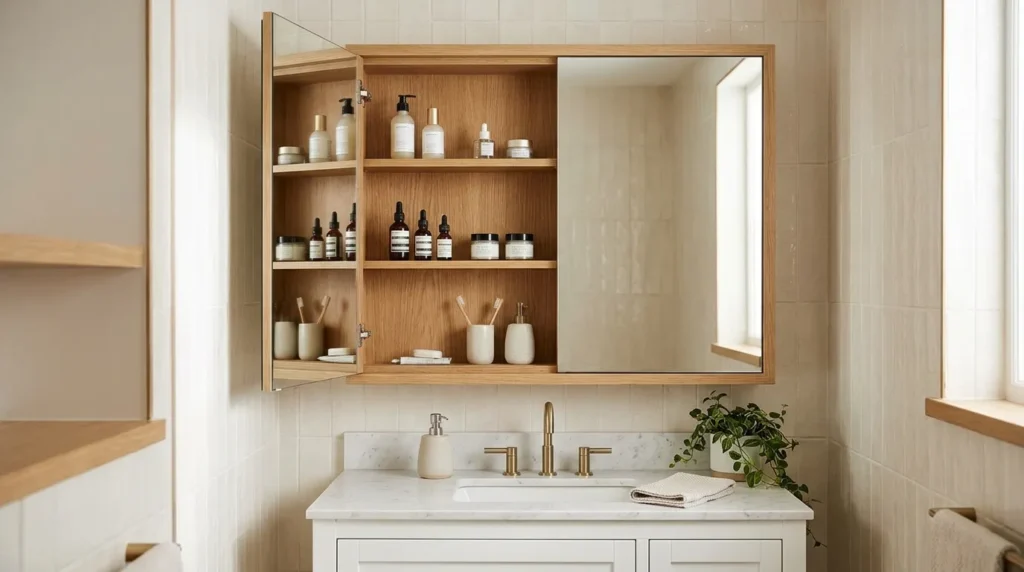
A mirrored cabinet can provide useful storage without adding another bulky piece of furniture. Keep daily skincare, grooming supplies, and small toiletries organized on adjustable shelves, grouping similar items in shallow containers. Before installing a recessed cabinet, check the wall for plumbing, electrical wiring, and structural obstacles. A surface-mounted model is often the simpler choice for renters or quick bathroom updates.
Hidden Sofa Storage

A sofa with built-in storage can hide bulky everyday items without requiring another cabinet. Lift-up chaise sections and under-seat compartments are useful for spare throws, board games, cushion covers, and other belongings that tend to gather in the living room.
Before choosing a model, check how much storage space the compartment offers and whether the seat mechanism is easy to operate. Keep heavier objects out of awkward lift-up sections, and avoid packing the compartment so tightly that it becomes difficult to close. In smaller homes, multifunctional seating helps preserve open floor space while keeping frequently used items nearby.
Pull-Out Pantry Shelves

BEFORE
Narrow gaps between kitchen cabinets often become wasted space, while pantry shelves can hide ingredients at the back. Small packets, cans, and spice jars become difficult to find, leading to cluttered shelves and forgotten groceries.
AFTER
A slim pull-out pantry makes use of that narrow gap and brings stored items into view. Sliding shelves can keep spices, canned foods, oils, and dry ingredients organized without taking up additional floor space.
Measure the gap carefully, including the space needed for the unit to slide out fully. Choose sturdy shelves with appropriate weight limits, and group similar ingredients together. Keep heavier containers on lower shelves to improve stability and make everyday cooking supplies easier to reach.
Concealed Laundry Hampers
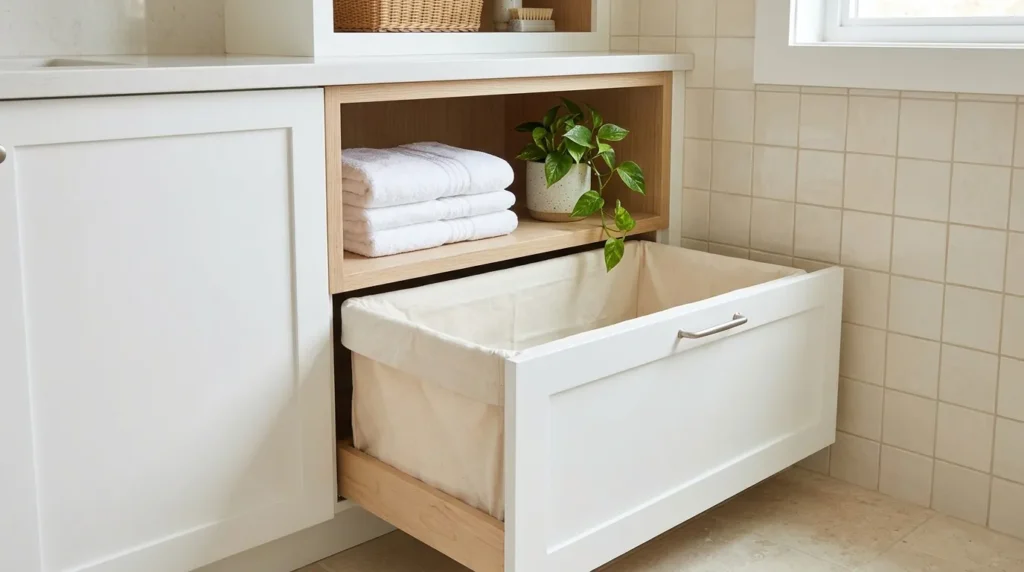
Quick Tip:
Place a pull-out laundry hamper inside a bathroom vanity, wardrobe, or laundry cabinet to keep worn clothes out of sight. Choose a removable, washable liner and ensure the compartment has enough ventilation to prevent damp laundry from developing unpleasant odors.
This setup is especially useful in small bedrooms and shared bathrooms where a freestanding hamper can make the room feel crowded. Separate light and dark clothing with divided bins if space allows, and empty the hamper regularly. Before installing a built-in unit, check that plumbing, cabinet hinges, and door movement will not interfere with the pull-out mechanism.
Hidden Desk Compartments
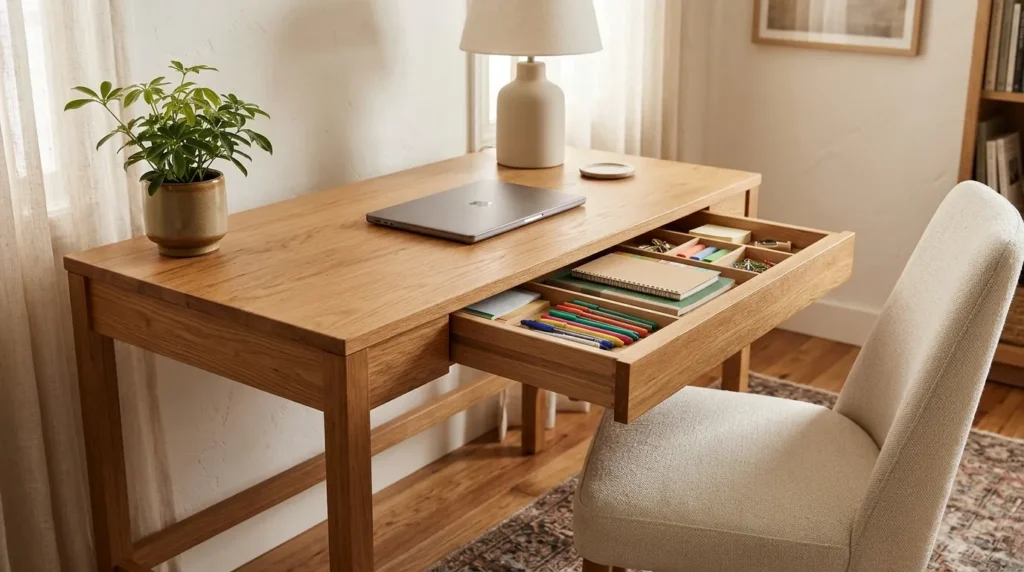
BEFORE
A desk can quickly become crowded with pens, sticky notes, charging cables, notebooks, and small electronic accessories. Even when the rest of the room is tidy, a cluttered work surface can make it harder to focus.
AFTER
A desk with concealed drawers or a hidden compartment keeps small supplies accessible without leaving everything on display. A shallow drawer can hold stationery, while a separate cable compartment keeps chargers and adapters organized.
Measure your everyday supplies before choosing a desk, and use small dividers to stop items from mixing together. Keep frequently used tools near the front and reserve deeper compartments for occasional supplies. For an existing desk, a slim under-desk organizer can provide similar storage without replacing your furniture.
Hidden Entryway Cabinets
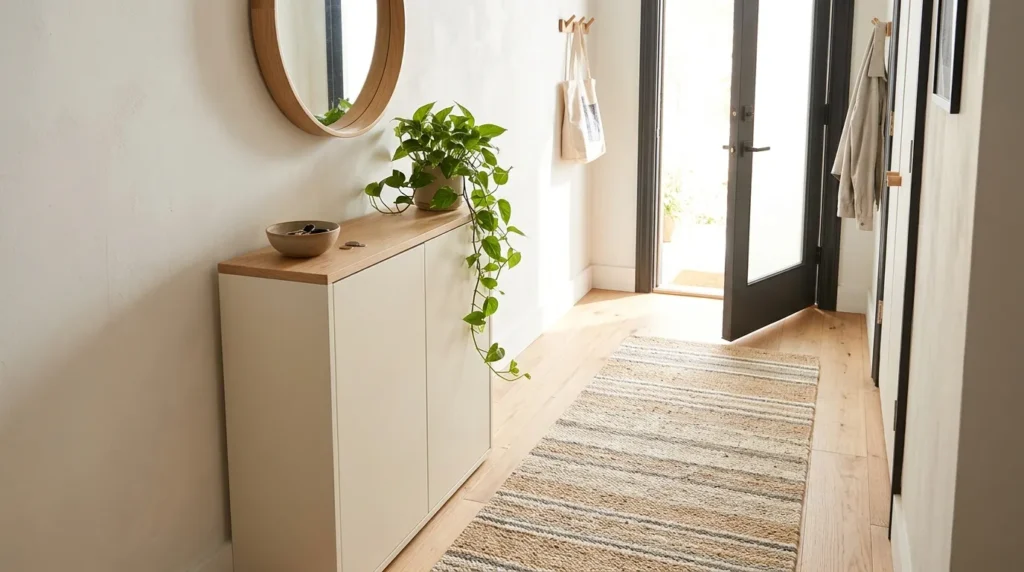
- Measure the entryway: Check the available width and depth so the cabinet doesn’t obstruct the doorway.
- Choose slim furniture: Look for a shallow shoe cabinet or narrow cupboard with closed doors.
- Sort everyday essentials: Group shoes, umbrellas, reusable bags, and outdoor accessories before filling the cabinet.
- Use internal organizers: Add adjustable shelves or small bins to separate belongings.
- Keep the top simple: Leave room for a small tray or bowl for keys and other daily essentials.
A concealed entryway cabinet helps prevent shoes and bags from spreading across the floor. Choose a design that suits your household’s routine, especially if several people use the same entrance. Leave enough clearance for doors to open, and secure tall furniture according to the manufacturer’s instructions to reduce tipping risks.
Hidden Bathroom Niches

| Feature | Recessed Wall Niche | Surface-Mounted Shelf |
| Storage position | Sits inside the wall | Projects into the room |
| Visual effect | Creates a streamlined appearance | Adds a visible storage feature |
| Installation | Requires suitable wall construction and waterproofing | Usually simpler to install |
| Best use | Planned bathroom renovations | Existing bathrooms needing extra space |
A recessed niche keeps shower products organized without adding a protruding rack that can make a small shower feel cramped. Plan its size around the bottles you actually use, and ensure the shelf materials suit wet conditions. Proper waterproofing is essential, so have a qualified professional install a niche in a shower wall. For an existing bathroom, a compact corner organizer may be a safer, simpler alternative.
Hidden Toy Storage Benches

DO
- Choose a bench with compartments sized for toys, puzzles, and children’s books.
- Use separate bins to group small pieces and make cleanup easier.
- Select a sturdy design with smooth edges and a stable base.
- Keep the most frequently used toys in easy-to-reach compartments.
DON’T
- Choose a lid that can slam shut or trap little fingers.
- Overfill compartments until toys become difficult to remove.
- Store heavy objects where children may struggle to lift them.
- Block walkways with baskets or benches placed too close to doors.
A storage bench gives children a convenient place to sit and a simple routine for putting toys away. It works well beside a play area, under a window, or along a living room wall. Look for child-appropriate safety features, and check the manufacturer’s guidance on lid support, weight limits, and age suitability before use.
Our Facebook Page : Blossom Dream Decor
Hidden Headboard Storage

Cost: Moderate, depending on the headboard design.
Time: A few hours for a simple furniture swap, longer for custom installation.
Skill Level: Beginner for ready-made furniture; intermediate for DIY modifications.
Best For: Small bedrooms with limited bedside space.
A storage headboard makes use of the area behind your pillows, keeping books, reading glasses, charging cables, and other nighttime essentials within reach. Some designs include hidden side compartments, while others offer discreet sliding panels or lift-up sections. Measure your bed and wall carefully before purchasing, and check cable access if you plan to charge devices nearby. Keep heavy objects securely stored so nothing can fall onto the bed.
Under-Sink Organisers
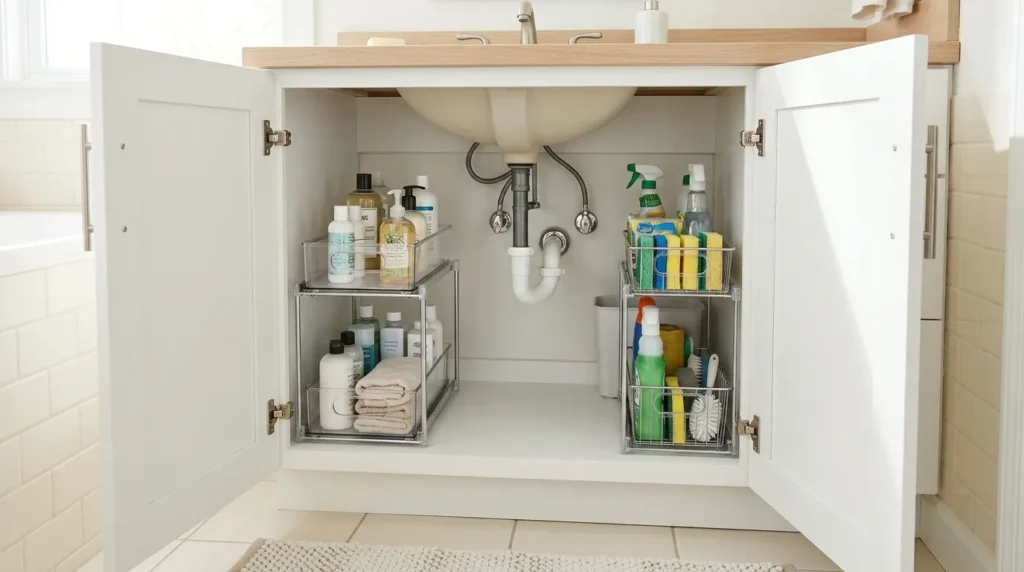
That awkward cabinet beneath the sink can hold far more than a jumble of cleaning bottles. A few well-chosen organizers can turn the space into a tidy storage zone while keeping everyday supplies out of sight.
Start by measuring around the pipes and checking how far the cabinet doors open. Use stackable bins or adjustable pull-out trays that fit the available space without blocking plumbing access. Keep cleaning products in their original, clearly labeled containers and away from children and pets. Group similar items together, and leave enough room to remove supplies without emptying the entire cabinet.
Concealed Charging Stations

- Choose a central location: Use a console, desk, or cabinet near the devices you charge most often.
- Group accessories: Keep cables, adapters, and spare charging leads in separate labeled compartments.
- Manage cable routes: Use suitable cable clips or built-in openings to prevent wires from tangling.
- Allow ventilation: Keep power adapters and charging equipment in spaces with adequate airflow.
- Keep the setup accessible: Make it easy to disconnect devices and inspect cables when needed.
A concealed charging station helps clear visual clutter from kitchen counters, bedside tables, and workspaces. Choose furniture designed for cable management or add a suitable organizer to an existing desk. Avoid enclosing hot power adapters in tight, unventilated compartments, and never overload outlets or hide damaged cables. A neat setup should keep electronics organized while allowing safe airflow and easy access.
Hidden Jewellery Drawers

Quick Tip:
Choose a shallow drawer with divided compartments to separate rings, earrings, bracelets, and necklaces. Soft drawer liners help protect delicate pieces, while small inserts prevent jewelry from tangling together. Keep frequently worn items near the front for quick access.
A concealed jewelry drawer keeps valuable accessories organized without leaving them scattered across a dressing table. If your furniture lacks built-in storage, a slim removable organizer can create the same effect inside an existing drawer. Measure the interior before purchasing inserts, and store delicate pieces away from moisture and direct sunlight. For valuable jewelry, use a secure location rather than relying on a decorative drawer alone.
Our Instagram : Blossom Dream Decor
Hidden Closet Shelves

BEFORE
A crowded closet can make getting dressed frustrating, especially when spare blankets, seasonal clothing, bags, and accessories compete for the same shelves. Items get pushed into corners and become difficult to find.
AFTER
Concealed upper shelves and matching storage boxes create dedicated spaces for belongings you don’t need every day. Seasonal clothing, travel accessories, and extra linens stay organized behind closed doors instead of spilling into the room.
Start by sorting items according to how often you use them, then reserve easy-to-reach shelves for daily essentials. Store lighter belongings on higher shelves and label boxes on the front so you can identify their contents quickly. Avoid stacking containers too high, and keep heavy items at a comfortable lifting height.
Hidden Coffee Table Storage

A coffee table with a concealed compartment helps keep the living room tidy without adding another storage cabinet. Use the hidden space for remote controls, coasters, magazines, board games, or other small items that tend to collect on the tabletop.
Choose a table with a stable lifting mechanism and enough internal space for the belongings you plan to store. Keep heavy objects out of compartments that require awkward lifting, and avoid overfilling the space. A simple tabletop arrangement with one tray or vase can then stay in place, making the room feel calmer and easier to maintain.
Hidden Wall Cabinets
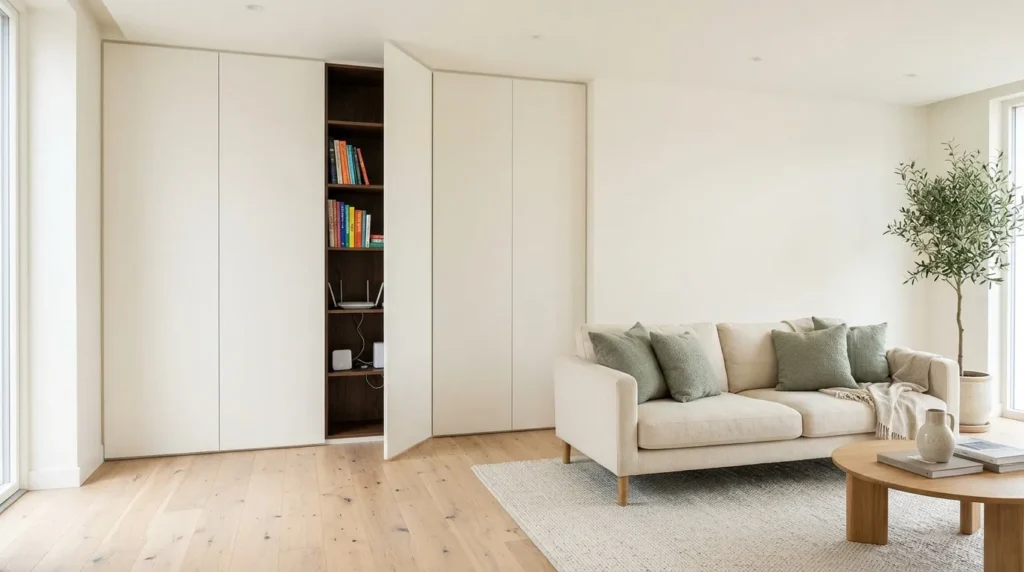
| Feature | Flush Wall Cabinet | Freestanding Cabinet |
| Space used | Uses wall space with minimal projection | Occupies floor space |
| Appearance | Blends into the surrounding wall | Becomes a visible furniture feature |
| Installation | Requires secure fixing and suitable wall construction | Usually simpler to position |
| Best for | Hallways, living rooms, and compact offices | Renters and flexible room layouts |
A wall cabinet with discreet doors can hide everyday belongings while keeping surfaces clear. Use adjustable shelves for books, household supplies, or small electronics, and choose a finish that complements your walls. Before installing a recessed or wall-mounted unit, check for wiring, plumbing, and suitable fixing points. Renters can achieve a similar look with a slim freestanding cabinet in a matching color.
Hidden Pantry Bins
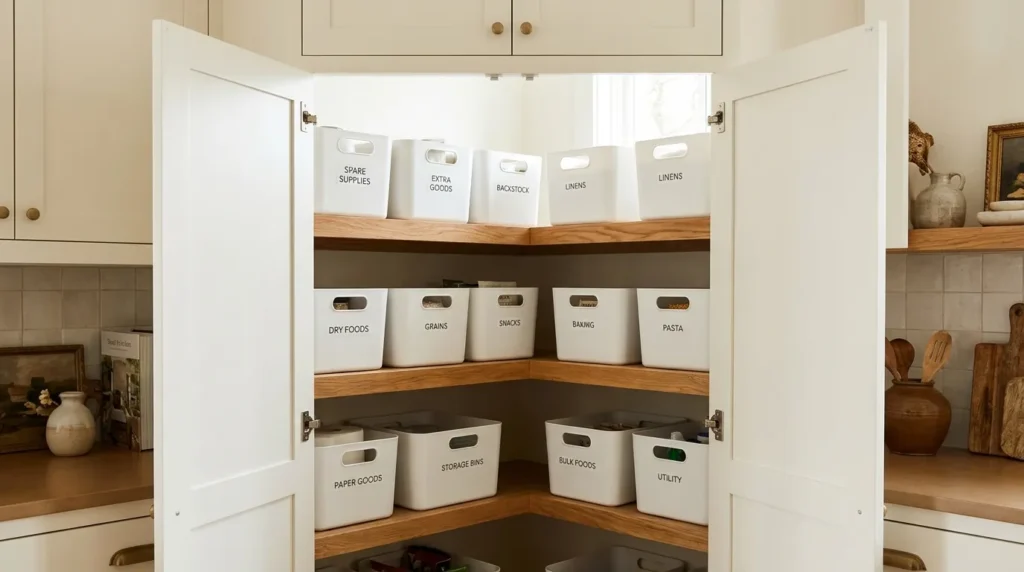
DO
- Group snacks, baking supplies, and spare ingredients in separate bins.
- Choose containers that fit your shelves without wasting vertical space.
- Label bins clearly so everyone can find and return items.
- Keep frequently used ingredients at an easy-to-reach height.
DON’T
- Mix food products with cleaning supplies in the same storage area.
- Hide expired ingredients behind newer purchases.
- Use opaque bins without labels when contents are difficult to identify.
- Store heavy containers on high shelves where they are difficult to lift safely.
Matching pantry bins make cluttered cupboards easier to manage because each category has a defined place. Measure shelf depth and height before buying containers, and leave enough room to pull them out comfortably. For dry foods, use food-safe, airtight containers where appropriate. A simple first-in, first-out routine also helps you use older ingredients before opening newer packages.
Read our previous article: 24 Studio Apartment Decorating Ideas for Clever Living
Hidden Storage Headboards

Cost: Moderate to high, depending on the headboard design.
Time: A few hours for ready-made furniture assembly; custom work may take longer.
Skill Level: Beginner for a ready-made unit; professional help may be needed for custom installation.
Best For: Bedrooms with limited floor space and little room for bedside cabinets.
Hidden storage ideas work especially well when they make use of furniture you already need. A storage headboard can keep books, spare pillowcases, charging accessories, and other small belongings close without crowding the bedside area. Measure your bed and available wall space carefully, and choose compartments that are easy to access. Keep the layout simple, store heavier items securely, and let the surrounding bedding and lighting create a restful finish.
CONCLUSION
A clutter-free home doesn’t require a complete renovation or endless storage furniture. Sometimes, the best solution is making better use of the space you already have. From concealed compartments to practical built-in features, these hidden storage ideas can help you organize everyday belongings while keeping your rooms comfortable and stylish.
Start with one area that feels crowded, measure the available space, and choose a solution that fits your routine and budget. Small improvements can make daily tidying feel much easier. Save this article on Pinterest for your next organizing project, try your favorite ideas, and share it with someone who could use a little extra space. Your calmer, more organized home can start with one clever change!


